Pump Selection & Hydraulic Engineering
Effects of Oversizing Centrifugal Pumps
Selecting an oversized centrifugal pump can lead to excess flow, energy waste, inefficient operation and increased mechanical stress. Understand how pump and system curves determine the operating point, why operation away from the best efficiency point (BEP) matters, and how correct pump sizing helps improve reliability.
Pump Selection & Hydraulic Engineering
Understanding the System Head Curve
The system head curve represents the total head required to move liquid through a pumping system at different flow rates. It is developed by considering static head and friction losses as the flow varies from zero to the required operating capacity.
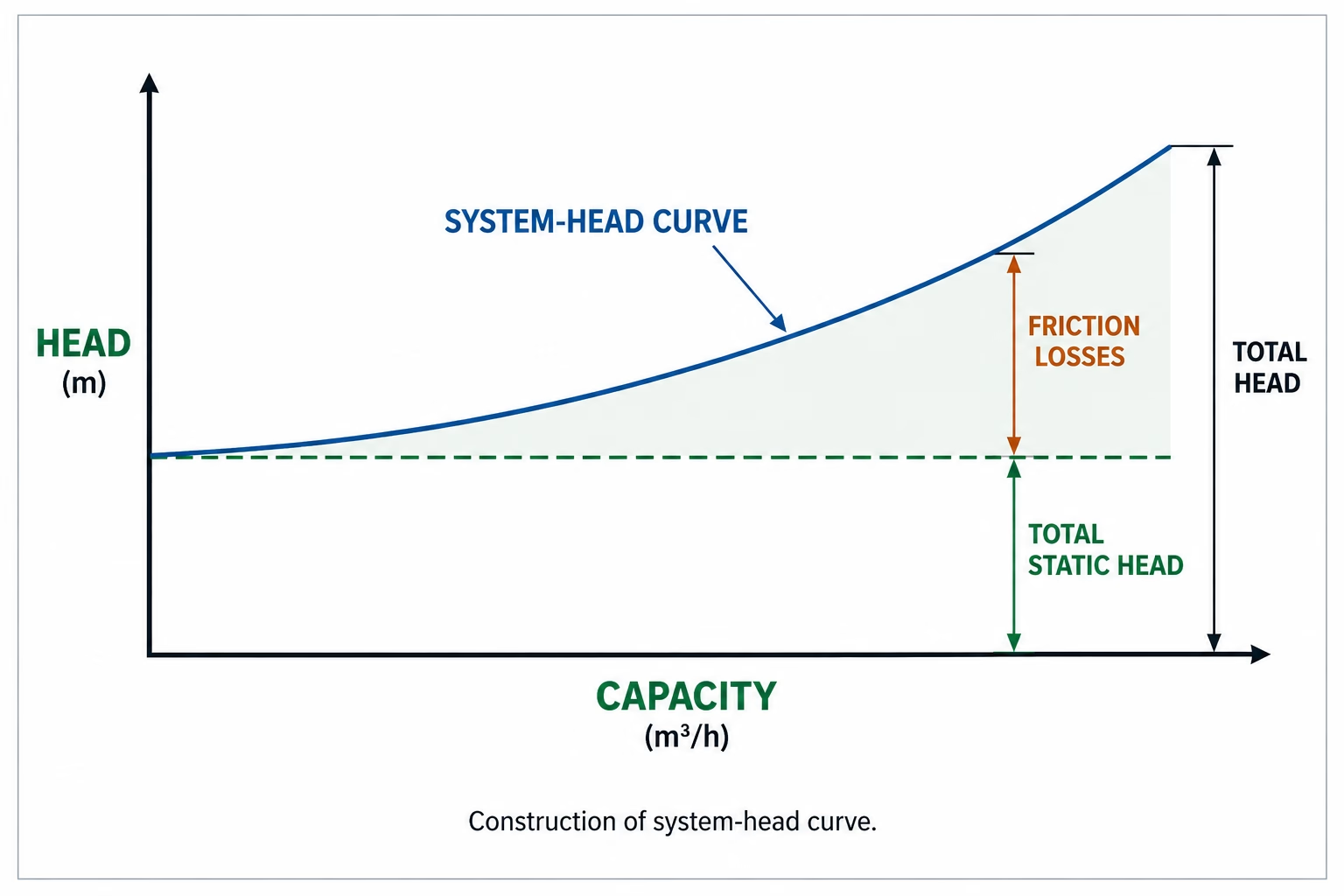
Construction of a system head curve showing the relationship between static head, friction losses and total head as capacity increases.
What Is Static Head?
Static head represents the elevation difference and, where applicable, pressure difference the pump must overcome. For a given system configuration, it is generally independent of flow rate.
How Do Friction Losses Affect Head?
Friction losses occur as liquid flows through pipes, valves, fittings and other system components. These losses generally increase as flow increases, causing the system head curve to rise.
Engineering principle: The system head curve must be evaluated alongside the pump performance curve to determine the operating point and assess whether the selected pump meets the actual system requirements.
Worked Example
Pump Oversizing: A Worked Example
Consider a pumping system designed for a flow rate of 350 m³/h with a calculated system head of 32 m. In the original example, a pump is selected for a higher head. When the discharge valve is fully open, the pump operates where its performance curve intersects the actual system curve. This operating point may deliver a higher flow rate than the process requires.
Pump Curve vs System Curve
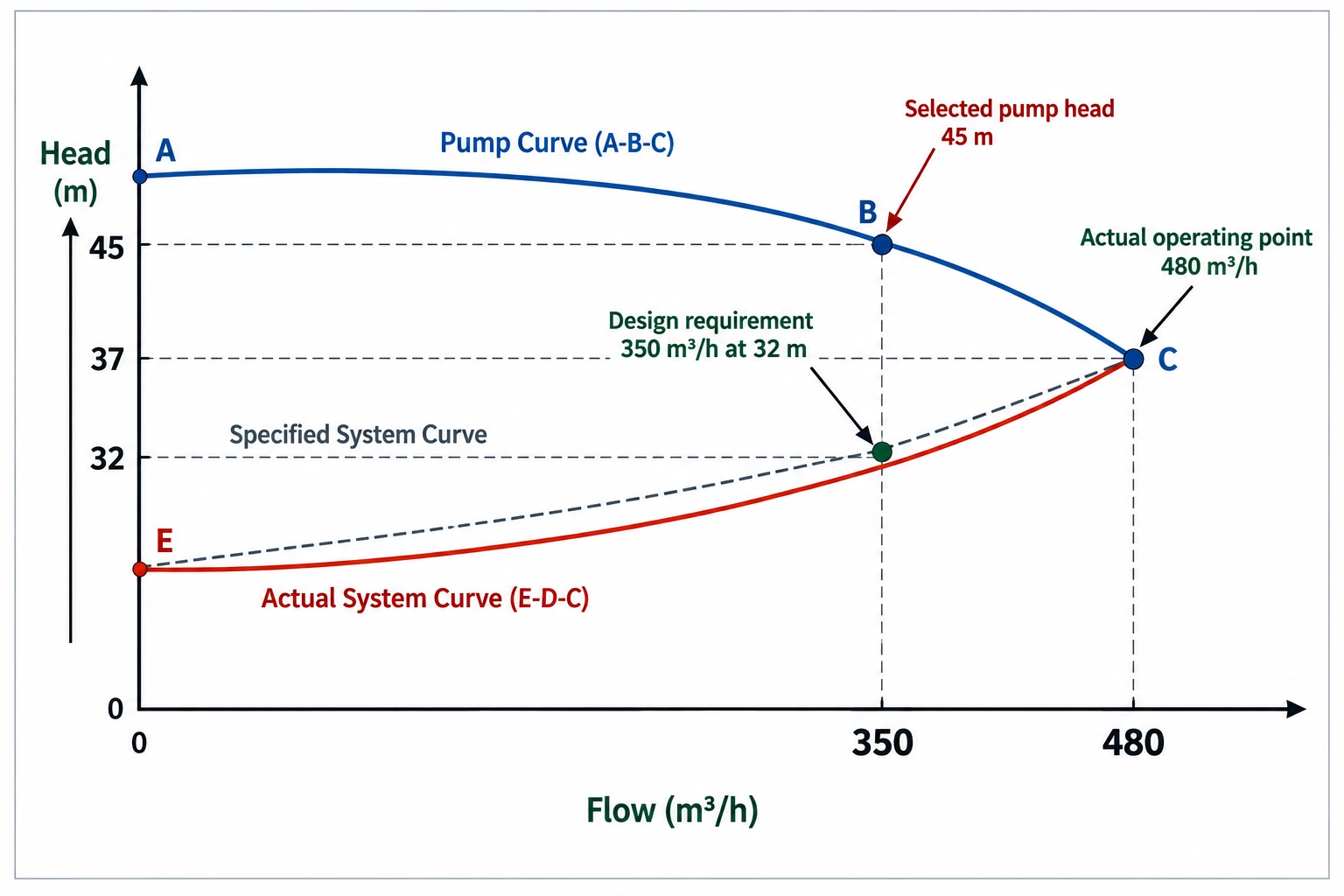
The intersection of the pump curve and actual system curve determines the operating point. Compare it with the required design duty before finalising pump selection.
What Happens When the Pump Is Oversized?
01 / Excess Flow
Higher Than Required Capacity
The pump may deliver more liquid than the process requires when the operating point falls at a higher flow rate than the design duty.
02 / Throttling
Additional Flow Resistance
A discharge valve may need to be throttled to restrict excess flow. This increases resistance and dissipates energy across the valve.
03 / Energy Consumption
Higher Operating Costs
An oversized pump can consume more power than necessary for the required duty. Actual energy consumption depends on the operating point, pump efficiency and system conditions.
Engineering verification: The original example states a design head of 32 m, adds a 12 m allowance and then refers to 45 m total head. Confirm the intended values with the engineering team before publishing. Also verify the diagram's plotted values against the original pump performance data.
Pump Performance & Reliability
What Happens When a Pump Operates Away from Its BEP?
The best efficiency point (BEP) is the point on a centrifugal pump's performance curve where the pump operates at its highest efficiency. Operating significantly away from the BEP can affect hydraulic stability, mechanical loading, vibration and component life. The effects depend on the pump design and its operating conditions.
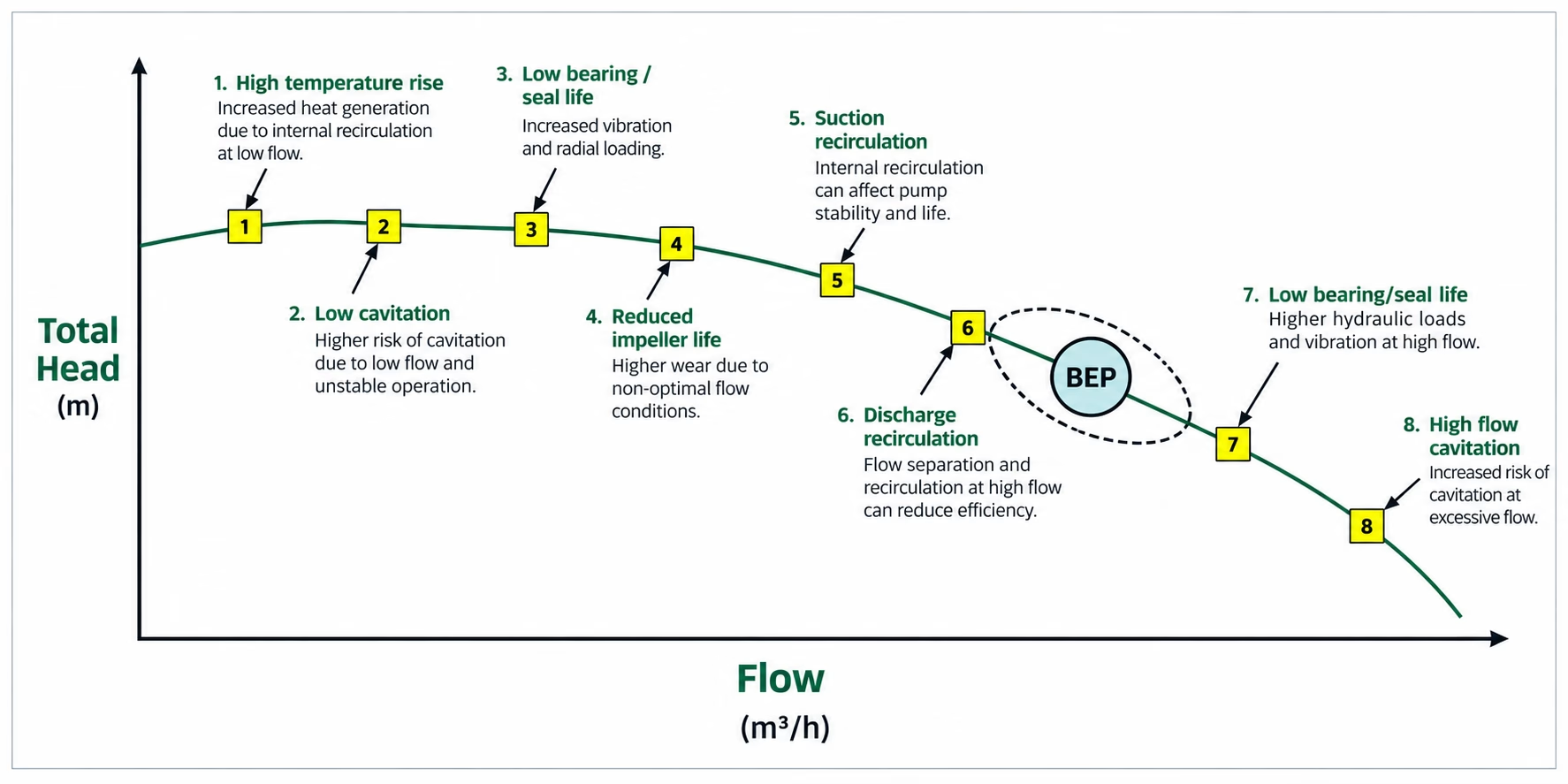
The illustration identifies potential operating concerns on either side of the best efficiency point. Actual operating limits must be confirmed using the manufacturer's pump data.
Key Effects of Operating Away from BEP
01–02 / Low Flow
Heat Rise and Recirculation
Operating at low flow can increase internal recirculation and temperature rise, potentially affecting pump stability and reliability.
03–04 / Mechanical Effects
Bearing and Impeller Wear
Increased vibration and hydraulic loading can contribute to wear of bearings, seals and impellers when operation falls outside the recommended range.
05–06 / Flow Disturbances
Suction and Discharge Recirculation
Internal flow disturbances may occur at unsuitable operating conditions and can affect hydraulic performance and pump reliability.
07–08 / High Flow
Higher Loads and Cavitation Risk
High-flow operation may increase power demand, NPSH required and hydraulic loading. Cavitation risk depends on the available NPSH and the pump's operating conditions.
Selection consideration: Select a pump that meets the required flow and head while operating within the manufacturer's recommended operating range. Verify minimum flow, allowable maximum flow, NPSH requirements and motor power before finalising the selection.
04 — PERFORMANCE & RELIABILITY
Effects of Oversizing Centrifugal Pumps
An oversized centrifugal pump may operate outside the intended duty point or require continuous discharge throttling to control flow. Depending on the pump design and operating conditions, this can affect energy consumption, suction performance, hydraulic loading and component life.
01 — SUCTION PERFORMANCE
Higher NPSH Requirement
Operating at excess capacity can increase the pump's required Net Positive Suction Head (NPSHr). If the available NPSH is insufficient, the risk of cavitation can increase.
02 — SUCTION-LINE LOSSES
Higher Foot-Valve Pressure Drop
The original article identifies a high pressure drop through the foot valve as a consequence of excess capacity. Actual losses depend on flow rate and the valve's hydraulic characteristics.
03 — CAVITATION RISK
Efficiency Loss and Rotor Damage
Cavitation can reduce hydraulic performance and damage pump components. Continued operation under damaging conditions can contribute to premature wear or failure of rotating components.
04 — ENERGY CONSUMPTION
Greater Power Consumption
Excess flow, operation away from the preferred operating region and throttling losses can increase operating costs. The actual energy impact depends on the pump curve and system duty.
05 — CAPITAL COST
Higher Initial Purchase Cost
Selecting a pump with more capacity or head than the application requires may result in unnecessary initial equipment expenditure.
06 — MECHANICAL LOADING
Internal Loading and Radial Thrust
Operation away from the best efficiency point can increase hydraulic radial forces, depending on the pump design and operating point. These forces can affect bearings, shafts and other components.
07 — VIBRATION & COMPONENT LIFE
Increased Vibration and Wear
Hydraulic instability, recirculation and increased mechanical loading can contribute to vibration and reduced component life when a pump operates outside its recommended operating region.
WHY CORRECT PUMP SIZING MATTERS
Selecting a pump to match the actual system flow and head requirements helps avoid unnecessary throttling, supports efficient operation and reduces the risk of operating outside the pump manufacturer's recommended limits.
05 — CORRECTIVE MEASURES
How to Correct an Oversized Pump
If a centrifugal pump consistently delivers more head or flow than the application requires, review the pump selection and actual system operating conditions. Depending on the pump design and application, the following options may help bring performance closer to the required duty point.
SOLUTION 01
Reduce the Impeller Diameter
Impeller trimming can reduce the head and flow produced by a centrifugal pump, depending on its design and operating conditions.
Consideration: Confirm the permissible impeller diameter and resulting performance with the pump manufacturer before modification.
SOLUTION 02
Reduce Pump Speed
Reducing rotational speed can lower the head and flow delivered by a centrifugal pump. Where suitable, a variable frequency drive (VFD) can allow speed adjustment to match changing system requirements.
Consideration: Check motor, drive, cooling, minimum-flow and operating limits before changing the speed.
SOLUTION 03
Select a Correctly Sized Pump
If the existing pump cannot meet the required duty efficiently within its permitted operating range, selecting a more suitable pump may be necessary.
Consideration: Base selection on the required flow, total dynamic head, liquid properties, NPSH conditions and preferred operating region.
Start with the Actual System Requirements
Before modifying or replacing a pump, verify the required flow and head, review the pump and system curves, and evaluate the operating point. The appropriate correction depends on the existing installation and the manufacturer's operating limits.
06 — OPERATION & MAINTENANCE
Pump Throttling, Minimum Flow and Preventive Maintenance
Throttling an oversized centrifugal pump may reduce the delivered flow, but prolonged operation at an unsuitable operating point can affect hydraulic stability, temperature, vibration and component life. Pump operation should remain within the manufacturer's recommended operating limits.
OPERATING GUIDANCE
Avoid Prolonged Operation at Very Low Flow
The original article specifically warns that excessive throttling of pulp stock pumps can contribute to vibration, increased internal radial loading and reduced rotating-element life.
Check the pump's minimum continuous stable flow and minimum thermal flow requirements before operating at reduced capacity. These limits depend on the pump model, liquid and application.
PREVENTIVE MAINTENANCE
Monitor Pump Condition and Performance
Preventive and routine maintenance are essential for reliable pump operation. Regular inspection helps identify abnormal operating conditions before they develop into more serious equipment problems.
- Monitor flow, discharge pressure and operating conditions.
- Check for abnormal vibration and noise.
- Inspect bearings, seals and rotating components.
- Review suction conditions and signs of cavitation.
- Follow the manufacturer's maintenance schedule.
IMPORTANT ENGINEERING NOTE
The original article specifies that pumps should not operate for extended periods below “1/49′ of BEP capacity.” This value is unclear and should not be published as a numerical operating limit until the SAM Turbo engineering team confirms the intended value and unit. Use the specific pump manufacturer's minimum-flow limit for operating decisions.
07 — TECHNICAL FAQs
Frequently Asked Questions About Pump Oversizing
Find answers to common questions about oversized centrifugal pumps, operating points, efficiency and corrective measures.
1. What is an oversized centrifugal pump?
An oversized centrifugal pump is a pump selected with more capacity or head than the application requires. It may deliver excess flow, require discharge throttling or operate away from its intended operating region.
2. How does pump oversizing affect energy consumption?
An oversized pump may consume more power than necessary for the required duty. When flow is controlled through discharge throttling, some of the developed head is dissipated across the valve. The actual energy impact depends on the pump curve, system requirements and operating conditions.
3. What is the Best Efficiency Point (BEP)?
The Best Efficiency Point is the flow rate at which a pump achieves its highest efficiency under the specified operating conditions. Operating significantly away from the BEP can increase hydraulic loading, vibration and wear, depending on the pump design and operating point.
4. Why is discharge valve throttling used on an oversized pump?
Closing the discharge valve increases system resistance and reduces the flow delivered by the pump. However, throttling does not eliminate the excess head developed by an incorrectly selected pump and can result in avoidable energy losses.
5. Can an oversized pump cause cavitation?
Oversizing does not automatically cause cavitation. However, operation at high flow may increase the pump's NPSH requirement. If the available NPSH is insufficient for the operating conditions, cavitation may occur.
6. How can an oversized centrifugal pump be corrected?
Potential options include reducing the impeller diameter, reducing pump speed where appropriate, or selecting a correctly sized pump. The suitable option depends on the required flow and head, pump design, motor and manufacturer's operating limits.
7. How do pump and system curves help identify oversizing?
The pump curve shows the head developed at different flow rates, while the system curve shows the head required by the installation. Their intersection identifies the operating point. Comparing this point with the required duty and the pump's BEP helps engineers assess whether the pump is suitably selected.
8. Why is minimum flow important for centrifugal pumps?
Operating below the manufacturer's minimum-flow limit can cause excessive temperature rise, internal recirculation, vibration or component damage, depending on the pump and liquid. Always check the pump's specified minimum continuous flow requirements.
Pump Selection & Hydraulic Engineering
NEED HELP SELECTING THE RIGHT INDUSTRIAL PUMP?
Correct pump sizing starts with your actual flow requirement, total dynamic head, system characteristics and operating conditions. Connect with SAM Turbo to discuss your pumping application and identify a suitable pump solution.
