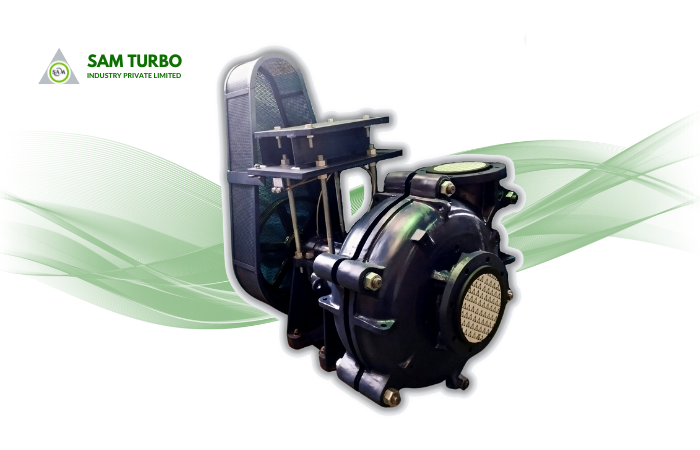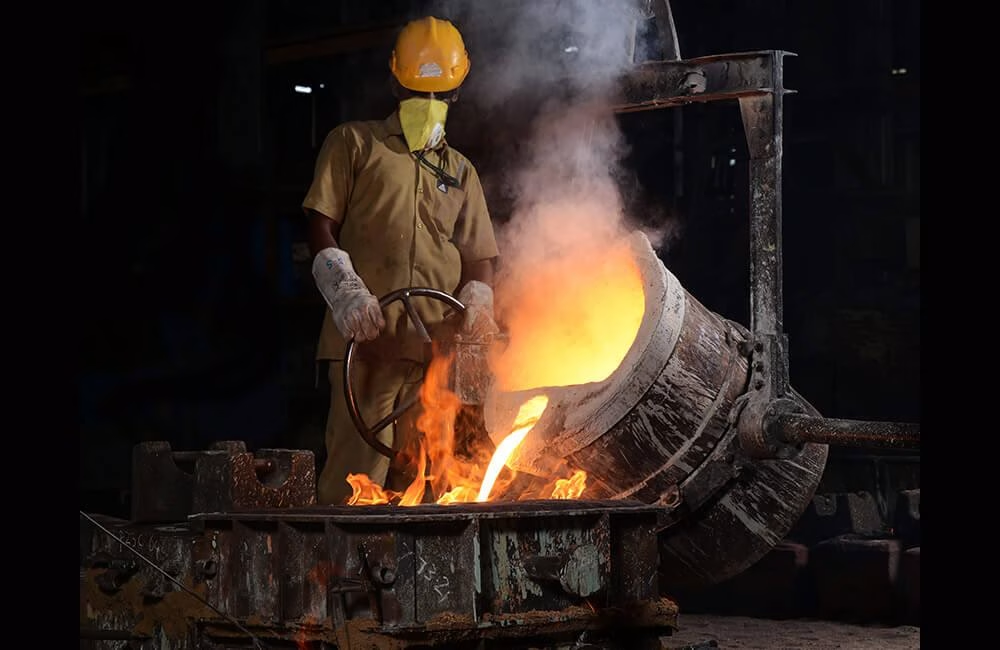
Captive Steel Foundry

Home | Captive Steel Foundry

In-House Metallurgy Behind Reliable Industrial Pumps

SAM Turbo’s captive steel foundry gives us direct control over material selection,
alloy composition and casting of critical pump components. This helps ensure
consistent component quality and metallurgy suited to demanding industrial applications.

  • Material selection
  • Alloy composition
  • Precision casting
  • Component quality
  • Application-specific metallurgy


See SAM Turbo's manufacturing infrastructure →

600 MT/month
CAPTIVE FOUNDRY CAPACITY
Multiple Induction
Furnaces
CONTROLLED MELTING & ALLOY PRODUCTION
IS · ASTM · JIS · AFNOR · BS
APPLICABLE MATERIAL STANDARDS
Application-Specific
Materials
FOR DEMANDING INDUSTRIAL SERVICE
ENGINEERING RATIONALE

Why In-House Foundry Capability Matters

Material Control

Controlled alloy composition and material selection according to application requirements.

Casting Control

Greater control over the production of critical cast components.

Application-Specific Metallurgy

Materials can be selected based on abrasion, corrosion, temperature and process conditions.

Integrated Manufacturing

Foundry capabilities work alongside engineering, machining, pump manufacturing and quality processes.

INFRASTRUCTURE

Integrated Foundry & Testing Infrastructure

Induction Furnaces at SAM Turbo captive steel foundry

01

Induction Furnaces

Current capability includes 2 Ton, 1.5 Ton and 0.5 Ton × 2 induction furnaces
for controlled melting and alloy preparation.

Mould Shop at SAM Turbo captive steel foundry

02

Mould Shop

Pattern and moulding operations supporting pump casings, impellers and other
cast pump components.

Universal Testing Machine at SAM Turbo foundry

03

Universal Testing Machine

In-house mechanical testing of cast material samples as part of the foundry
quality workflow.

Spectrometer at SAM Turbo foundry

04

Spectrometer

Chemical composition verification of melts before pouring, supporting
consistent alloy control.

Engineered Materials for Demanding Pump Applications

SAM Turbo's captive steel foundry supports a broad range of cast materials selected according to the requirements of industrial pumping applications — from general process duties to highly abrasive and chemically aggressive service.

The Right Material for the Right Application

Industrial pump materials should be selected according to operating conditions — fluid chemistry,
solids content, temperature and duty cycle — rather than applying one standard material across every
application. Matching metallurgy to service conditions is where pump reliability is decided.

Abrasive Service

Wear-resistant materials for slurry and high-solids applications.

Corrosive Service

Corrosion-resistant alloys for aggressive process fluids.

High-Temperature Service

Materials selected according to operating temperature and process requirements.

Pulp & Paper

Materials suited to demanding pulp, stock and process applications.

Mining & Mineral Processing

Wear-focused material selection for abrasive mineral handling.

Not sure which material suits your duty?

Talk to Our Engineering Team →

SAMRON-17 — Wear-Resistant Alloy
Developed by SAM Turbo

SAMRON-17 was developed by SAM Turbo's R&D team for demanding abrasive applications,
where component wear governs pump life and maintenance intervals. It reflects the company's
approach of engineering the material to the application rather than adapting the application
to an available material.

~500
BHN
Hardness as stated by SAM Turbo — confirm against technical
documentation before publishing.
▪ Abrasive service
▪ Pulp and paper applications
▪ Wear-resistant pump components
▪ Application-specific material engineering

SAM Turbo induction furnace for wear-resistant alloy development

PROCESS FLOW

From Metallurgy to Pump Performance

01

Application Requirement

02

Material Selection

03

Alloy Preparation

04

Casting

05

Inspection & Testing

06

Machining

07

Pump Manufacturing

08

Quality Validation

QUALITY

Quality Control from Metallurgy to Finished Component

Material Verification

Chemical composition and material verification.

Mechanical Testing

Testing of relevant mechanical properties.

Casting Inspection

Inspection of cast components according to applicable requirements.

Quality Assurance

Integrated quality practices across manufacturing.

INDUSTRIES

Foundry Expertise Supporting Demanding Industries

Pulp & Paper

Stock, liquor and process duties with high wear exposure.

Explore Industry →

Mining

Abrasive slurry and mineral handling service.

Explore Industry →

Thermal Power

Ash handling and plant water circulation duties.

Explore Industry →

Steel & Basic Metals

Heavy-duty process and scale-pit applications.

Explore Industry →

Chemical

Corrosive fluid transfer with alloy-specific selection.

Explore Industry →

Fertilizer

Aggressive process chemistry and slurry service.

Explore Industry →

Sugar

Juice, molasses and mill process pumping.

Explore Industry →

Oil & Gas

Process transfer duties in demanding conditions.

Explore Industry →

Water & Wastewater

Municipal and industrial effluent handling.

Explore Industry →

Agriculture

Large-volume irrigation and water movement.

Explore Industry →

PUMP RANGE

Built for Industrial Pump Applications

Slurry Pumps Double Casing AR

Slurry Pumps

Wear-resistant castings for high-solids abrasive service.

Explore Slurry Pumps →
Pulp and Paper Stock Pumps TPS

Pulp & Paper Pumps

Stainless and specialty alloys for stock and process duties.

Explore Pulp & Paper Pumps →
Chemical Pumps CPC

Chemical Pumps

Corrosion-resistant alloy castings for aggressive fluids.

Explore Chemical Pumps →
Process Pumps TCH N

Process Pumps

Application-matched materials for continuous process plants.

Explore Process Pumps →
Horizontal Split Case Pumps ZM AD

Horizontal Split Case Pumps

Reliable split-case pumps for high-flow industrial and water pumping applications.

Explore Split Case Pumps →
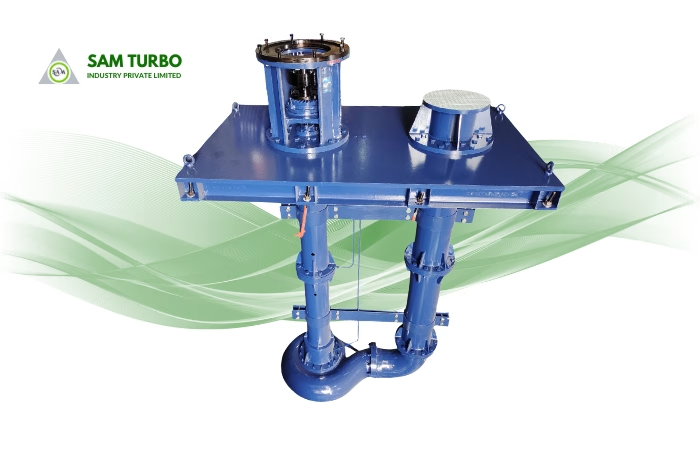
Vertical Sump Pumps VO

Vertical Sump Pumps

Vertical pumps designed for efficient sump drainage and industrial liquid handling.

Explore Vertical Sump Pumps →
55+ Years
Engineering & Manufacturing Experience
Captive Foundry
In-House Metallurgical Capability
Industrial Applications
Serving Demanding Process Industries
Engineering Expertise
Application-Focused Pump Solutions
ENGINEERING ENQUIRY

Need the Right Material for Your Pump Application?

Talk to SAM Turbo's engineering team about your operating conditions,
material requirements and industrial pumping application.

FAQ

Captive Steel Foundry – Common Questions

What is a captive steel foundry?
A captive steel foundry is a foundry owned and operated by a manufacturer for its own production requirements rather than for open-market casting sales. For SAM Turbo, the captive foundry produces the cast components used in its industrial pumps, which keeps material selection, alloy preparation and casting under the company's own engineering control.
What is the capacity of SAM Turbo's captive steel foundry?
SAM Turbo's captive foundry supports the manufacturing of cast components for its industrial pump applications. Specific foundry capacity details can be provided based on the applicable manufacturing requirements.
What materials are produced in the captive foundry?
The captive foundry supports application-specific material selection for industrial pumping requirements. Materials can be selected based on factors such as abrasion, corrosion, temperature and process conditions.
Why is material selection important for industrial pumps?
Material selection directly affects pump performance, service life and reliability. The appropriate material can be selected according to operating conditions such as abrasion, corrosion, temperature and the characteristics of the pumped fluid.
What is SAMRON-17?
SAMRON-17 is a material designation associated with SAM Turbo's foundry and material capabilities. Specific technical details should be confirmed from SAM Turbo's approved technical documentation.
How does SAM Turbo select materials for different pumping applications?
SAM Turbo selects materials according to the requirements of the pumping application. Factors can include abrasion, corrosion, operating temperature, process conditions and the characteristics of the pumped medium.