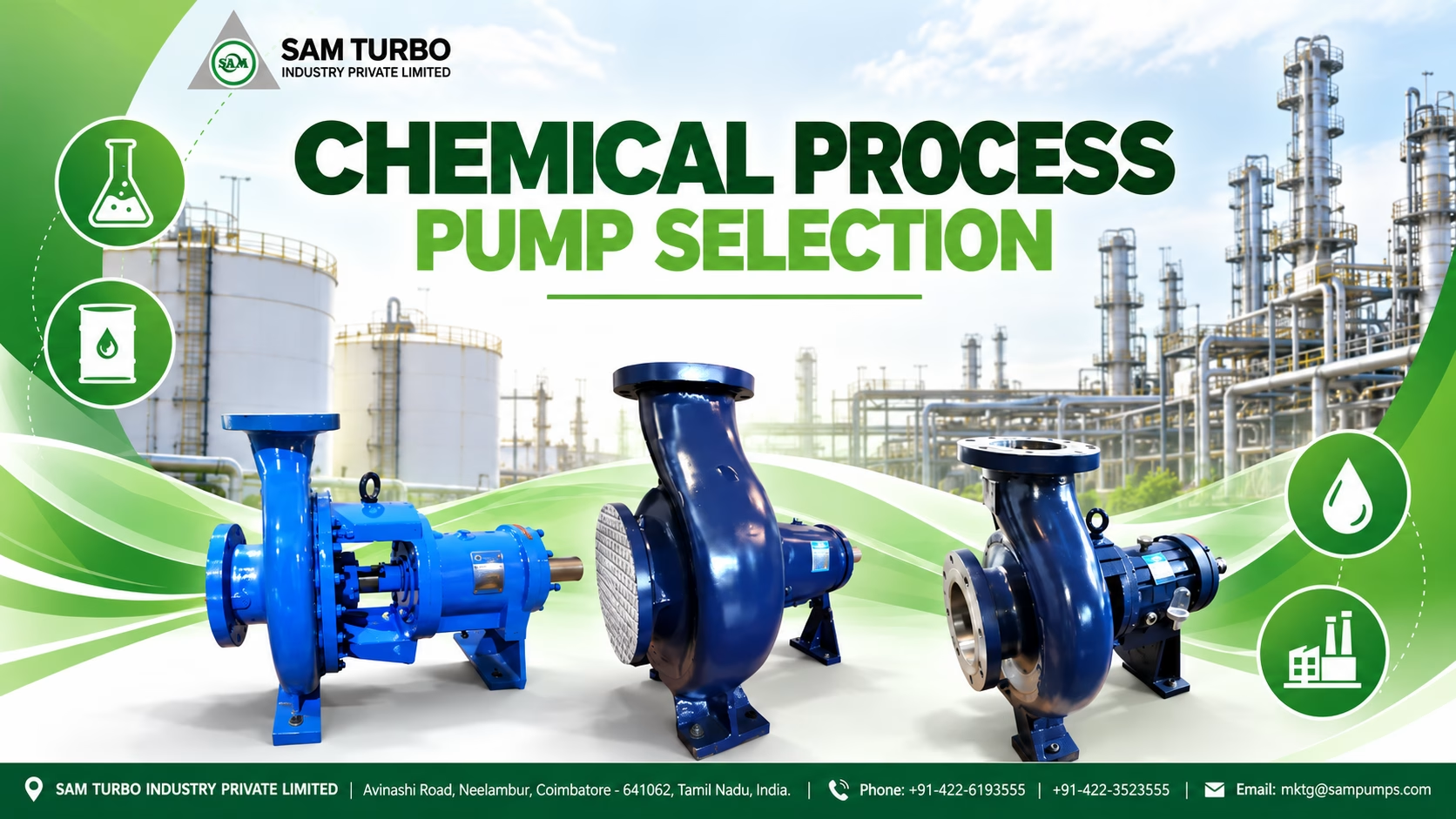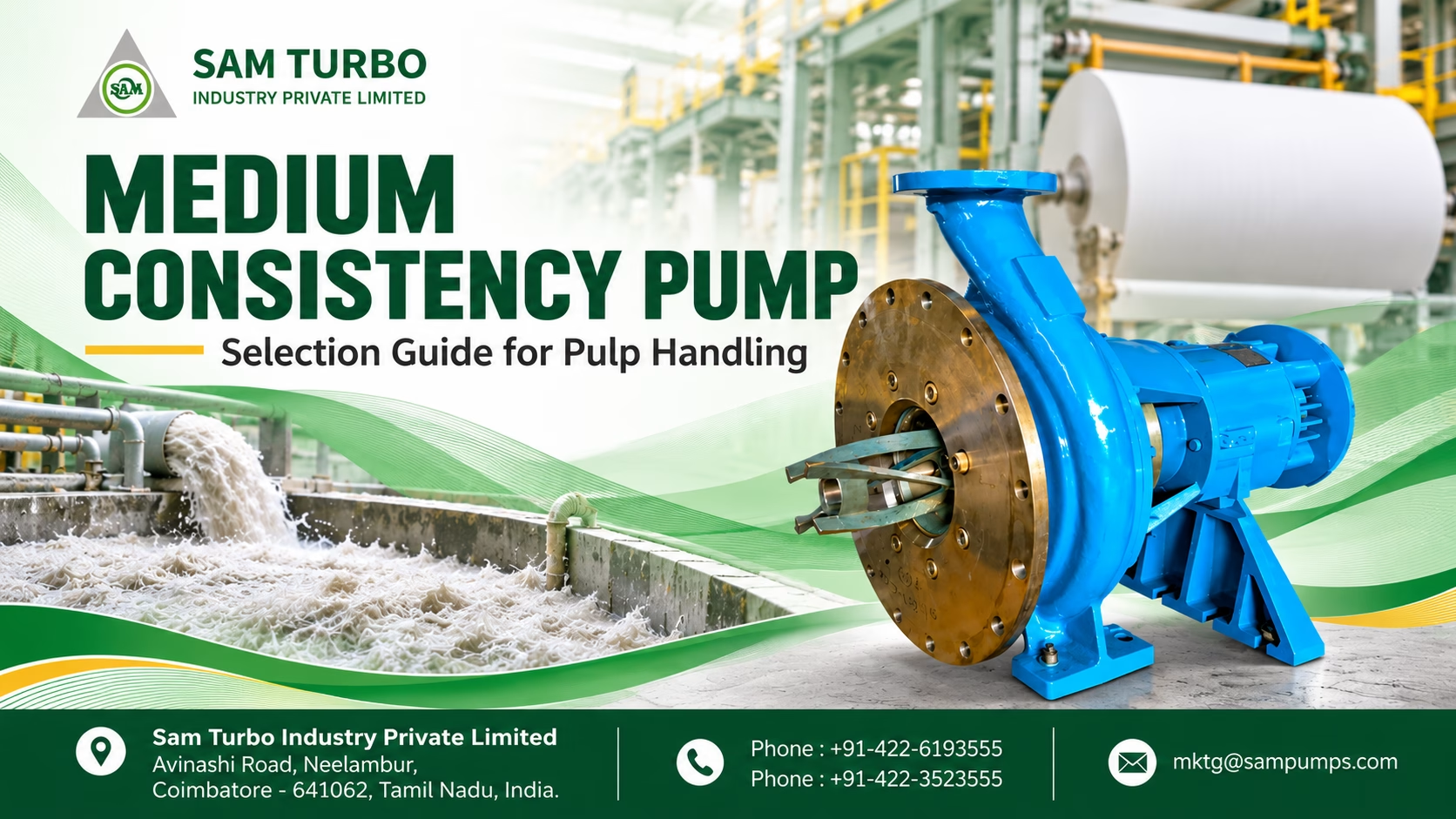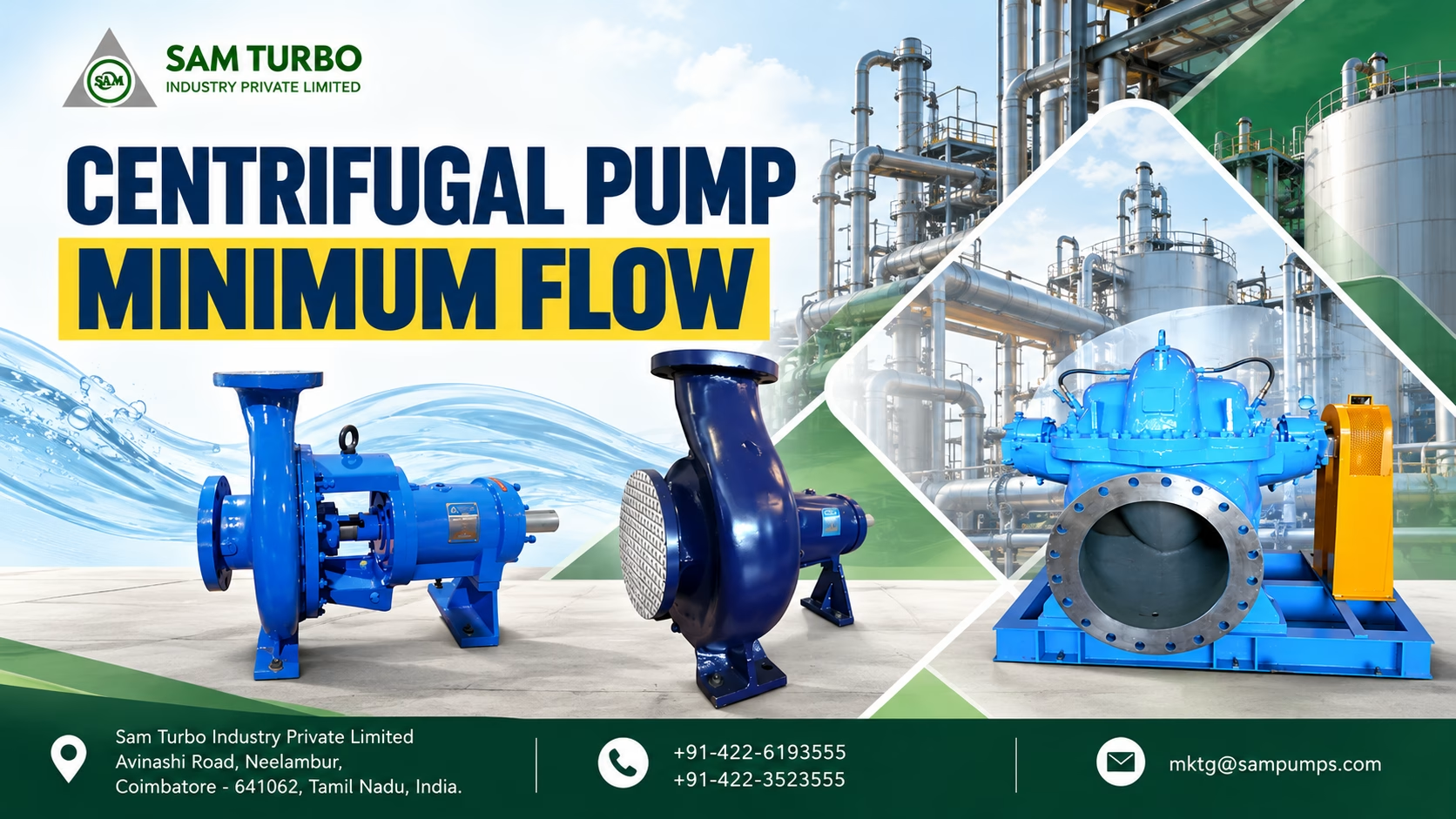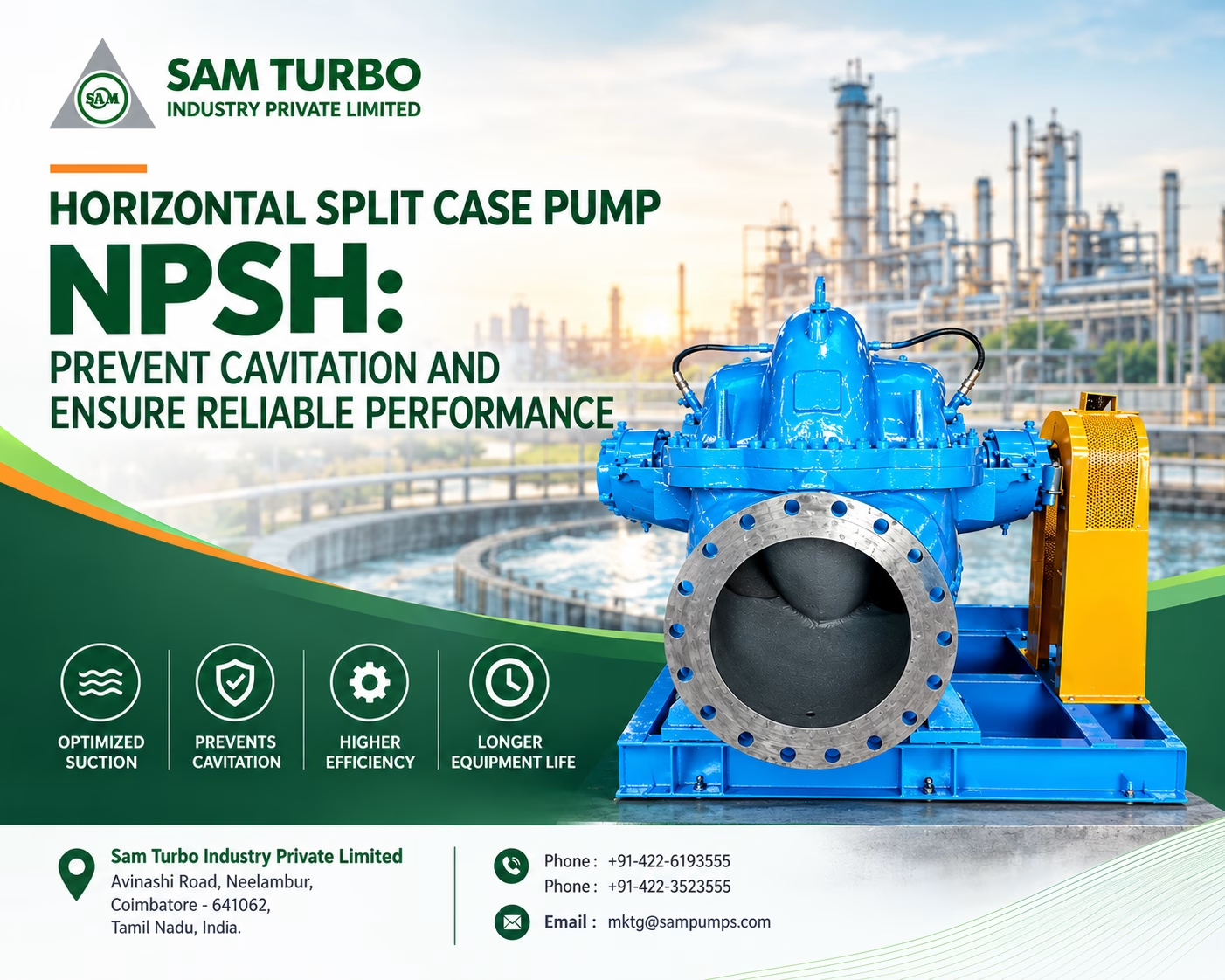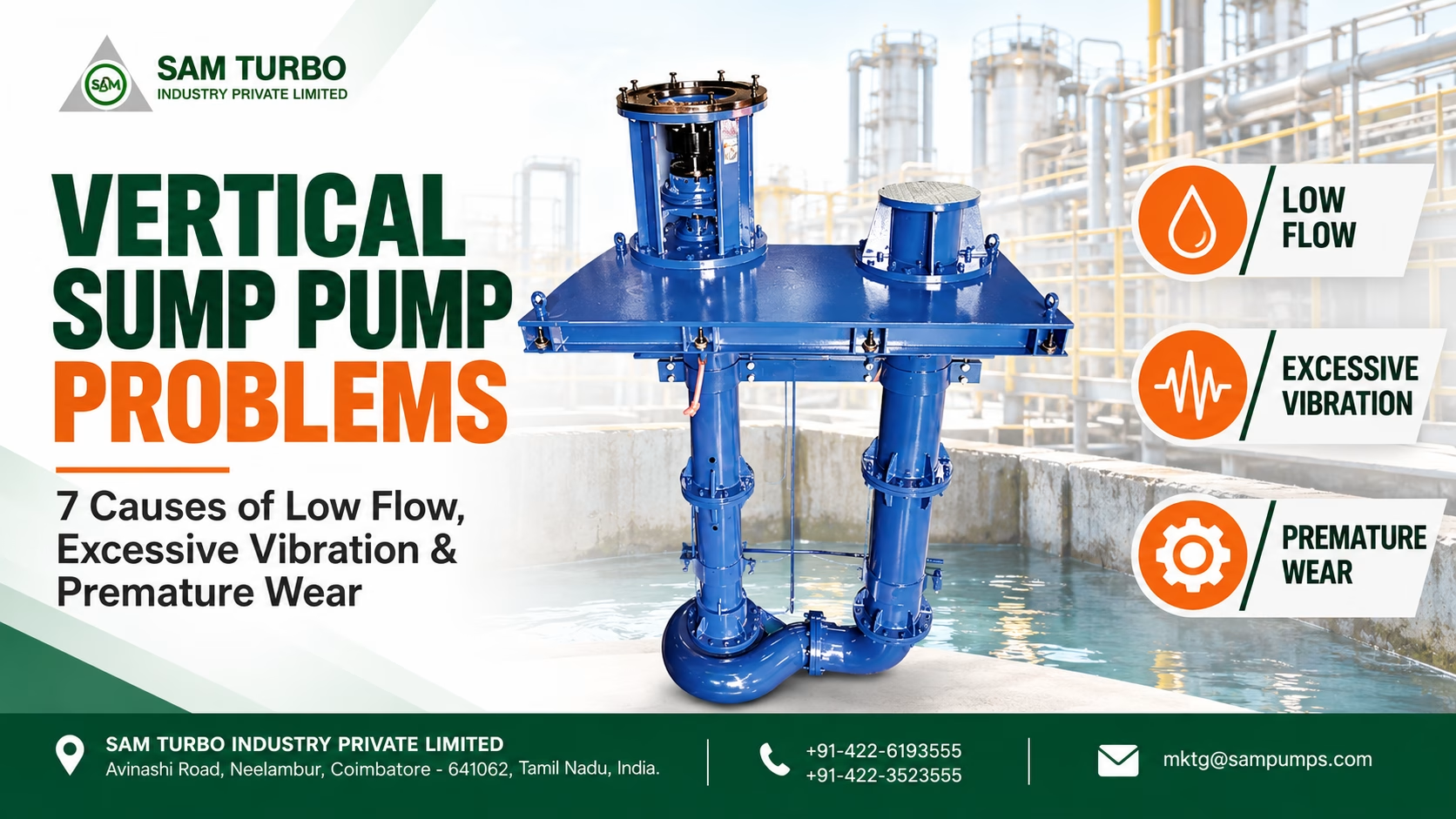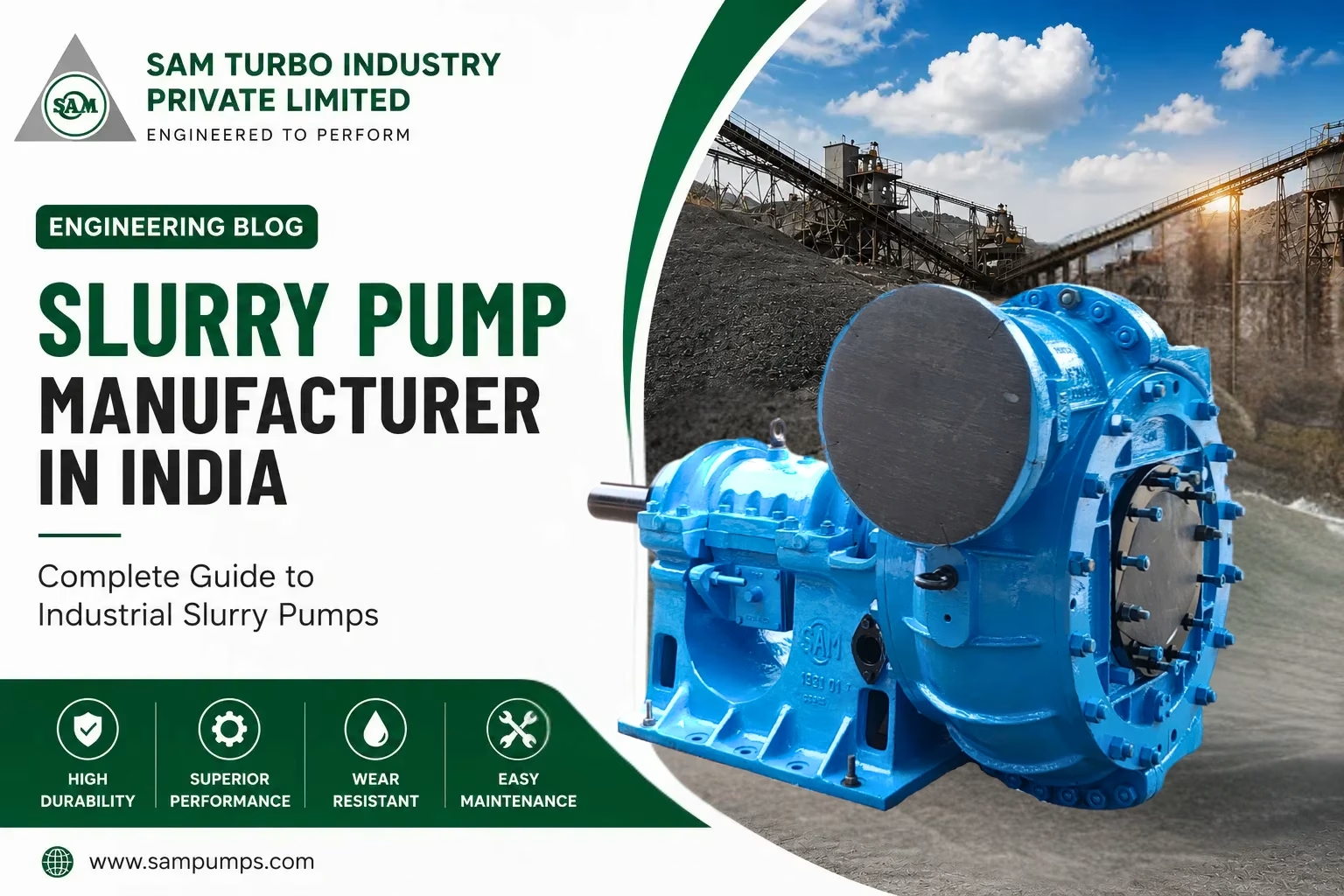
Slurry Pump Manufacturer in India – Complete Guide to Industrial Slurry Pumps
Heavy-Duty Industrial Slurry Pumps for Mining, M-Sand, Thermal Power, Steel, and Pulp & Paper Applications
Learn More
The slurry handling industry requires highly reliable and heavy-duty pumping systems for handling abrasive slurry, ash slurry, mineral slurry, coarse particles, tailings, sludge, and high-density process fluids continuously. Selecting the right slurry pump manufacturer in India is essential for achieving higher operational efficiency, reduced maintenance downtime, longer wear life, and dependable industrial performance.
If industries are searching for:
• Slurry Pump
• Slurry Pump Manufacturer
• Slurry Pump Manufacturer in India
• Best Slurry Pump
• Top Slurry Pump Manufacturer
• Leading Slurry Pump Manufacturer
• Industrial Slurry Pumps
• Heavy Duty Slurry Pumps
• Mining Slurry Pumps
• Ash Slurry Pumps
• Abrasive Slurry Pumps
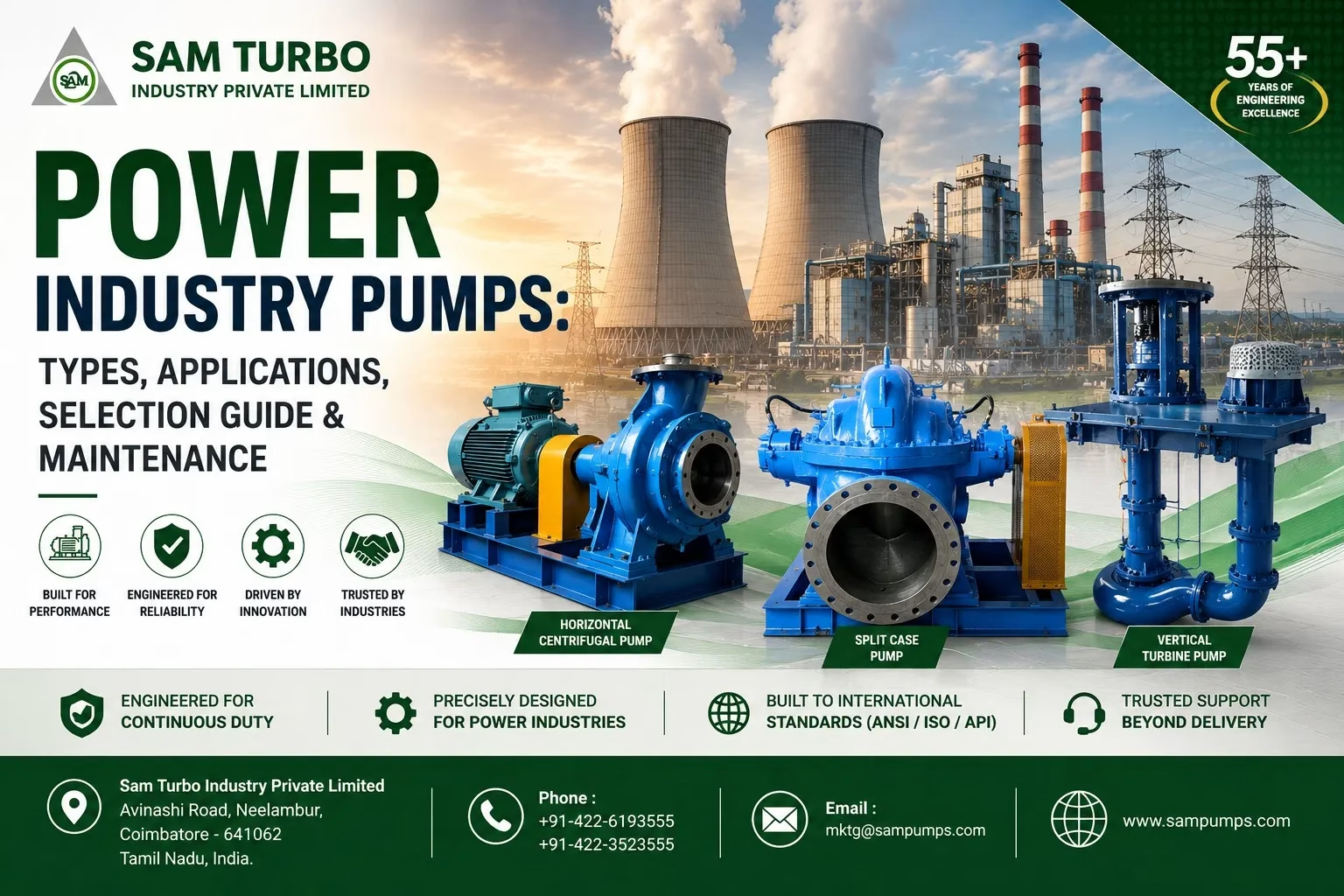
• Slurry Pumps for Power Plants
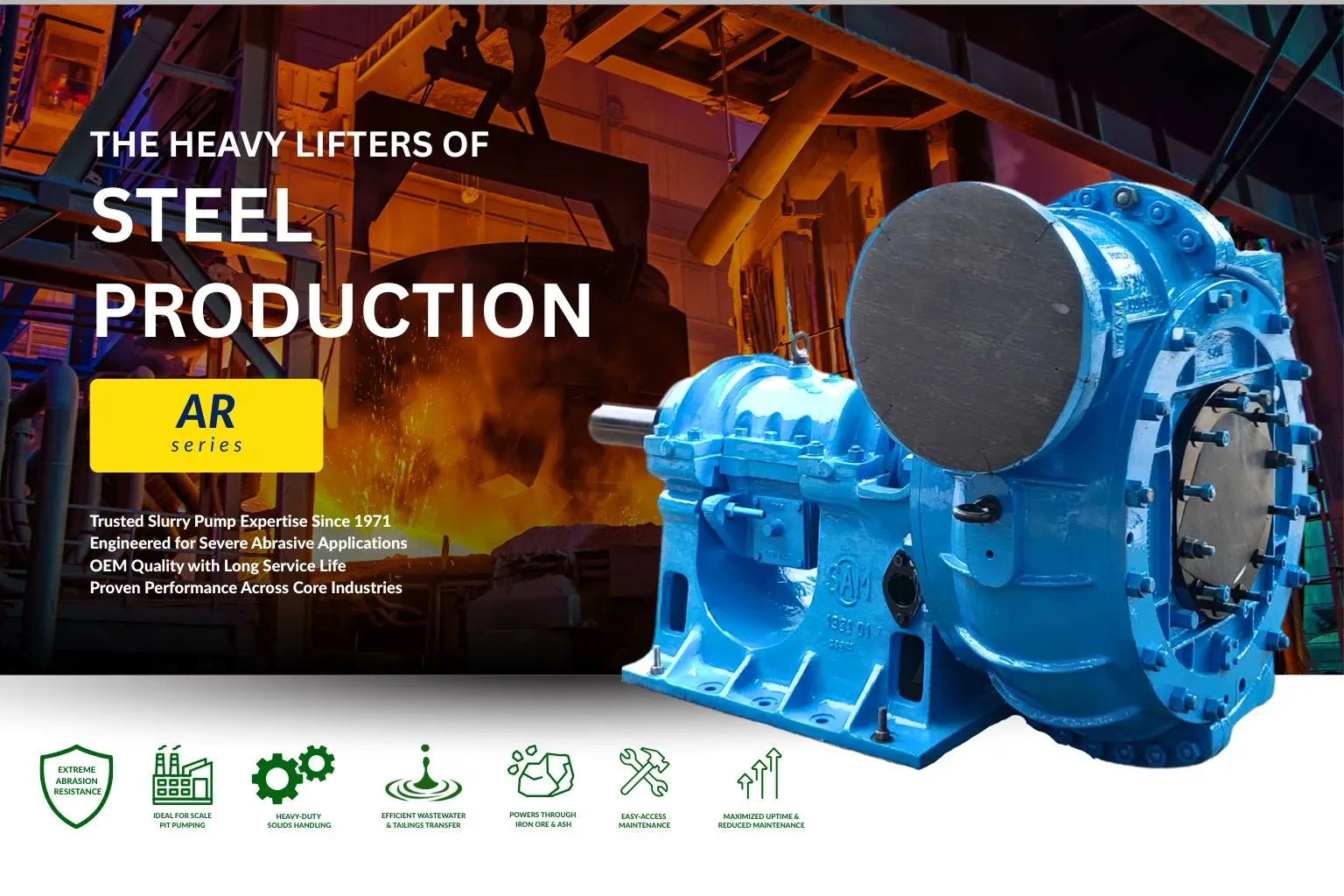
• Slurry Pumps for Steel Industries
then SAM Turbo Industry Private Limited stands among the trusted industrial pump manufacturers with more than 55+ years of engineering expertise in manufacturing heavy-duty centrifugal slurry pumps for demanding industrial applications.

SAM Turbo slurry pumps are engineered for industries such as:
• Thermal Power Plants
• Steel Plants
• Mining Industries
• Mineral Processing Plants
• Ash Handling Systems
• Coal Handling Plants
• Chemical Industries
• Cement Industries
• M-Sand Plants
Designed with rugged hydraulic engineering, heavy-duty bearing arrangements, replaceable wear parts, and abrasion-resistant wetted components, SAM Turbo Slurry Pumps deliver reliable performance even under severe operating conditions.
With advanced manufacturing capabilities and decades of industrial pump engineering experience, SAM Turbo continues to deliver efficient, cost-effective, and long-lasting slurry pumping solutions for industries across India and global markets.
What is a Slurry Pump?
A slurry pump is a heavy-duty centrifugal pump specifically designed to transport liquids containing solid particles such as sand, ash, ore, sludge, pulp stock, fly ash, tailings, chemicals, and mineral slurry.
Unlike conventional water pumps, slurry pumps are engineered with:
- Abrasion-resistant materials
- Heavy-duty impellers
- Wear-resistant liners
- High-efficiency hydraulic design
- Robust shaft and bearing arrangements
These features help slurry pumps withstand highly abrasive and corrosive applications in demanding industrial environments.
Why Slurry Pumps are Important in Industrial Applications
Industrial processes often involve handling fluids mixed with solid particles. Standard pumps fail quickly under such conditions because of excessive wear and erosion.
Heavy-duty slurry pumps are essential for:
- Continuous operation
- Handling high solid concentration
- Reducing maintenance downtime
- Improving plant productivity
- Increasing operational efficiency
- Lowering lifecycle cost
Industries that widely use slurry pumps include:
- Mining & Mineral Processing
- M-Sand Plants
- Steel Plants
- Coal Handling Plants
- Thermal Power Stations
- Chemical Industries
- Pulp & Paper Mills
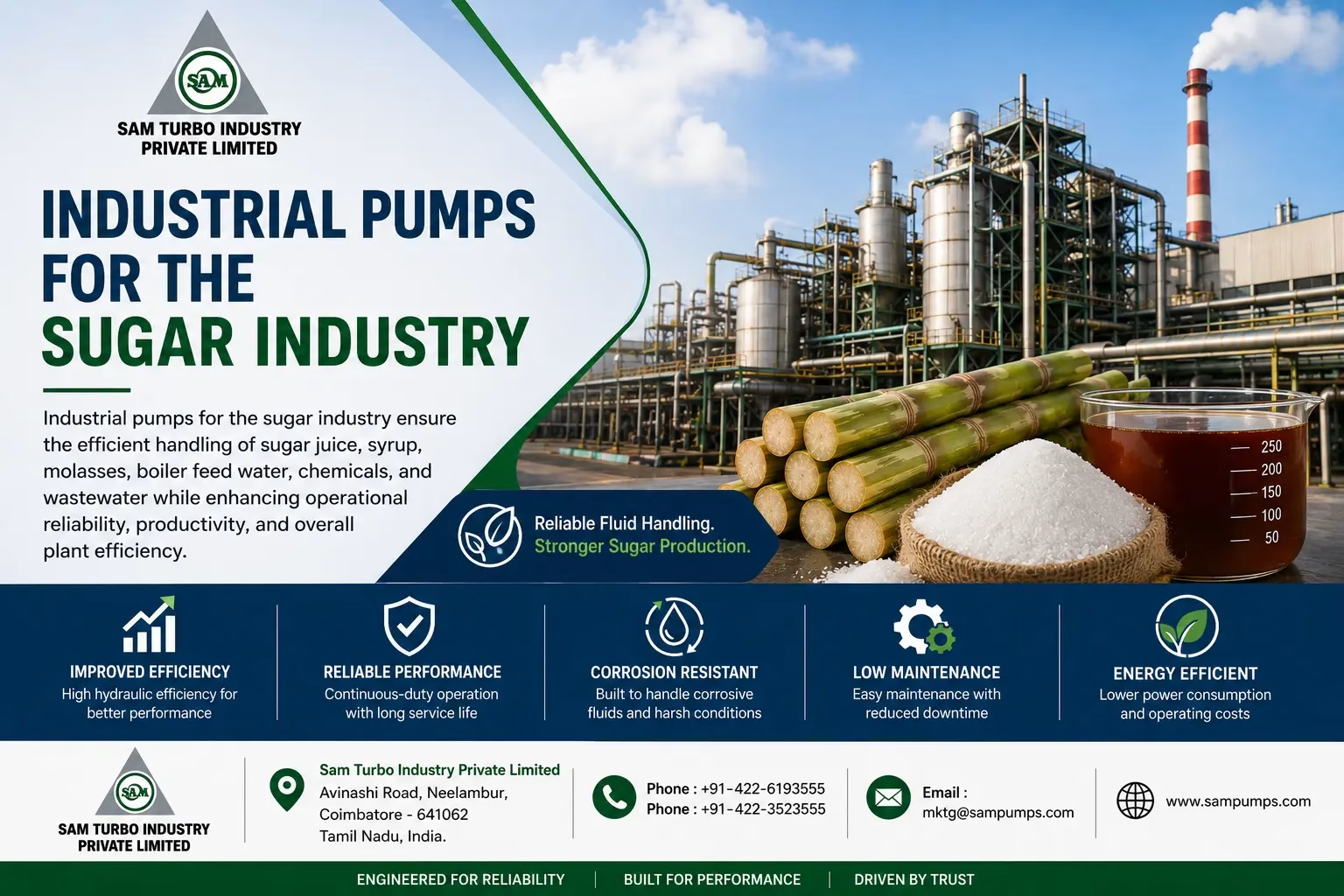
- Sugar Industries
- Wastewater Treatment Plants
Types of Slurry Pumps Used in Industries
1. Horizontal Slurry Pumps
Horizontal slurry pumps are commonly used for high-capacity abrasive applications. These pumps provide excellent efficiency and easy maintenance access.
Applications:
- Mining slurry
- M-Sand slurry transfer
- Tailings handling
- Ash slurry
- Ore transportation
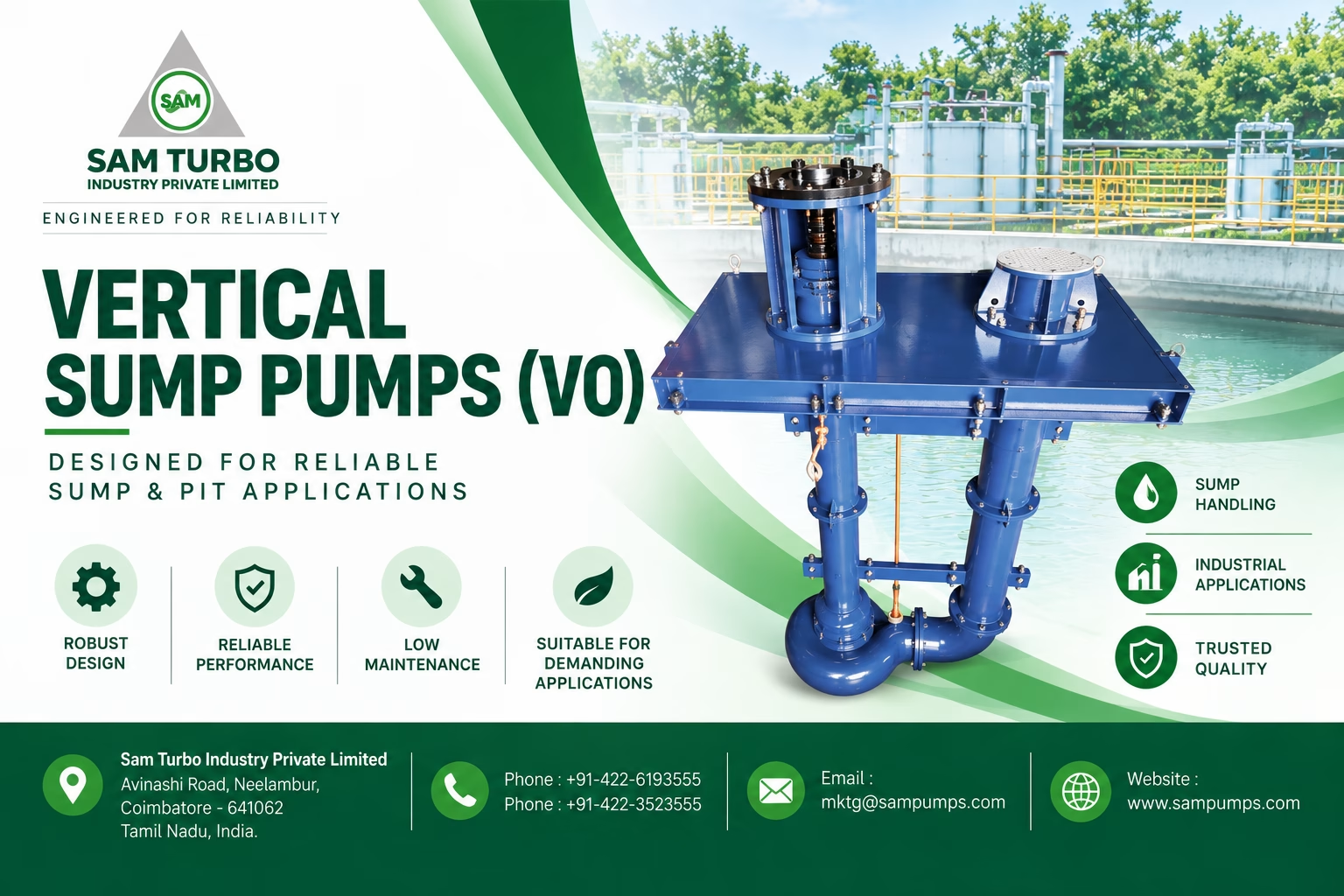
2. Vertical Slurry Pumps
Vertical slurry pumps are ideal for sump applications and corrosive slurry handling where submerged operation is required.
Applications:
- Sludge handling
- Settling tanks
- Sump transfer
- Chemical slurry
3. Double Casing Slurry Pumps
Double casing slurry pumps are designed for severe-duty abrasive services. They provide additional wear protection and extended service life.
Key advantages:
- Replaceable liners
- Heavy-duty construction
- Higher reliability
- Lower maintenance cost
Explore:
SAM Turbo Double Casing Slurry Pumps (ARH Series)
4. Single Casing Slurry Pumps
Single casing slurry pumps are suitable for medium-duty slurry applications with compact and efficient construction.
Benefits:
- Compact design
- Lower installation cost
- Easy maintenance
- Reliable performance
Explore:
SAM Turbo Single Casing Slurry Pumps (ARS Series)
Top Applications of Slurry Pumps in India
Mining Industry
Mining operations require robust slurry pumps for transporting ore slurry, tailings, coal slurry, and mineral concentrates.
M-Sand Plants
M-Sand manufacturing involves highly abrasive sand-water mixtures. Heavy-duty slurry pumps are critical for efficient material transfer and cyclone feed applications.
Thermal Power Plants
Slurry pumps handle:
- Fly ash slurry
- Bottom ash
- Coal slurry
- Limestone slurry
Steel and Metal Industries
Steel plants use slurry pumps for:
- Scale pit handling
- Mill discharge
- Sludge transfer
- Blast furnace applications
Pulp & Paper Industry
Pulp and paper manufacturing requires specialized pumps for:
- Pulp stock transfer
- Chemical handling
- Medium consistency pumping
- Liquor circulation
- Sludge transfer
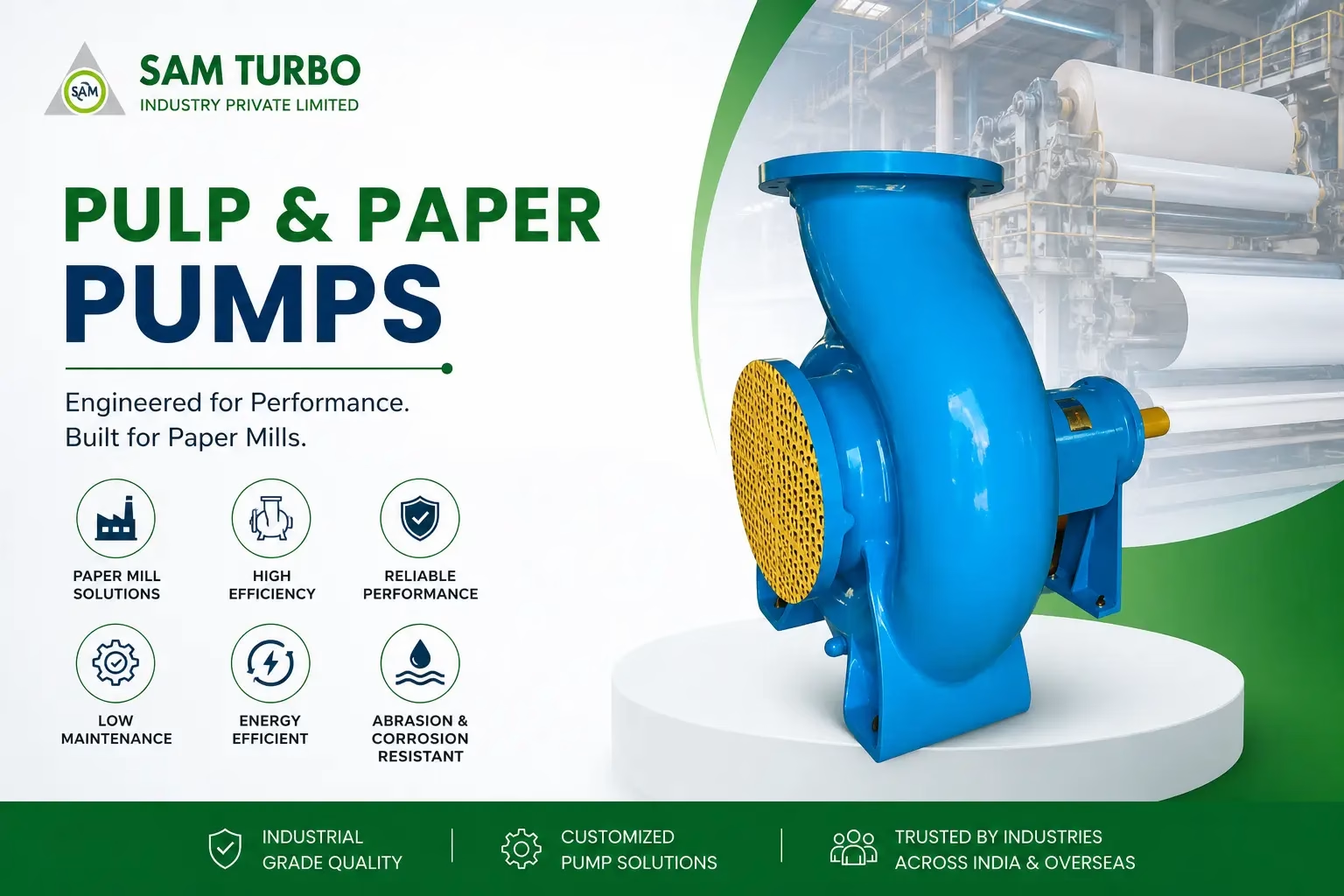
SAM Turbo manufactures dedicated pulp & paper pumps designed for high consistency and abrasive stock handling.
Why Industries Choose SAM Turbo Slurry Pumps
SAM Turbo Industry Private Limited is one of the recognized industrial pump manufacturers in India specializing in slurry pumps and pulp & paper pumps.
The company serves industries across India and overseas with engineered pumping solutions for abrasive and corrosive applications.
Key Strengths of SAM Turbo Pumps
1. 55+ Years of Engineering Excellence
Established in 1971, SAM Turbo has decades of expertise in designing and manufacturing industrial centrifugal pumps.
2. Heavy-Duty Slurry Pump Design
The slurry pumps are engineered for:
- Abrasive slurries
- Corrosive fluids
- High solid concentration
- Continuous industrial operation
3. Advanced Manufacturing Infrastructure
SAM Turbo operates with advanced engineering facilities and captive steel foundry capabilities.
4. Wide Industrial Applications
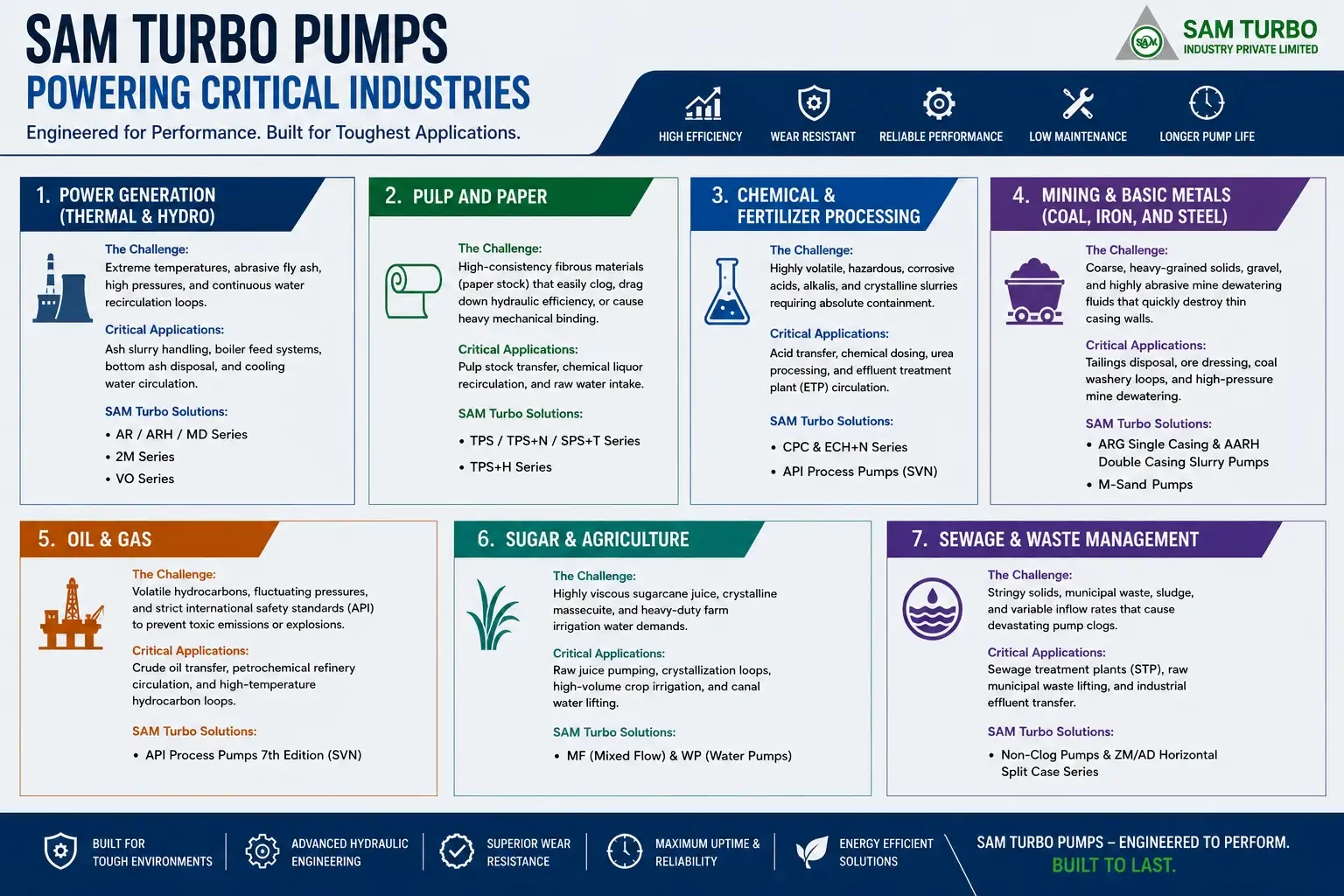
Industries served include:
- Mining
- Pulp & Paper
- Thermal Power
- Chemical
- Fertilizer
- Sugar
- Steel
- Oil & Gas
5. Customized Pump Solutions
Customized slurry pump solutions are available based on:
- Flow rate
- Head requirement
- Abrasiveness
- Temperature
- Material compatibility
Double Casing vs Single Casing Slurry Pumps
| Feature | Double Casing Slurry Pump | Single Casing Slurry Pump |
|---|---|---|
| Construction | Heavy-duty dual casing | Compact single casing |
| Wear Resistance | Very high | Moderate |
| Maintenance | Easy liner replacement | Simple maintenance |
| Best for | Severe-duty slurry | Medium-duty slurry |
| Application | Mining, M-Sand, ash | General industrial slurry |
| Operating Life | Longer | Moderate |
How to Select the Right Slurry Pump
Choosing the right slurry pump depends on several factors:
Solid Particle Size
Larger particles require stronger hydraulic design and wider passages.
Slurry Density
Higher density slurries need more power and wear resistance.
Flow Rate Requirement
Pump sizing must match plant operational needs.
Head Requirement
Correct head selection ensures energy-efficient operation.
Abrasiveness
Highly abrasive slurries require special metallurgy and liners.
Corrosion Resistance
Chemical applications may need stainless steel or alloy materials.
Common Problems in Slurry Pump Systems
Industries often face issues such as:
- Excessive wear
- Seal leakage
- Bearing failure
- Reduced efficiency
- Cavitation
- Frequent maintenance
Using properly engineered slurry pumps with correct material selection significantly reduces these failures.
Slurry Pumps for Pulp & Paper Industry
The pulp and paper industry requires highly reliable pumps for handling:
- Paper stock
- Pulp slurry
- Black liquor
- Green liquor
- Lime slurry
- Chemical process fluids
SAM Turbo manufactures specialized pumps for pulp & paper applications including:
- Medium Consistency Pumps
- Pulp Stock Pumps
- Process Pumps
- Paper Stock Pumps
These pumps are engineered for handling stock consistency up to 18% in demanding paper mill operations.
Explore:
Top Features to Look for in a Slurry Pump Manufacturer
When selecting a slurry pump manufacturer in India, consider:
- Engineering expertise
- Manufacturing capability
- Industry experience
- Service support
- Spare parts availability
- Material technology
- Hydraulic efficiency
- Customization capability
Why SAM Turbo is Among the Top Slurry Pump Manufacturers in India
Industries across India trust SAM Turbo Industry Private Limited for reliable slurry pumping solutions because of:
- Proven industrial performance
- Heavy-duty pump engineering
- High-efficiency designs
- Reliable after-sales support
- Customized engineering solutions
- Strong presence in pulp & paper applications
- Expertise in abrasive slurry handling
The company is widely recognized for its industrial slurry pumps and pulp stock pumps serving process industries in India and global markets.
Frequently Asked Questions (FAQs)
Which is the best slurry pump manufacturer in India?
Several companies manufacture slurry pumps in India, but SAM Turbo Industry Private Limited is recognized for its heavy-duty slurry pumps, pulp & paper pumps, and industrial centrifugal pumping solutions.
What industries use slurry pumps?
Slurry pumps are widely used in:
- Mining
- M-Sand plants
- Thermal power plants
- Steel plants
- Chemical industries
- Pulp & paper mills
- Wastewater treatment
What is the difference between slurry pumps and water pumps?
Slurry pumps are specially designed for handling abrasive and solid-laden liquids, whereas water pumps are intended for clean liquid applications.
What are the advantages of double casing slurry pumps?
Double casing slurry pumps offer:
- Longer wear life
- Replaceable liners
- Better abrasion resistance
- Higher reliability in severe-duty applications
Which slurry pump is suitable for pulp & paper industries?
Medium consistency pumps, pulp stock pumps, and paper stock pumps are commonly used in pulp & paper industries for stock transfer and chemical handling applications.
Conclusion
Selecting the right slurry pump is essential for improving industrial efficiency, minimizing downtime, and achieving long-term reliability in abrasive applications.
Whether your industry requires pumps for mining, M-Sand, ash handling, steel plants, or pulp & paper processing, choosing an experienced slurry pump manufacturer makes a significant difference in operational performance.
With decades of engineering expertise, advanced manufacturing infrastructure, and specialized industrial pump solutions, SAM Turbo Industry Private Limited continues to be a trusted name among slurry pump manufacturers in India.
Explore SAM Turbo Slurry Pump Solutions
Pulp and Paper Pump Manufacturer in India – Complete Guide to Industrial Pulp Pumps for Paper Mills
High-Efficiency Pulp, Paper Stock, Medium Consistency & Process Pumps for Modern Paper Mill Applications
Learn More
The pulp and paper industry requires highly reliable and energy-efficient pumping systems for handling pulp stock, paper stock, chemicals, filtrates, sludge, liquor circulation, and abrasive process fluids continuously. Selecting the right pulp and paper pump manufacturer in India is essential for achieving higher plant efficiency, lower maintenance downtime, and reliable process performance.
If industries are searching for:
- Pulp Pumps
- Pulp and Paper Pumps
- Pulp Stock Pumps
- Medium Consistency Pumps
- Process Pumps for Paper Mills
- Paper Stock Pumps
- Pulp and Paper Pump Manufacturer in India
then SAM Turbo Industry Private Limited stands among the trusted industrial pump manufacturers with decades of expertise in manufacturing heavy-duty centrifugal pumps for pulp & paper applications.
What are Pulp and Paper Pumps?
Pulp and paper pumps are specially engineered industrial centrifugal pumps designed to handle:
- Pulp stock
- Paper stock
- Filtrates
- Liquors
- Corrosive chemicals
- Sludge
- Abrasive slurry
- Medium consistency stock
These pumps are built for continuous operation in demanding paper mill environments where conventional pumps fail due to abrasion, clogging, corrosion, and fiber handling challenges.
Why Pumps are Critical in Paper Mills
The paper manufacturing process involves multiple fluid transfer operations across different stages of production.
Industrial pulp pumps are essential for:
- Pulp stock transfer
- Chemical circulation
- Medium consistency pumping
- Black liquor handling
- Green liquor handling
- Lime slurry transfer
- White water circulation
- Wastewater treatment
Efficient pumping systems help paper industries achieve:
- Continuous production
- Lower downtime
- Higher efficiency
- Reduced energy consumption
- Improved process reliability
- Better fiber handling
Types of Pulp and Paper Pumps Used in Industries
1. Pulp & Paper Stock Pumps (TPS)
Paper stock pumps are heavy-duty centrifugal pumps designed for handling paper stock and pulp up to 7% consistency. These pumps are suitable for heavily contaminated liquids and liquor applications in paper industries.
Key Features
- Heavy-duty centrifugal design
- DIN 24256 standard
- Open impeller construction
- Renewable wear plates
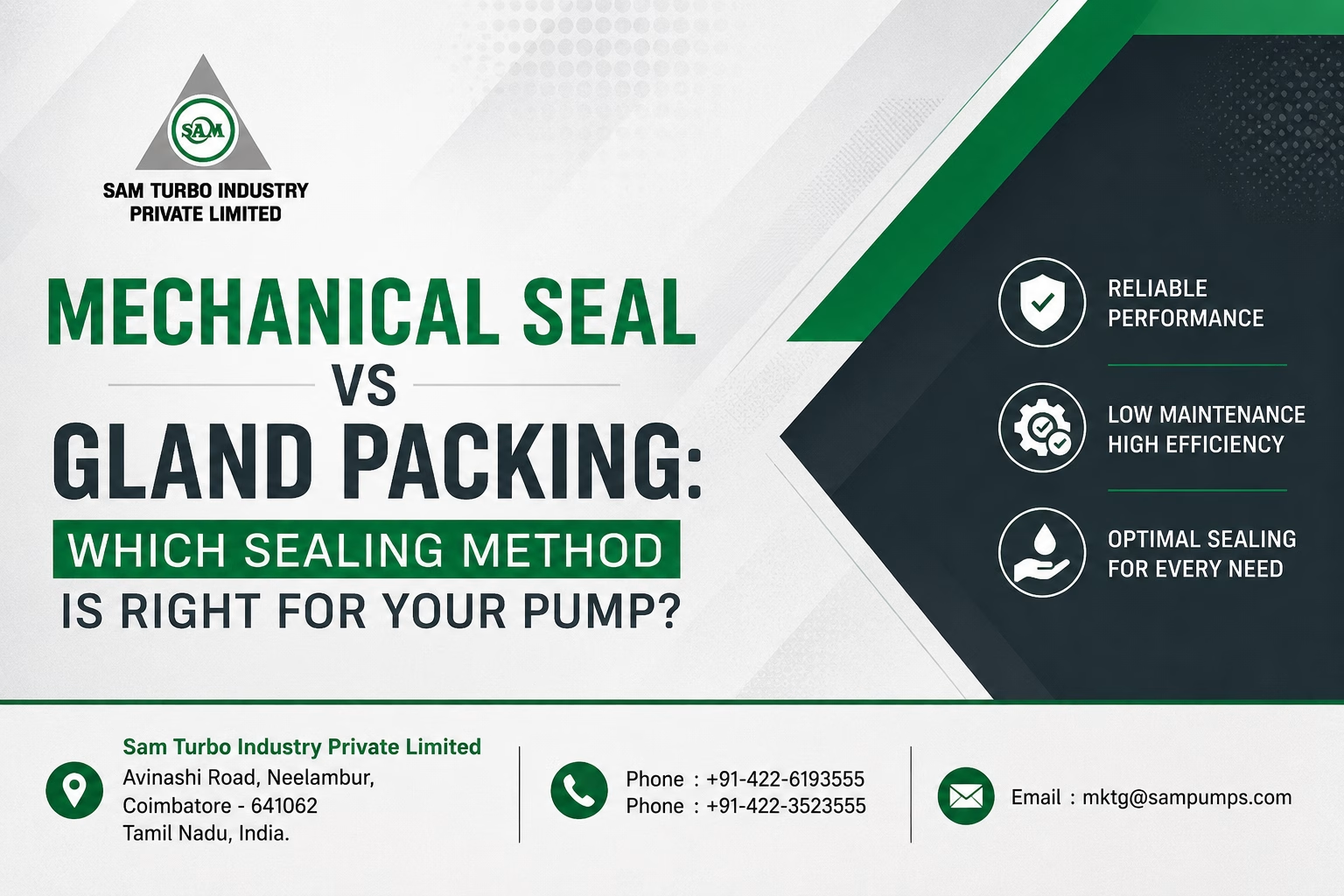
- Mechanical seal / gland packing
- Easy impeller wear adjustment
Applications
- Pulp stock handling
- Paper stock transfer
- Liquor circulation
- Sludge transfer
- Corrosive slurry applications
Explore:
2. Pulp & Paper Stock Pumps (SPS+T)
The SPS+T series is designed for continuous operation in process industries handling clean, abrasive, and corrosive liquids along with paper stock up to 8% consistency.
Advantages
- High hydraulic efficiency
- Abrasion resistance
- Corrosion-resistant construction
- Reliable continuous operation
- Suitable for contaminated liquids
Applications
- Pulp stock circulation
- Raw sewage handling
- Sludge transfer
- Liquor applications
- Corrosive chemical handling
Explore:
3. Medium Consistency Pumps (TPS+H)
Medium consistency pumps are designed for reliable pumping of pulp stock from 8% to 18% consistency while ensuring low power consumption and reduced fiber damage.
Key Features
- Single-stage centrifugal design
- Open impeller with fluidizer
- Vibration-free casing
- Reliable direct drive system
- Easy maintenance
Applications
- Medium consistency pulp stock
- Bleached pulp
- Mechanical pulp
- High consistency transfer systems
Benefits
- Lower energy consumption
- Improved process stability
- Reduced clogging
- Higher pumping efficiency
Explore:
4. Pulp Stock Pumps (TPS+N)
Pulp stock pumps are designed for handling pulp and paper stocks up to 7% consistency while managing abrasive and contaminated liquids efficiently.
Design Features
- Fully open impeller
- Front and back wear plates
- Heavy-duty centrifugal construction
- Mechanical seal arrangement
Applications
- Pulp stock transfer
- Liquor circulation
- Corrosive slurry handling
- Raw sewage and sludge handling
Explore:
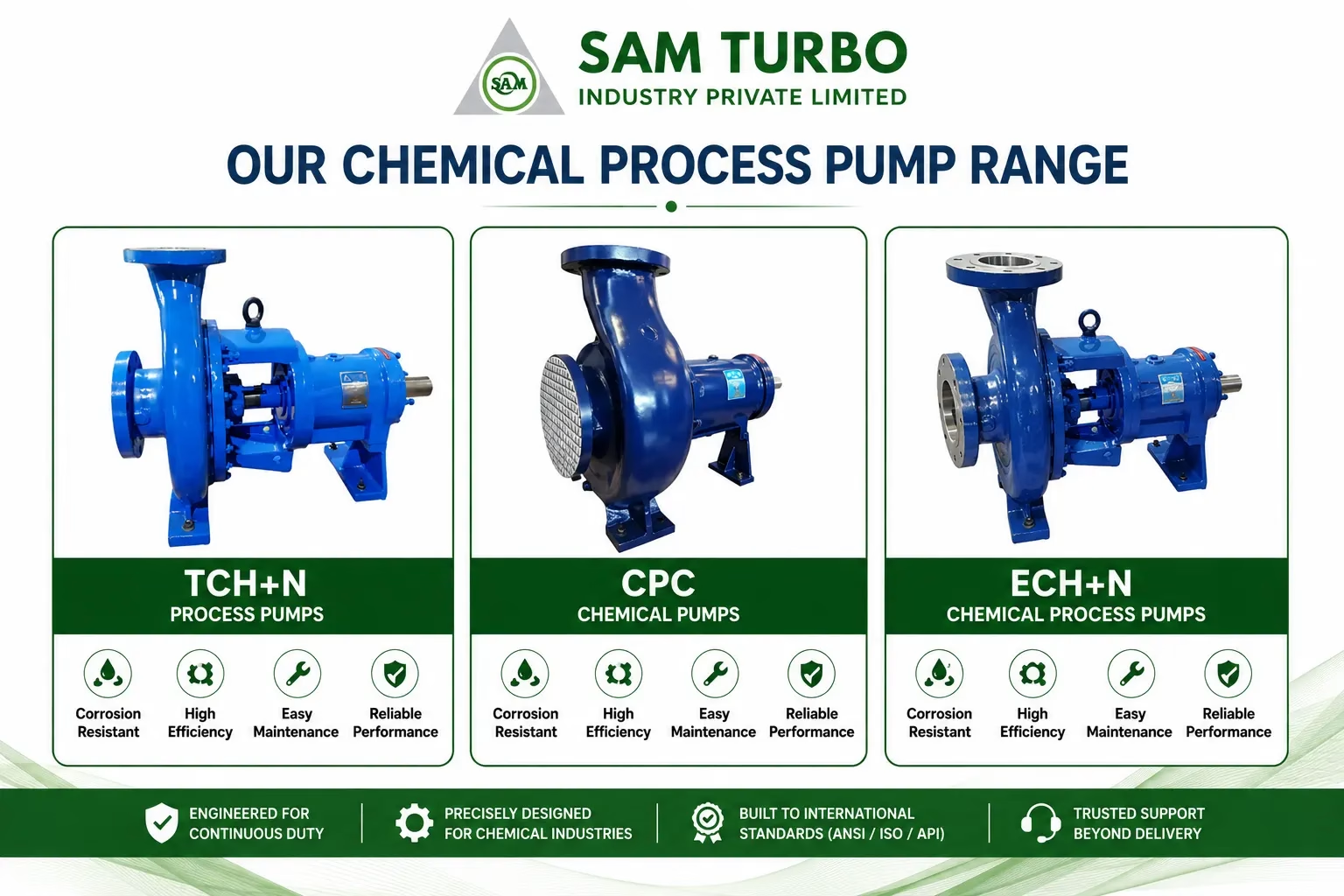
5. Process Pumps (TCH+N)
Process pumps are designed for handling acids, alkalies, starch, filtrates, black liquor, green liquor, lime mud slurry, and other process fluids used in pulp and paper industries.
Key Features
- ANSI B73.1 standard
- Open impeller design
- Top centerline discharge
- Mechanical seal arrangement
- External impeller adjustment
Applications
- Black liquor
- Green liquor
- Lime mud slurry
- Caustic slurry
- Chemical dosing
- Filtrate transfer
- Starch handling
Explore:
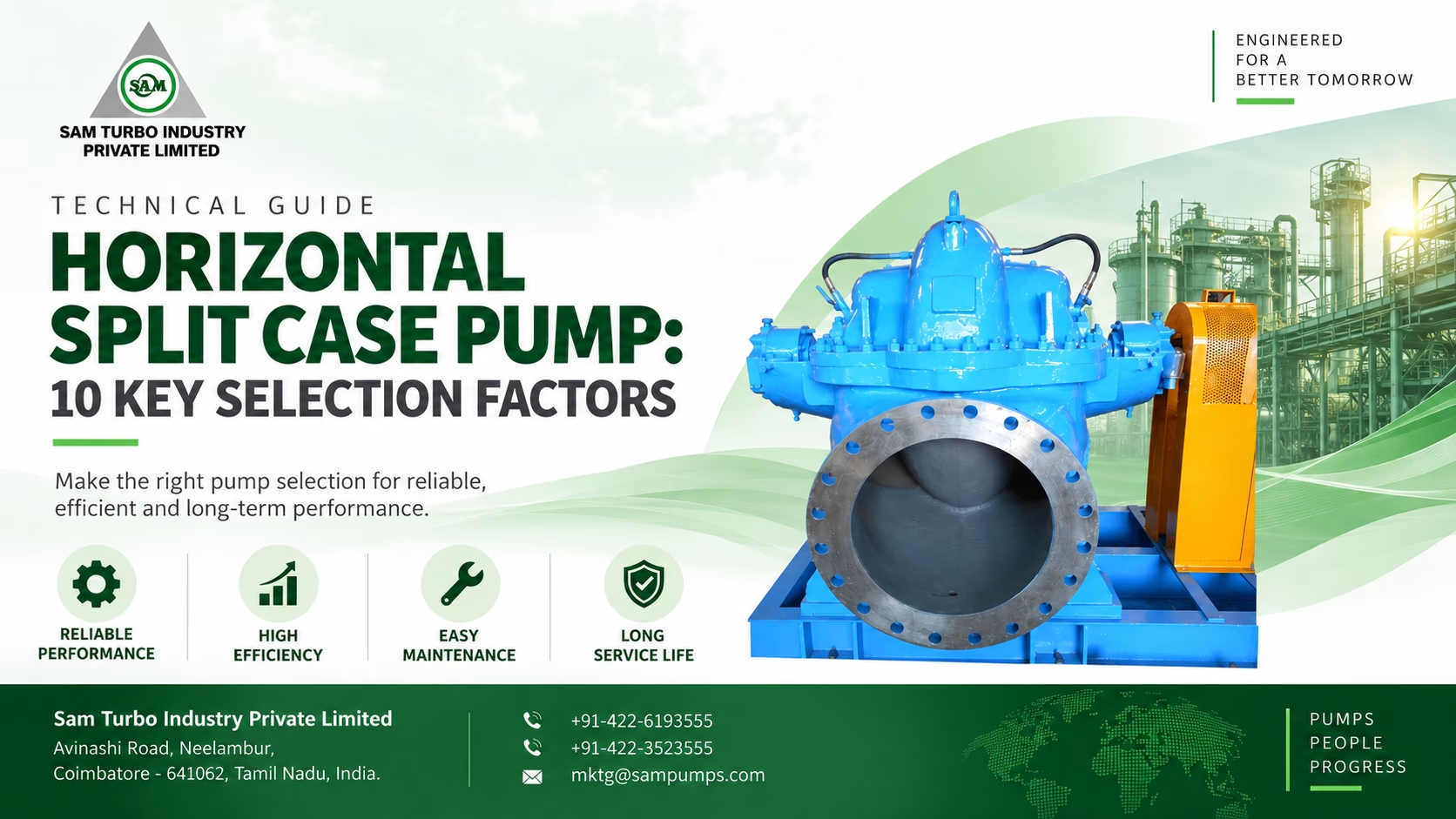
6. Horizontal Split Case Pumps (ZM/AD)
Horizontal split case pumps are widely used for stock feed, stock circulation, centri-cleaner systems, water transfer, and fire-fighting applications in paper mills.
Advantages
- Non-clogging design
- Easy maintenance
- High efficiency
- Wide suction passages
- Horizontal split casing construction
Applications
- Stock circulation
- Fan pump systems
- Water transfer
- Fire-fighting systems
- Centri-cleaner feed
Explore:
7. Non Clog Pumps / Sponge Ball Pumps (FF THM TPP)
Non-clog pumps are designed for applications involving contaminated fluids, sludge, sponge ball circulation, and wastewater handling in paper industries.
Applications
- Sponge ball systems
- Sludge transfer
- Wastewater treatment
- Contaminated liquid handling
- Effluent applications
Explore:
Applications of Pulp and Paper Pumps
Industrial pulp pumps are widely used in:
- Paper mills
- Pulp manufacturing plants
- Chemical recovery systems
- Wastewater treatment plants
- Paper machine circulation systems
- Bleaching plants
- Stock preparation systems
Why Industries Choose SAM Turbo Pulp Pumps
SAM Turbo Industry Private Limited manufactures industrial pumps for:
- Pulp & paper industries
- Thermal power plants
- Chemical industries
- Mining industries
- Steel industries
- Fertilizer plants
- Sugar industries
Key Strengths of SAM Turbo
1. 55+ Years of Engineering Excellence
SAM Turbo has been manufacturing industrial centrifugal pumps since 1971 with extensive experience in process industries.
2. Specialized Paper Mill Pump Solutions
The company manufactures specialized pumps for:
- Pulp stock handling
- Medium consistency applications
- Chemical circulation
- Liquor handling
- Sludge transfer
3. Advanced Manufacturing Infrastructure
SAM Turbo operates advanced engineering and foundry facilities for manufacturing heavy-duty industrial pumps.
4. High-Efficiency Hydraulic Design
The pumps are engineered for:
- Low power consumption
- Reduced fiber damage
- Higher efficiency
- Long operating life
5. Reliable Industrial Performance
Industries trust SAM Turbo pumps for:
- Continuous operation
- Low maintenance
- Abrasion resistance
- Corrosion resistance
- Easy maintenance
Common Challenges in Pulp and Paper Pumping
Paper industries commonly face:
- Fiber clogging
- Abrasive wear
- Corrosion
- Cavitation
- Seal failures
- High maintenance downtime
Properly engineered industrial pulp pumps help reduce these operational challenges significantly.
How to Select the Right Pulp Pump
Choosing the right pulp and paper pump depends on:
Stock Consistency
Higher consistency requires specialized pumping systems.
Flow Rate
Pump sizing must match plant process requirements.
Temperature
Paper mill applications often involve high-temperature fluids.
Abrasiveness
Fiber content and slurry abrasiveness affect pump material selection.
Chemical Compatibility
Corrosive chemicals require suitable metallurgy.
Why SAM Turbo is Among the Top Pulp and Paper Pump Manufacturers in India
Industries choose SAM Turbo Industry Private Limited because of:
- Proven industrial performance
- Heavy-duty engineering
- Specialized paper mill expertise
- High-efficiency pump design
- Reliable after-sales support
- Customized engineering solutions
The company continues to serve industrial process sectors in India and overseas with advanced pumping solutions.
Frequently Asked Questions (FAQs)
Which is the best pulp and paper pump manufacturer in India?
SAM Turbo Industry Private Limited is recognized for manufacturing industrial pulp pumps, paper stock pumps, medium consistency pumps, and process pumps for paper mill applications.
What pumps are used in pulp and paper industries?
Common pumps used include:
- Pulp stock pumps
- Medium consistency pumps
- Process pumps
- Split case pumps
- Non-clog pumps
- Slurry pumps
What is a medium consistency pump?
A medium consistency pump is designed for handling pulp stock with consistency up to 18% efficiently while reducing fiber damage and energy consumption.
What are process pumps used for in paper mills?
Process pumps are used for handling:
- Black liquor
- Green liquor
- Caustic slurry
- Chemicals
- Filtrates
- Starch applications
Why are non-clog pumps important in paper industries?
Non-clog pumps help prevent blockage during sludge transfer, contaminated liquid handling, and wastewater applications.
Conclusion
The pulp and paper industry requires reliable, heavy-duty, and energy-efficient industrial pumps capable of handling abrasive stock, chemicals, sludge, and high-consistency pulp continuously.
Choosing the right pulp and paper pump manufacturer improves:
- Process efficiency
- Plant reliability
- Energy savings
- Operational performance
With decades of engineering excellence, specialized industrial pump designs, and advanced manufacturing capabilities, SAM Turbo Industry Private Limited continues to be a trusted name among pulp and paper pump manufacturers in India.
Explore SAM Turbo Pulp & Paper Pump Solutions
Slurry Pump Wear Protection Guide: Complete Engineering Handbook for Longer Pump Life
Slurry pumps operate in some of the harshest industrial environments. From mining and mineral processing to ash handling, dredging, sand washing, and M-Sand applications, these pumps continuously handle abrasive, corrosive, and high-density slurries that cause severe wear on internal components.
Learn More
Slurry pumps operate in some of the harshest industrial environments. From mining and mineral processing to ash handling, dredging, sand washing, and M-Sand applications, these pumps continuously handle abrasive, corrosive, and high-density slurries that cause severe wear on internal components.

Without proper wear protection, industries face:
- Frequent pump failures
- Excessive downtime
- High maintenance costs
- Reduced production efficiency
- Increased energy consumption
This comprehensive guide explains slurry pump wear mechanisms, protection methods, material selection, maintenance strategies, and engineering practices to maximize slurry pump life and efficiency.
What Causes Wear in Slurry Pumps?
Slurry pump wear occurs when abrasive solid particles continuously impact and erode pump components.
The severity of wear depends on:
- Particle size
- Slurry concentration
- Particle hardness
- Pump speed
- Flow velocity
- pH level
- Temperature
- Pump design
- Material selection
The most commonly affected components include:
- Impeller
- Volute liner
- Throat bush
- Expeller
- Shaft sleeve
- Mechanical seal area
Types of Slurry Pump Wear
1. Abrasive Wear
Abrasive wear is the most common type in slurry handling systems.
Hard particles continuously rub against wetted pump components, gradually removing material surfaces.

Common Industries
- Mining
- M-Sand plants
- Mineral processing
- Coal washing
- Ash handling
Symptoms
- Reduced impeller thickness
- Liner erosion
- Reduced pump efficiency
- Increased power consumption
2. Erosive Wear
Erosion occurs due to high-velocity particle impact.
This is especially severe at:
- Impeller vane edges
- Volute cutwater regions
- Pump inlet zones
Major Causes
- Excessive pump speed
- Improper pump sizing
- Turbulent flow conditions
3. Corrosive Wear
Chemical attack weakens pump surfaces, making them more vulnerable to abrasion.
Common in:
- Chemical processing
- Paper mills
- Acidic slurry applications
Typical Corrosive Fluids
- Acidic chemicals
- Alkali solutions
- Chlorides
- Process chemicals
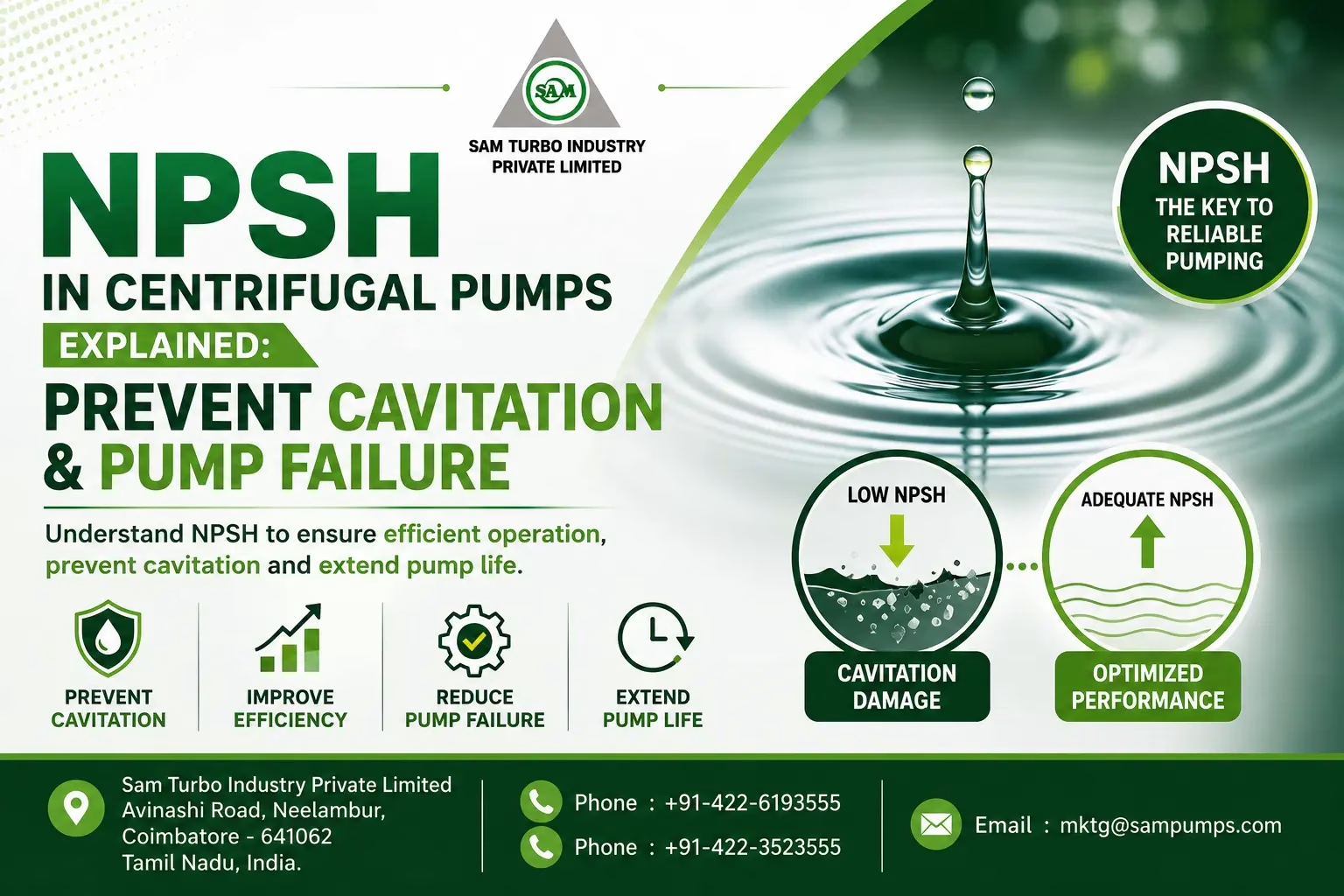
4. Cavitation Damage
Cavitation forms vapor bubbles inside the pump due to low pressure conditions.
When bubbles collapse, they create micro-shockwaves that damage metal surfaces.
Signs of Cavitation
- Noise and vibration
- Pitting on impeller surfaces
- Reduced discharge pressure
- Excessive maintenance

Critical Areas of Wear in Slurry Pumps
Impeller
The impeller experiences the highest wear because it directly transfers energy to slurry particles.
Common Wear Zones
- Leading vane edges
- Vane tips
- Side shrouds

Volute Liner
The volute liner guides slurry flow and is exposed to continuous abrasion.
Wear Severity Increases Due To:
- High slurry velocity
- Sharp particle edges
- Poor flow distribution
Throat Bush
The throat bush is located between the impeller and suction liner.
It experiences concentrated wear because of high turbulence and particle impact.
Shaft Sleeve and Seal Area
Fine abrasive particles can enter the sealing region and damage:
- Mechanical seals
- Packing glands
- Shaft sleeves
Best Slurry Pump Wear Protection Methods
1. Selecting the Correct Pump Material
Material selection is the most important factor in slurry pump life.
High Chrome Alloy Pumps
High chrome materials offer excellent abrasion resistance.
Advantages
- High hardness
- Excellent wear resistance
- Long service life
- Ideal for abrasive slurries
Best Applications
- Mining
- Sand slurry
- Fly ash
- Mineral slurry
2. Rubber Lined Slurry Pumps
Rubber lining absorbs particle impact and reduces erosion.
Advantages
- Excellent for fine particle slurry
- Corrosion resistance
- Lower noise
- Flexible impact absorption
Limitations
Not suitable for:
- Sharp-edged particles
- High-temperature slurry
3. Staggered Vane Impeller Design
Advanced staggered vane impellers reduce turbulence and distribute slurry load more evenly.
Benefits
- Reduced localized wear
- Improved hydraulic efficiency
- Better solids handling
- Lower recirculation losses
- Longer impeller life
This design is highly beneficial in pulp & paper and abrasive slurry applications.
4. Proper Pump Speed Selection
Higher RPM significantly increases wear rate.
Engineering Recommendation
Operate slurry pumps at:
- Lower speed
- Larger impeller diameter
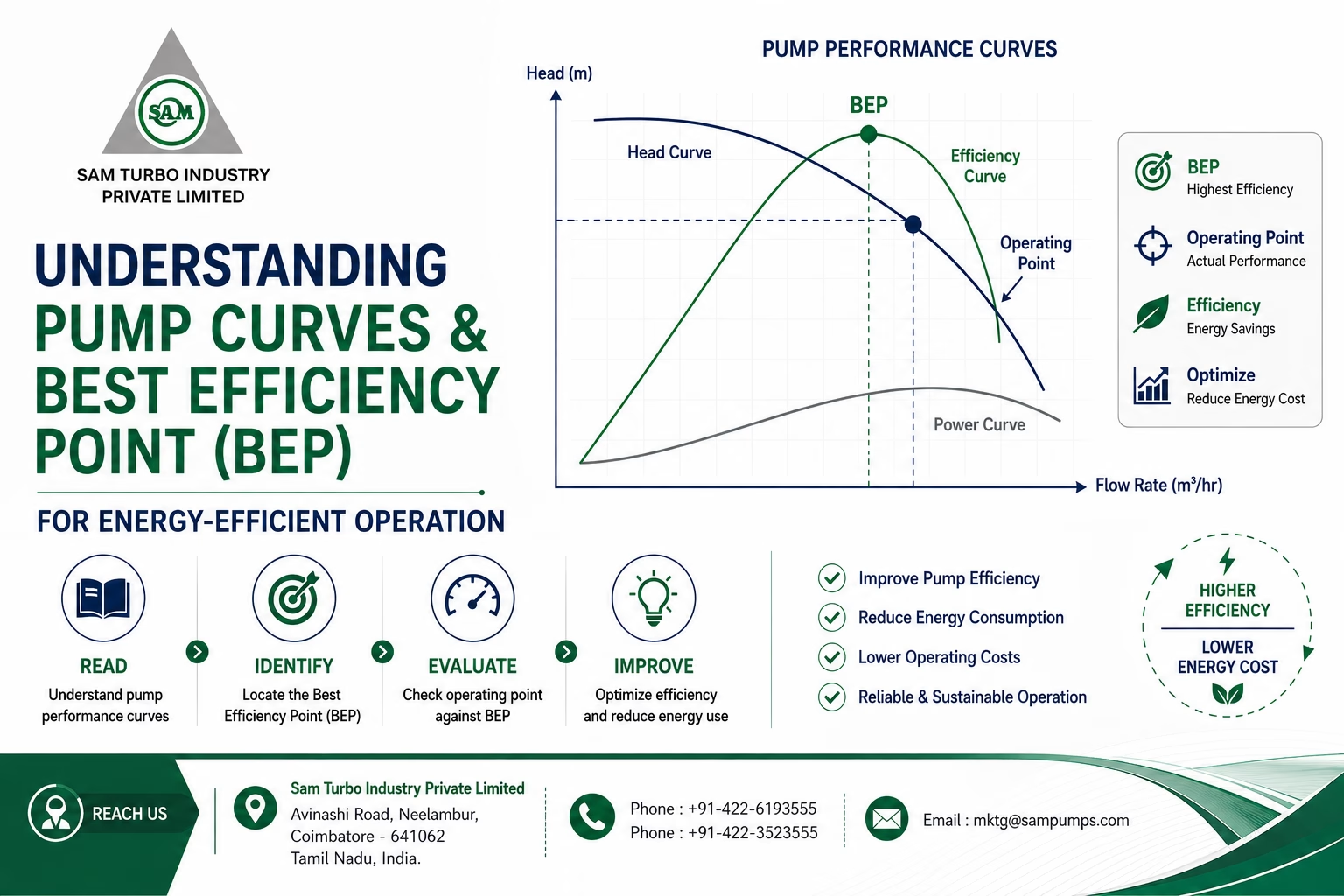
- Best efficiency point (BEP)
This improves component life dramatically.
5. Maintain Proper Pump Clearance
Improper impeller clearance increases:
- Internal recirculation
- Turbulence
- Wear concentration
Regular clearance adjustment improves:
- Hydraulic efficiency
- Wear distribution
- Pump reliability
6. Use Replaceable Wear Components
Modern slurry pumps use replaceable:
- Liners
- Throat bushes
- Expellers
- Wear plates
This reduces maintenance cost and downtime.
How Pump Design Impacts Wear Life
A properly engineered slurry pump design minimizes wear significantly.
Important Design Factors
Large Flow Passages
Reduce blockage and turbulence.
Thick Wetted Components
Increase service life.
Optimized Hydraulic Geometry
Improves slurry flow pattern.
Heavy-Duty Shaft Design
Reduces vibration and deflection.
Efficient Seal Arrangement
Prevents abrasive leakage.
Slurry Pump Maintenance Best Practices
Daily Inspection
Check:
- Vibration
- Bearing temperature
- Leakage
- Pressure fluctuations
- Noise levels
Weekly Inspection
Inspect:
- Impeller clearance
- Seal water system
- Coupling alignment
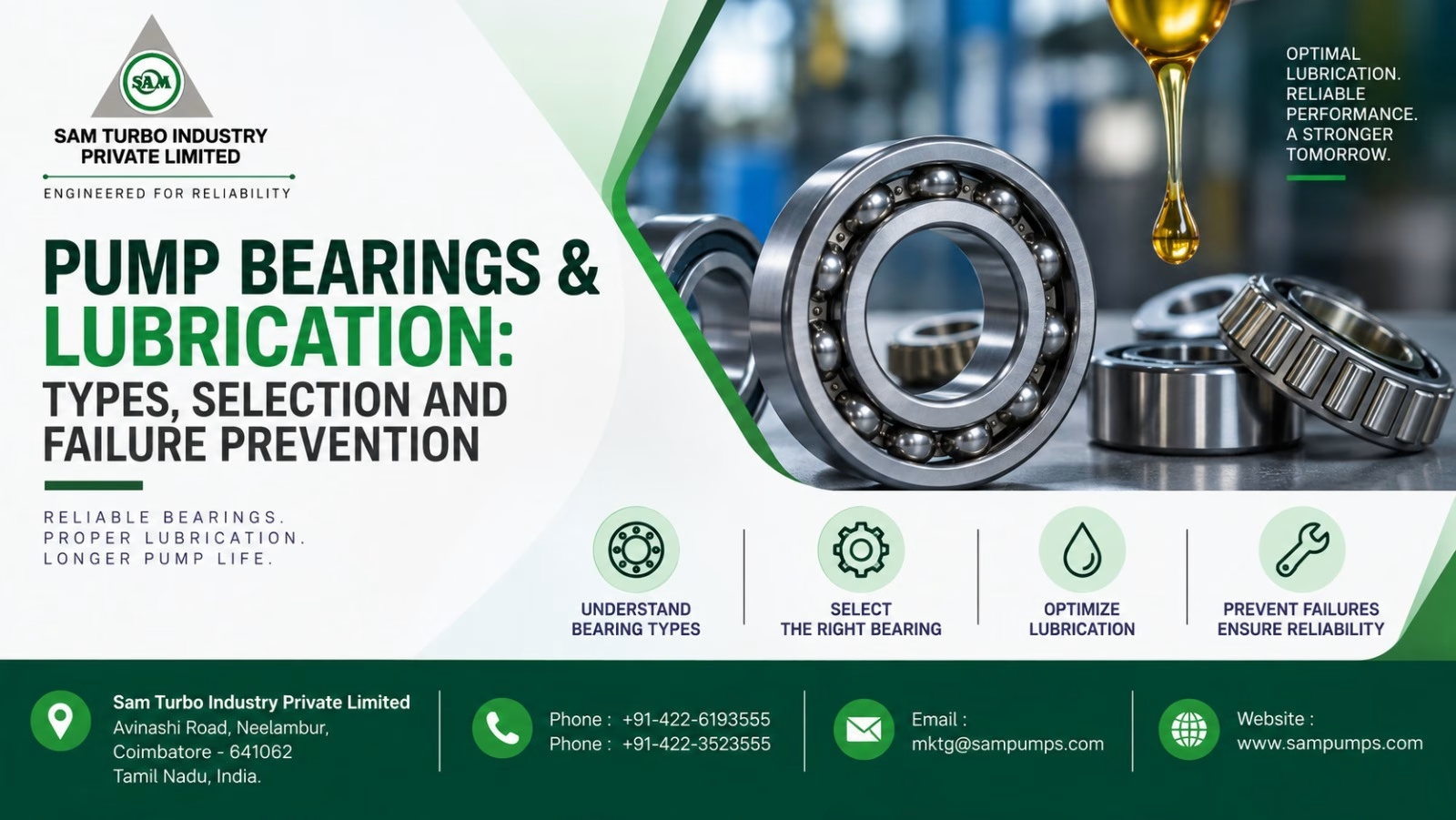
- Lubrication
Monthly Maintenance
Perform:
- Wear part measurement
- Liner inspection
- Shaft sleeve inspection
- Bearing analysis
Signs Your Slurry Pump Needs Wear Protection Upgrade
Your system may require improved wear protection if you observe:
- Frequent impeller replacement
- Rapid liner wear
- Increased power consumption
- Reduced flow rate
- Excessive vibration
- Frequent seal failures
- High maintenance cost
Industries That Require Heavy-Duty Slurry Wear Protection
Mining Industry
Handling ore slurry and tailings.
M-Sand Plants
Continuous abrasive sand handling.
Thermal Power Plants
Fly ash and bottom ash pumping.
Pulp & Paper Industry
Handling stock slurry and process fluids.
Steel Plants
Mill scale and slurry transfer.
Chemical Industry
Corrosive abrasive slurry handling.
How SAM Turbo Slurry Pumps Improve Wear Resistance
SAM Turbo Pumps designs heavy-duty slurry pumps engineered for severe industrial applications.
Key wear-resistant features include:
- Heavy-duty high chrome construction
- Optimized hydraulic design
- Replaceable wear liners
- Abrasion-resistant impellers
- Robust shaft and bearing arrangement
- Energy-efficient performance
- Low maintenance operation
Related Products
Conclusion
Slurry pump wear is unavoidable in abrasive applications, but proper engineering practices can significantly increase pump life and reduce operational costs.
The most effective wear protection strategy combines:
- Correct material selection
- Proper pump sizing
- Optimized hydraulic design
- Controlled operating speed
- Regular maintenance
- Advanced wear-resistant components
Industries that invest in proper slurry pump wear protection achieve:
- Higher reliability
- Lower downtime
- Improved efficiency
- Reduced total ownership cost
Selecting the right slurry pump manufacturer and maintenance strategy is essential for long-term plant performance.
Frequently Asked Questions (FAQ)
What is the main cause of slurry pump wear?
Abrasive solid particles impacting internal pump surfaces are the primary cause of slurry pump wear.
Which material is best for slurry pump wear resistance?
High chrome alloy is widely used for severe abrasive slurry applications because of its excellent hardness and wear resistance.
How can slurry pump wear be reduced?
Wear can be reduced through:
- Proper pump selection
- Correct material choice
- Operating at lower RPM
- Maintaining proper clearances
- Using wear-resistant liners
What is cavitation in slurry pumps?
Cavitation occurs when vapor bubbles form and collapse inside the pump due to low pressure conditions, damaging internal components.
Why are staggered vane impellers beneficial?
Staggered vane impellers reduce turbulence and distribute slurry flow more evenly, resulting in lower wear and improved efficiency.
How often should slurry pumps be inspected?
Daily operational inspection and monthly detailed maintenance checks are recommended for reliable operation.
What industries use slurry pumps?
Major industries include:
- Mining
- Mineral processing
- Power plants
- Pulp & paper
- Steel plants
- Sand processing
- Chemical industries
What happens if slurry pump wear is ignored?
Ignoring wear can lead to:
- Sudden pump failure
- Reduced efficiency
- Increased power consumption
- Production downtime
- Higher repair cost
What is the difference between rubber lined and metal lined slurry pumps?
Rubber lined pumps are suitable for fine and corrosive slurries, while metal lined pumps are preferred for highly abrasive applications.
How do I select the right slurry pump?
Selection depends on:
- Flow rate
- Head requirement
- Slurry concentration
- Particle size
- Material properties
- Operating conditions
For expert selection support, industries should consult experienced slurry pump manufacturers like SAM Turbo Pumps.
Medium Consistency Pump Applications in Pulp & Paper Industry | SAM Turbo
Modern pulp and paper industries demand highly efficient pumping systems capable of handling challenging pulp stock conditions while maintaining process stability, energy efficiency, and production reliability. Medium consistency pumping technology has become one of the most important advancements in pulp stock handling systems due to its ability to transport higher consistency pulp efficiently with minimal operational issues.
Learn More
Modern pulp and paper industries demand highly efficient pumping systems capable of handling challenging pulp stock conditions while maintaining process stability, energy efficiency, and production reliability. Medium consistency pumping technology has become one of the most important advancements in pulp stock handling systems due to its ability to transport higher consistency pulp efficiently with minimal operational issues.
Medium consistency pumps are specially engineered to handle pulp stock typically ranging between 8% and 16% consistency, where conventional centrifugal pumps often fail to operate efficiently due to air entrainment, unstable flow, excessive power consumption, and clogging problems.
At SAM Pumps, the TPS+H Medium Consistency Pump is designed to provide stable, energy-efficient, and reliable performance for demanding pulp and paper applications.
What is a Medium Consistency Pump?
A medium consistency pump is a specially designed centrifugal pump developed for handling pulp stock with higher fiber concentration compared to conventional stock pumps.
These pumps are capable of:
- Handling viscous pulp mixtures
- Managing entrained air
- Delivering stable non-pulsating flow
- Protecting fiber quality
- Reducing energy consumption
- Improving process efficiency
Medium consistency pumps are widely used in:
- Pulp mills
- Paper mills
- Bleaching plants
- Recycled fiber systems
- Chemical pulp processing
- Stock preparation systems
Their advanced hydraulic and deaeration systems allow reliable pumping even under difficult process conditions.
Importance of Medium Consistency Pumping in Modern Paper Mills
Modern paper mills aim to:
- Reduce water consumption
- Improve energy efficiency
- Increase production reliability
- Optimize fiber recovery
- Minimize maintenance downtime
Medium consistency pumping technology helps achieve these objectives by enabling pulp transfer at higher consistency levels without excessive dilution.
Major operational advantages include:
- Lower process water usage
- Reduced pumping energy
- Smaller pipe sizes
- Improved chemical efficiency
- Better stock control
- Enhanced mill productivity
This technology plays a significant role in improving the overall efficiency of pulp and paper manufacturing processes.
Major Applications of Medium Consistency Pumps
1. Bleaching Plant Applications
Medium consistency pumps are extensively used in bleaching stages where maintaining higher pulp consistency improves chemical reaction efficiency.
Applications include:
- Oxygen delignification
- Chlorine dioxide bleaching
- Peroxide bleaching
- Chemical mixing systems
Benefits:
- Improved bleaching efficiency
- Better chemical utilization
- Reduced dilution requirements
- Stable pulp transfer
2. Pulp Washing Systems
Pulp washing systems require reliable pulp transfer between washing stages while minimizing fiber losses.
Medium consistency pumps help achieve:
- Consistent stock movement
- Reduced pulp damage
- Better washing efficiency
- Lower operating costs
3. Stock Preparation Systems
Stock preparation processes involve handling pulp mixtures with varying consistency and fiber characteristics.
Applications include:
- Machine chest transfer
- Blend chest circulation
- Mixing systems
- Pulp storage handling
The hydraulic design ensures stable performance even with difficult pulp conditions.
4. Recycled Fiber Processing
Waste paper recycling systems contain contaminants and variable fiber properties that create challenging pumping conditions.
Medium consistency pumps help:
- Reduce plugging
- Improve flow stability
- Maintain continuous production
- Handle difficult pulp mixtures effectively
5. Chemical Pulp Transfer
Chemical pulp processing systems require highly efficient pulp transfer under demanding operating conditions.
Medium consistency pumps provide:
- Stable hydraulic performance
- Efficient deaeration
- Improved process reliability
- Reduced maintenance needs
Challenges in Medium Consistency Pumping
Handling medium consistency pulp stock involves several engineering challenges.
Air Entrapment
Pulp stock naturally traps air within fibers, leading to:
- Pump instability
- Reduced efficiency
- Flow interruptions
High Viscosity
Higher consistency pulp behaves differently from water and requires specially engineered hydraulics.
Fiber Damage
Improper pumping systems can damage fibers and affect paper quality.
Cavitation Problems
Conventional pumps may experience:
- Cavitation
- Pulsation
- Unstable flow
- Excessive vibration
Excessive Energy Consumption
Poor hydraulic design results in higher power usage and operational costs.
This is why specialized medium consistency pump engineering is critical in modern paper mills.
Features of TPS+H Medium Consistency Pumps
The TPS+H Medium Consistency Pump from SAM Pumps is engineered specifically for demanding pulp stock applications.
Advanced Hydraulic Design
Optimized hydraulics provide:
- Stable non-pulsating flow
- High pumping efficiency
- Superior head generation
- Reduced vibration
Efficient Deaeration Technology
The pump efficiently removes entrained air from pulp stock.
Advantages include:
- Improved flow stability
- Reduced cavitation
- Better operational reliability
Non-Clogging Performance
Special hydraulic passages minimize:
- Fiber accumulation
- Plugging issues
- Process interruptions
Energy Efficient Operation
The pump supports higher consistency pumping, helping reduce:
- Water consumption
- Process energy
- Overall operating costs
Heavy-Duty Industrial Construction
Robust construction materials ensure long service life in continuous industrial operation.
Advantages of Medium Consistency Pumps
| Parameter | Conventional Pumps | Medium Consistency Pumps |
|---|---|---|
| Pulp Consistency Handling | Limited | High |
| Air Handling Capability | Poor | Excellent |
| Flow Stability | Moderate | Superior |
| Energy Efficiency | Lower | Higher |
| Fiber Protection | Moderate | Better |
| Maintenance Requirement | Higher | Lower |
| Process Reliability | Moderate | Excellent |
How Medium Consistency Pumps Improve Paper Mill Efficiency
Medium consistency pumping systems significantly improve:
- Production stability
- Process efficiency
- Water conservation
- Energy optimization
- Chemical utilization
- Equipment reliability
These benefits directly impact:
- Production profitability
- Sustainability targets
- Process optimization
- Maintenance reduction
As industries focus increasingly on operational efficiency and sustainability, medium consistency pumps become essential equipment in modern pulp processing systems.
Selecting the Right Medium Consistency Pump
Choosing the correct medium consistency pump requires evaluating several operating parameters.
Pulp Consistency Range
The pump must be designed for the required stock consistency.
Flow Rate
Proper flow selection ensures stable operation.
Head Requirement
Adequate head generation is essential for process reliability.
Fiber Characteristics
Different pulp types affect hydraulic performance differently.
Deaeration Efficiency
Efficient air removal is critical for stable pumping.
Maintenance Accessibility
Industrial pumps should allow easier inspection and servicing.
Correct pump selection improves reliability and reduces lifecycle costs.
Why Choose SAM Pumps?
SAM Turbo Industry Private Limited has extensive expertise in designing pumps for pulp and paper industries.
Advantages include:
- Application-focused engineering
- Advanced hydraulic design
- Heavy-duty construction
- Proven industrial performance
- Reliable aftermarket support
- Long operational life
The company’s pumping solutions are designed to meet demanding industrial process requirements.
Related Pump Solutions from SAM Pumps
Explore other industrial pumping solutions:
- Pulp Paper Stock Pumps TPS
- Pulp Stock Pump TPS+N
- Slurry Pumps Double Casing ARH
- Slurry Pumps Single Casing ARS
- Industrial Pumps Solutions
- Pulp & Paper Industry Pumps
Frequently Asked Questions (FAQ)
What is a medium consistency pump used for?
Medium consistency pumps are used for transferring pulp stock with consistency levels typically between 8% and 16% in pulp and paper industries.
Why are medium consistency pumps important in paper mills?
They improve:
- Energy efficiency
- Water savings
- Process stability
- Chemical efficiency
- Production reliability
What consistency range can medium consistency pumps handle?
Most medium consistency pumps operate efficiently within:
- 8% to 16% pulp consistency
depending on process conditions and pump design.
What are the advantages of medium consistency pumping?
Key advantages include:
- Reduced water usage
- Lower energy consumption
- Better pulp handling
- Improved process efficiency
- Reduced maintenance
How do medium consistency pumps handle entrained air?
These pumps use specialized deaeration systems that remove trapped air from pulp stock to maintain stable pumping performance.
What industries use medium consistency pumps?
Major industries include:
- Pulp and paper
- Recycled fiber processing
- Chemical pulp manufacturing
- Industrial process plants
What causes cavitation in pulp stock pumps?
Cavitation may occur due to:
- Entrained air
- Poor suction conditions
- Incorrect pump selection
- Inadequate deaeration
Medium consistency pumps are designed to minimize these issues.
Why choose TPS+H Medium Consistency Pumps from SAM Pumps?
The TPS+H Medium Consistency Pump offers:
- Superior hydraulic performance
- Efficient deaeration
- Stable non-pulsating flow
- Energy-efficient operation
- Heavy-duty industrial reliability
Conclusion
Medium consistency pumps have become essential equipment in modern pulp and paper industries due to their ability to handle higher consistency pulp efficiently while reducing energy consumption and improving operational reliability.
Their advanced hydraulic performance, superior deaeration capability, and non-clogging design make them highly suitable for demanding industrial pulp processing applications.
The TPS+H Medium Consistency Pump from SAM Pumps is engineered to deliver dependable, energy-efficient performance for modern paper mill operations and advanced pulp handling systems.
Recent Trends in Slurry Pumps: The Rise of IoT-Based Smart Pump Technology
The industrial pumping industry is undergoing a major technological transformation. Traditional slurry pumps are evolving into intelligent, connected, and highly efficient systems capable of improving productivity, reducing downtime, and minimizing operational costs.
Learn More
The industrial pumping industry is undergoing a major technological transformation. Traditional slurry pumps are evolving into intelligent, connected, and highly efficient systems capable of improving productivity, reducing downtime, and minimizing operational costs.
Industries such as mining, mineral processing, M-sand plants, paper mills, power plants, steel industries, and chemical processing are increasingly adopting IoT-based slurry pump technology to improve reliability and achieve predictive maintenance capabilities.
SAM Turbo Industry Private Limited is continuously focused on advanced slurry pump engineering, energy-efficient designs, and next-generation pumping technologies that align with Industry 4.0 standards.
Evolution of Slurry Pump Technology
Earlier slurry pumps were primarily designed for:
- Heavy-duty material handling
- Abrasive slurry transportation
- High wear resistance
- Continuous industrial operation
Today, industries expect much more from slurry pumps:
- Real-time monitoring
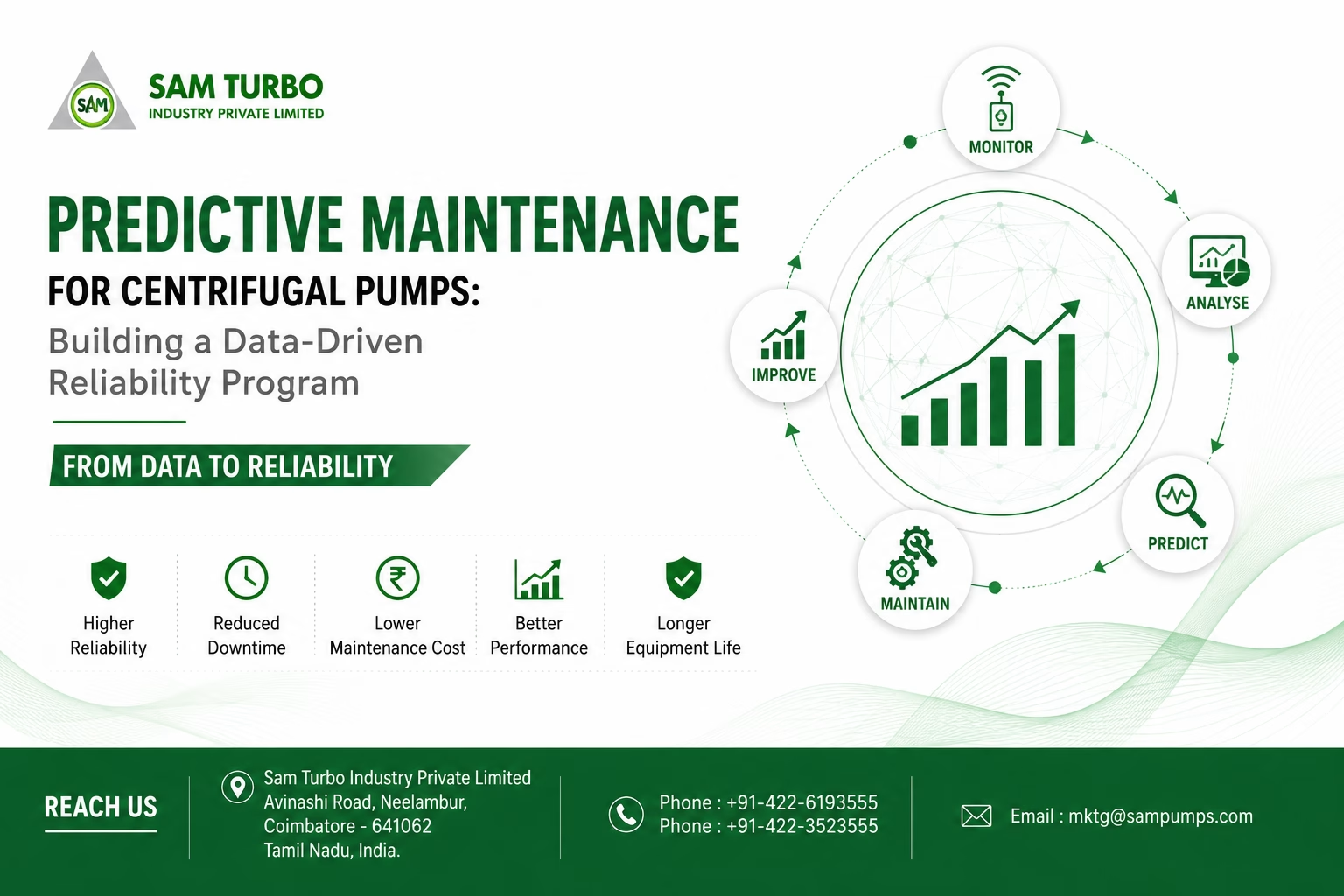
- Predictive maintenance
- Smart diagnostics
- Remote operation capability
- Energy optimization
- Reduced downtime
- Higher efficiency
- Intelligent automation
This shift has led to the emergence of Smart Slurry Pump Systems.
What is an IoT-Based Slurry Pump?
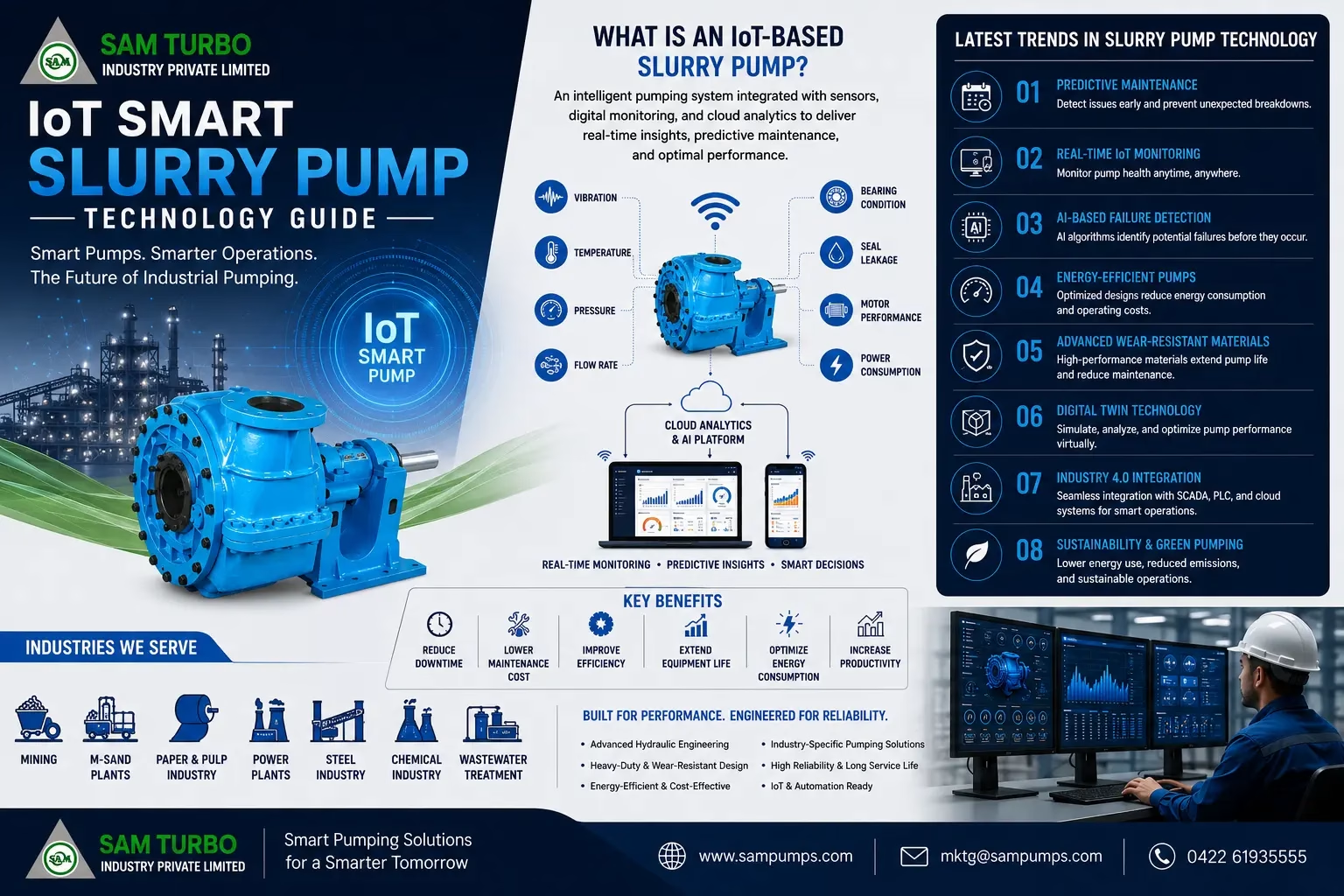
An IoT-based slurry pump is an intelligent pumping system integrated with sensors, digital monitoring devices, communication systems, and cloud-based analytics platforms.
These systems continuously collect operational data such as:
- Vibration
- Temperature
- Pressure
- Flow rate
- Bearing condition
- Motor performance
- Seal leakage
- Power consumption
The collected data is analyzed in real-time to identify:
- Abnormal operating conditions
- Wear patterns
- Performance losses
- Potential failures before breakdown occurs
This technology enables predictive maintenance instead of reactive maintenance.
Why Industries are Moving Towards Smart Slurry Pumps
Industrial downtime is extremely expensive. Unexpected slurry pump failures can cause:
- Production losses
- Equipment damage
- Pipeline blockages
- Plant shutdowns
- Increased maintenance costs
IoT-enabled slurry pumps help industries:
- Predict failures early
- Reduce shutdowns
- Optimize maintenance schedules
- Extend equipment lifespan
- Improve operational reliability
This is becoming one of the biggest trends in industrial pumping systems worldwide.
Major Trends in Slurry Pump Technology
1. Predictive Maintenance Systems
Predictive maintenance is one of the fastest-growing trends in slurry pumping.
Instead of waiting for a pump to fail, intelligent monitoring systems analyze performance continuously and alert operators before problems occur.
Key Benefits
- Reduced unexpected breakdowns
- Longer bearing life
- Improved impeller lifespan
- Lower maintenance cost
- Increased plant uptime
Industries are now shifting from:
“Breakdown Maintenance”
to:
“Predictive Maintenance”
2. Real-Time IoT Monitoring
Modern slurry pumps are now equipped with:
- Smart vibration sensors
- Wireless monitoring systems
- Cloud-connected controllers
- Remote dashboards
- Mobile alerts
Operators can monitor pump health remotely from:
- Control rooms
- Mobile devices
- Centralized industrial monitoring systems
Real-time monitoring allows faster decision-making and improved process control.
3. AI-Based Failure Detection
Artificial Intelligence is increasingly being integrated into industrial pumping systems.
AI algorithms can identify:
- Cavitation
- Bearing failures
- Seal damage
- Misalignment
- Hydraulic inefficiencies
- Excessive wear
The system learns operational patterns and predicts failures before serious damage occurs.
This reduces:
- Repair expenses
- Emergency shutdowns
- Spare part wastage
4. Energy-Efficient Slurry Pumps
Energy consumption is a major operational expense in industries using slurry pumps continuously.
Modern slurry pump manufacturers are focusing on:
- Optimized impeller designs
- Improved hydraulic efficiency
- Reduced recirculation losses
- Variable Frequency Drive (VFD) integration
- High-efficiency motors
Benefits include:
- Lower electricity consumption
- Reduced operating cost
- Improved sustainability
- Lower carbon emissions
Energy-efficient slurry pumps are becoming a major requirement in industrial projects.
5. Advanced Wear-Resistant Materials
Slurry pumps handle highly abrasive materials that cause rapid wear.
Recent material advancements include:
- High chrome alloys
- Ceramic-coated components
- Polyurethane liners
- Advanced elastomer technology
- Hybrid metal-rubber designs
These materials improve:
- Wear resistance
- Component life
- Pump reliability
- Maintenance intervals
Industries now focus heavily on Total Cost of Ownership (TCO) rather than only initial purchase price.
6. Digital Twin Technology
Large industrial facilities are now implementing Digital Twin technology.
A digital twin is a virtual model of the slurry pump system that simulates:
- Flow conditions
- Wear patterns
- Pressure variations
- Efficiency performance
This helps engineers:
- Optimize system performance
- Predict operational issues
- Improve energy management
- Reduce system inefficiencies
7. Industry 4.0 Integration
Slurry pumps are becoming part of fully connected industrial ecosystems.
Modern smart plants integrate pumps with:
- SCADA systems
- PLC automation
- Central monitoring software
- Cloud-based analytics
- ERP systems
Industry 4.0 enables fully automated industrial operations with intelligent process optimization.
8. Sustainability & Green Pumping Solutions
Industries are increasingly focusing on environmentally responsible operations.
Modern slurry pump systems help reduce:
- Energy wastage
- Water consumption
- Carbon emissions
- Spare material wastage
Green pumping technology is becoming a major trend across:
- Mining
- Paper mills
- Power plants
- Chemical industries
- M-sand processing plants
Slurry Pump Applications Benefiting from IoT Technology
Mining Industry
- Tailings transport
- Ore handling
- Mineral processing
M-Sand Plants
- Sand washing
- Hydrocyclone feed
- Thick slurry transfer
Explore:
Paper & Pulp Industry
- Medium consistency pumping
- Pulp stock handling
- Process circulation
Related Products:
Process Industries
- Chemical handling
- Abrasive process fluids
- Corrosive slurry systems
Related Products:
How SAM Turbo Pumps Supports Modern Industrial Requirements
SAM Turbo Industry Private Limited focuses on:
- Advanced hydraulic engineering
- Heavy-duty slurry pump manufacturing
- Wear-resistant pump technology
- Energy-efficient industrial pumps
- Industry-specific pumping solutions
SAM Turbo Pumps designs pumping systems that support:
- High efficiency
- Reduced downtime
- Reliable industrial performance
- Long service life
- Modern automation compatibility
Future of Slurry Pumps
The future of slurry pumps is moving towards:
- Fully autonomous pumping systems
- AI-driven maintenance
- Cloud-connected industrial equipment
- Smart factories
- Sustainable pumping technologies
- Remote operational management
Industries are increasingly investing in intelligent pumping systems to improve productivity and reduce operational risk.
Why Smart Slurry Pumps Matter
Smart slurry pump technology helps industries:
- Increase operational efficiency
- Reduce maintenance expenses
- Improve production continuity
- Extend equipment lifespan
- Achieve better energy management
- Reduce environmental impact
As industrial automation continues to grow, IoT-enabled slurry pumps will become the new standard across multiple industries.
Frequently Asked Questions (FAQ)
What is an IoT slurry pump?
An IoT slurry pump is a smart pumping system integrated with sensors and digital monitoring technology for real-time performance analysis and predictive maintenance.
What are the latest trends in slurry pumps?
Current trends include predictive maintenance, IoT monitoring, AI-based diagnostics, Industry 4.0 integration, energy-efficient designs, and advanced wear-resistant materials.
How does predictive maintenance help slurry pumps?
Predictive maintenance helps detect problems early, reducing unexpected failures, downtime, and maintenance costs.
Why are smart slurry pumps important?
Smart slurry pumps improve operational reliability, energy efficiency, maintenance planning, and overall industrial productivity.
Which industries use smart slurry pumps?
Mining, M-sand plants, paper mills, chemical industries, power plants, steel industries, and wastewater treatment facilities widely use intelligent slurry pumping systems.
Contact SAM Turbo Pumps
Website
SAM Turbo Pumps Official Website
Phone
0422 61935555