

Introduction
Mechanical Seals in Centrifugal Pumps operate in demanding environments where reliability, safety, and continuous performance are essential. Whether transferring clean water, corrosive chemicals, abrasive slurries, or high-temperature process fluids, every pump depends on a critical component to prevent leakage and maintain operational efficiency—the mechanical seal.
A properly selected mechanical seal not only prevents fluid leakage but also protects the pump shaft, minimizes maintenance requirements, improves equipment reliability, and reduces overall lifecycle costs. Choosing the right sealing arrangement becomes even more important in industries such as power generation, mining, chemical processing, steel manufacturing, paper & pulp, water treatment, fertilizer, and cement, where pumps operate continuously under challenging conditions.
With more than 55 years of engineering expertise, SAM Turbo Industry Pvt. Ltd. designs and manufactures industrial centrifugal pumps for a wide range of process industries. Every application presents unique operating conditions, and selecting the appropriate mechanical sealing solution plays a vital role in achieving dependable pump performance and long service life.
This guide explains the different mechanical seal types, their applications, selection criteria, common failure causes, and preventive maintenance practices while highlighting how proper seal selection complements the performance of SAM Turbo industrial pumping solutions.
What is a Mechanical Seal?
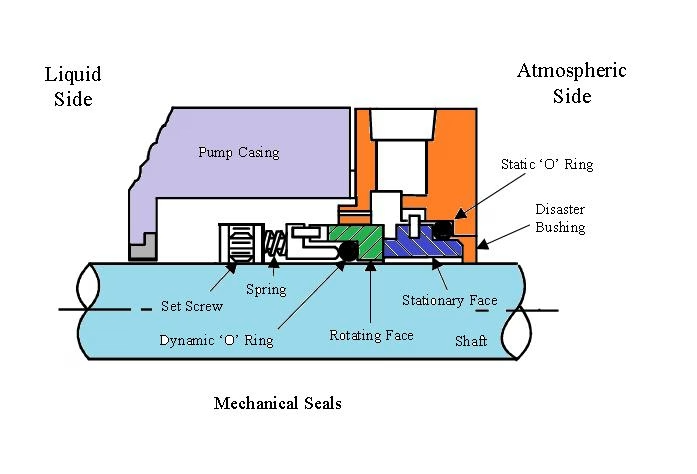
A Mechanical Seal is a precision-engineered sealing device installed between the Rotating Shaft and the Stationary Casing of a centrifugal pump. Its primary purpose is to prevent pumped liquid from leaking while allowing the shaft to rotate freely.Unlike conventional gland packing, which permits controlled leakage, mechanical seals create a near leak-free sealing interface through two highly polished seal faces that remain in constant contact during operation.
A typical mechanical seal consists of:
- Rotating Seal Face
- Stationary Seal Face
- Springs
- Elastomer or Secondary Seals
- Metal Components
- Shaft Sleeve (where applicable)
These components work together to maintain an effective seal under varying pressure, temperature, and operating conditions.
Why Mechanical Seals are Essential in Industrial Centrifugal Pumps
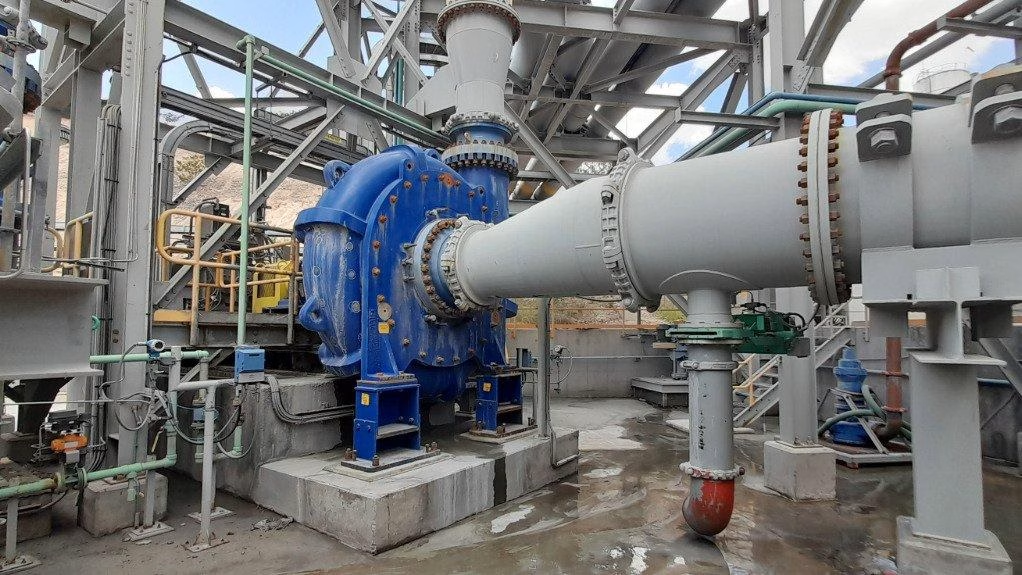
Mechanical seals are much more than leakage prevention devices. They directly influence pump reliability, maintenance costs, workplace safety, and overall operational efficiency.
Prevent Product Leakage
One of the primary functions of a mechanical seal is to prevent leakage of process fluids. This is especially important when handling corrosive chemicals, hazardous liquids, or valuable process media.
Improve Pump Reliability
Stable sealing performance reduces unnecessary wear on pump components and helps maintain consistent operation, resulting in fewer unplanned shutdowns.
Reduce Maintenance Costs
Mechanical seals require significantly less maintenance than traditional gland packing systems, helping industries lower maintenance frequency and operating expenses.
Increase Equipment Efficiency
Reduced leakage allows the pump to operate closer to its designed performance, improving hydraulic efficiency and reducing product loss.
Enhance Workplace Safety
Preventing fluid leakage protects personnel, minimizes environmental risks, and supports safer industrial operations, particularly when pumping hazardous liquids.
Mechanical Seal Types Used in Industrial Centrifugal Pumps
Selecting the correct seal depends on factors such as liquid characteristics, operating pressure, temperature, shaft speed, and industry requirements.
1. Single Mechanical Seal
Single mechanical seals are the most widely used sealing arrangement in centrifugal pumps.They consist of one rotating face and one stationary face that create the sealing interface.
Suitable Applications
- Water Supply
- Cooling Water
- Process Water
- Utility Services
- Light Chemicals
Advantages
- Economical
- Simple design
- Easy installation
- Low maintenance
- Suitable for non-hazardous liquids
Limitations
- Not recommended for highly toxic or hazardous fluids
- Limited protection against leakage in critical services
2. Dual Mechanical Seal
Dual mechanical seals incorporate two independent sealing interfaces separated by a barrier or buffer fluid.They are designed for applications where leakage control is critical.
Suitable Applications
- Chemical Processing
- Oil & Gas
- Fertilizer Plants
- Hazardous Liquids
- High-Pressure Systems
- High-Temperature Services
Advantages
- Superior leakage protection
- Increased operational safety
- Extended seal life
- Better reliability in demanding applications
Limitations
- Higher installation cost
- Requires auxiliary support systems
3. Cartridge Mechanical Seal
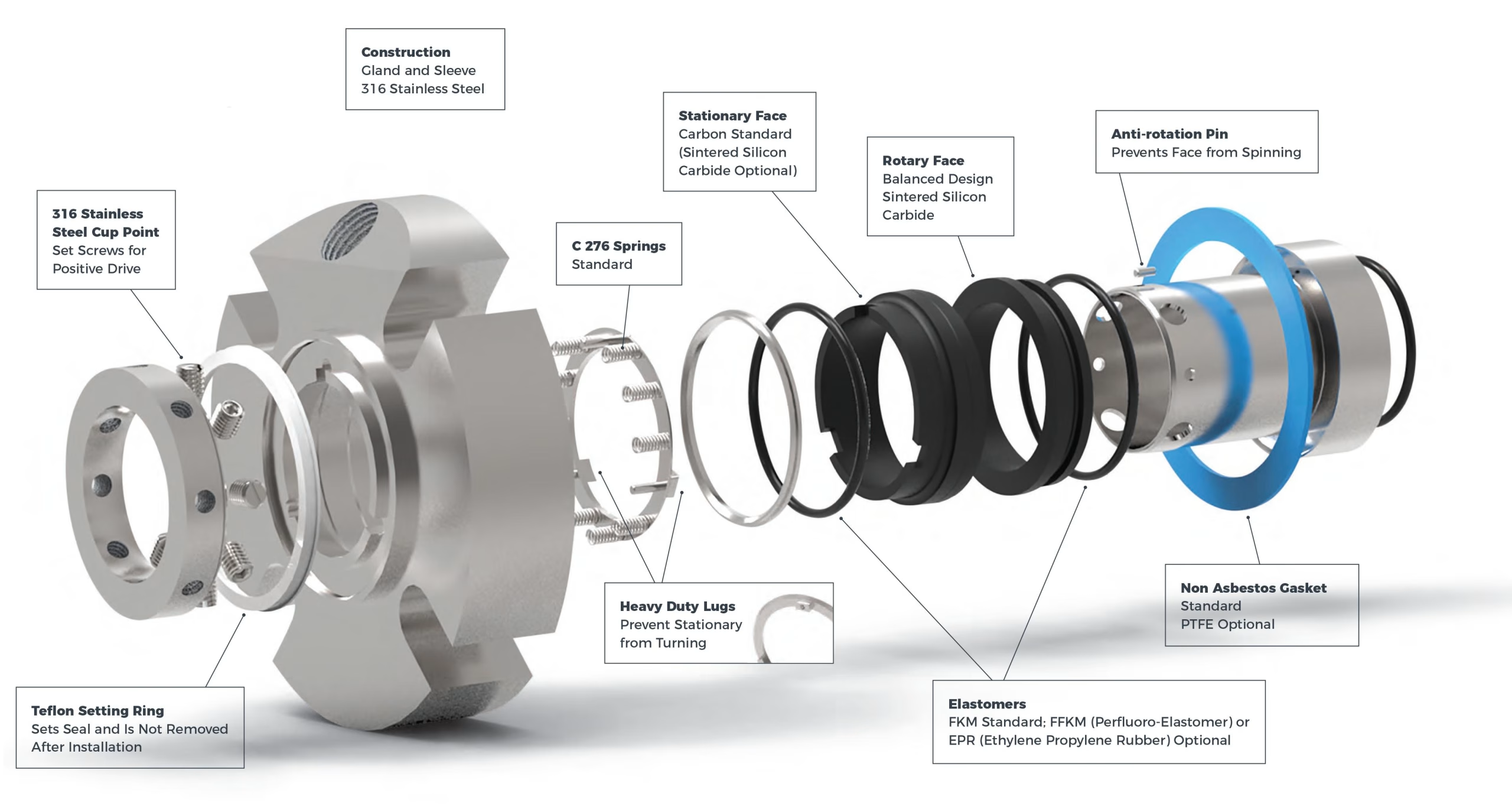
Cartridge seals are factory-assembled sealing units designed for simplified installation and maintenance.
Benefits
- Faster installation
- Reduced alignment errors
- Lower maintenance time
- Improved reliability
- Easy replacement during servicing
4. Metal Bellows Mechanical Seal
Metal bellows seals replace conventional springs with flexible metal bellows, making them suitable for high-temperature and corrosive services.
Best Suited For
- Chemical Industries
- Thermal Applications
- Hot Oil Systems
- High Temperature Fluids
5. Elastomer Bellows Seal
Elastomer bellows seals provide flexibility while offering cost-effective sealing for general industrial services.
Common Applications
- Clean Water
- Utility Pumps
- HVAC Systems
Mechanical Seal Applications Across Industries
Different industries require different sealing arrangements because each process involves unique fluid properties and operating conditions.
Chemical Processing
Chemical pumps frequently handle corrosive acids, alkalis, solvents, and aggressive process liquids.
Mechanical seals for chemical services should provide:
- Corrosion resistance
- Chemical compatibility
- Reliable leakage control
- Long operational life
Related SAM Turbo Solution:
Chemical Process Pumps (CPC)
Mining & Mineral Processing
Mining pumps often transfer abrasive slurry containing solid particles that accelerate seal wear.
Mechanical seals used in mining applications should offer:
- High wear resistance
- Excellent abrasion resistance
- Stable sealing performance
- Long service life
Related SAM Turbo Solution:
Mining & Mineral Processing Pumps
Thermal Power Plants
Power generation facilities require dependable sealing systems for boiler feed pumps, cooling water pumps, condensate pumps, and auxiliary process pumps.Proper seal selection helps improve equipment reliability and reduce maintenance downtime.
Related SAM Turbo Solutions:
- Boiler Feed Pumps
- Horizontal Split Case Pumps
- Cooling Water Pumps
Water & Wastewater Treatment
Water treatment plants require reliable sealing systems capable of handling raw water, treated water, sludge, and wastewater.
Mechanical seals contribute to:
- Continuous operation
- Reduced maintenance
- Improved environmental protection
Related SAM Turbo Solution:
Water & Wastewater Pumping Solutions
Paper & Pulp Industry
Paper mills operate pumps that transfer pulp stock, process water, chemicals, and recycled water.Mechanical seals help maintain reliable sealing under continuous operating conditions while minimizing leakage and maintenance interruptions.
Related SAM Turbo Solution:
Pulp Stock Pumps (TPSN)
Why Mechanical Seal Selection Matters in SAM Turbo Pumps
- Every pumping application has unique operating requirements. At SAM Turbo Industry Pvt. Ltd., pump selection goes beyond hydraulic performance by considering the operating environment, liquid characteristics, pressure, temperature, and maintenance expectations.
- Depending on the application, SAM Turbo Centrifugal Pumps can be configured with suitable mechanical sealing arrangements that support reliable operation across industries such as mining, chemical processing, thermal power, steel, water & wastewater, and paper & pulp.
- Selecting the appropriate sealing solution helps reduce leakage, improve equipment reliability, extend service life, and support efficient industrial operations.
Mechanical Seal Face Materials
The performance and lifespan of a mechanical seal largely depend on the materials used for the seal faces. Since the seal faces remain in continuous contact during pump operation, selecting the right material helps reduce wear, withstand process conditions, and improve sealing reliability.The choice of seal face material should be based on the pumped liquid, operating pressure, temperature, shaft speed, and the presence of abrasive particles.
Carbon Graphite
Carbon graphite is one of the most commonly used seal face materials due to its self-lubricating properties and compatibility with a wide range of industrial applications.
Advantages
- Excellent self-lubrication
- Low friction
- Good thermal conductivity
- Suitable for clean liquids
Typical Applications
- Water supply systems
- Cooling water pumps
- General industrial services
Silicon Carbide (SiC)
Silicon Carbide is an extremely hard material that offers exceptional resistance to abrasion and corrosion. It is widely used in demanding industrial environments.
Advantages
- Outstanding wear resistance
- High corrosion resistance
- Excellent thermal stability
- Long service life
Typical Applications
- Mining slurry pumps
- Chemical process pumps
- Wastewater treatment
- Abrasive process fluids
Tungsten Carbide
Tungsten carbide provides excellent mechanical strength and is ideal for applications involving abrasive or high-pressure fluids.
Advantages
- High hardness
- Excellent impact resistance
- Good wear characteristics
- Long operating life
Typical Applications
- Mining operations
- Steel plants
- Process industries
- High-pressure pumping systems
Ceramic
Ceramic seal faces offer a cost-effective solution for clean liquid applications where operating conditions are relatively stable.
Advantages
- Good corrosion resistance
- Economical
- Reliable in clean services
Typical Applications
- Water pumps
- Utility pumps
- HVAC systems
How to Select the Right Mechanical Seal
Choosing the correct mechanical seal requires evaluating several operating parameters rather than selecting a standard seal for every application.
1. Fluid Characteristics
The first consideration is the liquid being pumped.
Questions to evaluate include:
- Is the liquid corrosive?
- Does it contain abrasive solids?
- Is it hazardous?
- Is it clean or contaminated?
- What is its viscosity?
These factors determine both the seal design and the seal face materials.
2. Operating Pressure
Higher operating pressures place greater loads on the sealing surfaces.
Industrial applications with elevated pressures may require:
- Dual mechanical seals
- Balanced seal designs
- Appropriate seal support systems
3. Operating Temperature
Temperature affects seal face materials, elastomers, and overall seal performance.
High-temperature services often require:
- Metal bellows seals
- High-temperature elastomers
- Specialized seal face combinations
4. Shaft Speed
High shaft speeds generate friction and heat between the seal faces.Proper material selection helps minimize wear while maintaining sealing efficiency.
5. Industry Requirements
Each industry has unique sealing demands.
| Industry | Typical Sealing Requirement |
|---|---|
| Chemical | Corrosion-resistant sealing |
| Mining | Abrasion-resistant sealing |
| Power | High-pressure reliability |
| Water | Low-maintenance sealing |
| Paper & Pulp | Continuous-duty operation |
| Steel | High-temperature durability |
Understanding Seal Flush Plans
A mechanical seal depends on adequate lubrication and cooling to operate efficiently. This is achieved through a seal flush plan, which supplies clean fluid around the seal faces.
A properly designed flush plan helps:
- Remove heat generated at the seal faces
- Flush away contaminants
- Prevent dry running
- Extend seal life
- Improve sealing performance
- The selection of a seal flush arrangement depends on factors such as process fluid characteristics, pressure, temperature, and the sealing configuration.
For critical industrial services, selecting the appropriate seal support system is just as important as selecting the seal itself.
Common Mechanical Seal Failure Causes
Even a high-quality mechanical seal can fail prematurely if operating conditions are not properly controlled. Understanding the root causes helps improve pump reliability and reduce maintenance costs.
1. Dry Running
Dry running occurs when the pump operates without sufficient liquid around the seal faces.Without lubrication, friction increases rapidly, generating excessive heat that damages the seal faces.
Prevention
- Ensure proper pump priming
- Monitor suction conditions
- Avoid operating against closed valves
- Install dry-run protection where applicable
2. Improper Installation
Incorrect installation remains one of the leading causes of premature seal failure.
Common mistakes include:
- Incorrect setting dimensions
- Contaminated seal faces
- Misalignment
- Improper tightening
Prevention
- Follow manufacturer installation procedures
- Use clean working conditions
- Verify shaft alignment before startup
3. Abrasive Wear
Particles suspended in the pumped liquid gradually wear the seal faces.
This is particularly common in:
- Mining
- Slurry handling
- Sand processing
- Wastewater treatment
Prevention
- Select wear-resistant materials
- Improve filtration where possible
- Operate within recommended conditions
4. Excessive Heat
Heat accelerates seal wear and damages elastomers.
Possible causes include:
- Inadequate cooling
- High operating temperatures
- Incorrect seal selection
- Poor lubrication
Prevention
- Select appropriate seal materials
- Ensure adequate cooling
- Maintain seal flush systems
5. Shaft Misalignment
Misaligned shafts place uneven loads on the seal faces.
This often leads to:
- Increased vibration
- Uneven wear
- Premature leakage
Prevention
- Perform precision shaft alignment
- Inspect bearings regularly
- Monitor vibration levels
6. Cavitation
Cavitation creates vapor bubbles that collapse violently inside the pump.
Besides damaging the impeller, cavitation can also shorten mechanical seal life due to vibration and hydraulic instability.
Prevention
- Maintain adequate NPSH
- Eliminate suction restrictions
- Operate near the pump’s Best Efficiency Point (BEP)
- Related Internal Link: NPSH Explained: Why It’s the #1 Cause of Pump Failure in Centrifugal Pumps
Best Practices for Preventing Mechanical Seal Failure
Preventive maintenance significantly improves seal reliability and reduces unplanned downtime.
Recommended practices include:
- Select the correct seal for the application.
- Choose suitable seal face materials.
- Install seals using approved procedures.
- Maintain proper shaft alignment.
- Avoid dry running.
- Monitor operating temperature and vibration.
- Maintain clean seal flush systems.
- Replace worn bearings promptly.
- Operate pumps within their recommended performance range.
- Schedule regular pump inspections.
- These maintenance practices help improve both seal life and overall pump reliability.
How Proper Seal Selection Supports SAM Turbo Pump Performance
Mechanical seals are an essential part of the complete pumping system. At SAM Turbo Industry Pvt. Ltd., sealing arrangements are considered alongside hydraulic design, operating conditions, and application requirements to achieve reliable pump performance.
Whether supplying pumps for chemical processing, mining, thermal power, water & wastewater, steel, or paper & pulp industries, selecting compatible seal face materials and sealing configurations contributes to reduced leakage, lower maintenance requirements, and dependable long-term operation.
By matching the sealing solution to the application’s pressure, temperature, and fluid characteristics, industrial users can maximize the efficiency and service life of their pumping systems.
Conclusion
Mechanical seals play a crucial role in ensuring the reliability, efficiency, and safety of centrifugal pumps across industrial applications. From preventing fluid leakage to minimizing equipment wear and reducing maintenance costs, the right mechanical seal contributes significantly to long-term pump performance.
However, selecting the appropriate seal requires careful evaluation of factors such as fluid properties, operating pressure, temperature, shaft speed, and process conditions. Equally important are proper installation, suitable seal face materials, effective seal flush arrangements, and routine preventive maintenance to maximize seal life and avoid unexpected failures.
At SAM Turbo Industry Pvt. Ltd., every pumping application is approached with a focus on delivering dependable and efficient solutions. Whether serving the chemical, mining, thermal power, water & wastewater, steel, paper & pulp, sugar, or fertilizer industries, SAM Turbo centrifugal pumps are engineered to meet demanding operating conditions with sealing arrangements suited to the specific application.
By combining the right pump with the appropriate mechanical sealing solution, industries can achieve improved operational reliability, reduced downtime, enhanced process safety, and lower lifecycle costs.
If you’re looking for the right industrial pump solution for your application, explore SAM Turbo’s range of Centrifugal Pumps or Connect with our Engineering Team for expert guidance on pump selection and sealing requirements.
Frequently Asked Questions (FAQs)
1. What is the purpose of a mechanical seal in a centrifugal pump?
A mechanical seal prevents liquid leakage between the rotating pump shaft and the stationary pump casing while allowing smooth shaft rotation. It improves pump efficiency, enhances safety, and reduces maintenance compared to conventional gland packing.
2. What are the different types of mechanical seals used in centrifugal pumps?
The most common mechanical seal types include:
- Single Mechanical Seal
- Dual Mechanical Seal
- Cartridge Mechanical Seal
- Metal Bellows Mechanical Seal
- Elastomer Bellows Mechanical Seal
The selection depends on the fluid being pumped, operating conditions, and application requirements.
3. What is the difference between a single seal and a dual seal?
A single mechanical seal is suitable for clean, non-hazardous liquids and general industrial applications. A dual mechanical seal uses two sealing interfaces with a barrier or buffer fluid, making it ideal for handling hazardous, corrosive, abrasive, or high-pressure fluids where enhanced leakage protection is required.
4. What are the common causes of mechanical seal failure?
Some of the most common mechanical seal failure causes include:
- Dry running
- Improper installation
- Shaft misalignment
- Abrasive particles
- Excessive heat
- Cavitation
- Inadequate seal flush systems
- Operating the pump outside its recommended range
- Regular maintenance and proper seal selection help prevent these issues.
5. Which seal face material is best for abrasive applications?
Silicon carbide and tungsten carbide are widely preferred for abrasive applications due to their excellent wear resistance, durability, and ability to withstand harsh operating conditions commonly found in mining, slurry handling, and heavy industrial processes.
6. Why is a seal flush plan important?
A seal flush plan supplies clean fluid to the mechanical seal to lubricate and cool the seal faces while removing contaminants. Proper flush plans help reduce wear, prevent overheating, extend seal life, and improve overall pump reliability.
7. How do I choose the right mechanical seal for my centrifugal pump?
Selecting the right mechanical seal depends on several factors, including:
- Pumped liquid characteristics
- Operating pressure
- Temperature
- Shaft speed
- Presence of abrasive solids
- Industry requirements
- Environmental and safety regulations
- Consulting pump specialists ensures the most suitable sealing arrangement for your application.
8. How can mechanical seal life be extended?
Mechanical seal life can be improved by:
- Selecting the correct seal type
- Using appropriate seal face materials
- Maintaining proper shaft alignment
- Preventing dry running
- Monitoring vibration and temperature
- Maintaining seal flush systems
- Following preventive maintenance schedules
These practices help reduce unexpected failures and improve pump reliability.
9. Which industries commonly use mechanical seals in centrifugal pumps?
Mechanical seals are widely used in industries such as:
- Chemical Processing
- Mining & Mineral Processing
- Thermal Power Plants
- Water & Wastewater Treatment
- Steel Manufacturing
- Paper & Pulp
- Sugar Industry
- Fertilizer Plants
- Cement Industry
- Oil & Gas


