

Get the material selection wrong, and the consequences go well beyond a maintenance headache. Premature corrosion can lead to seal failure, fluid leakage, unplanned shutdowns, and in the worst cases, exposure incidents that put personnel and the plant at risk. Get it right, and a chemical pump can run reliably for years with predictable maintenance, low total cost of ownership, and minimal safety risk.
This guide walks through how chemical process pumps work, the materials used to build them, how to select the right pump for a corrosive application, the most common causes of failure, and the safety and maintenance practices that keep chemical handling operations running safely.
SECTION 01
What Are Chemical Process Pumps?
A chemical process pump is a centrifugal or positive displacement pump specifically designed to transfer corrosive, hazardous, abrasive, or high-purity fluids within a chemical, petrochemical, or process plant. Unlike general-purpose pumps, chemical process pumps are built with corrosion-resistant wetted parts, robust sealing arrangements, and construction standards suited to aggressive chemical environments.
Working Principle
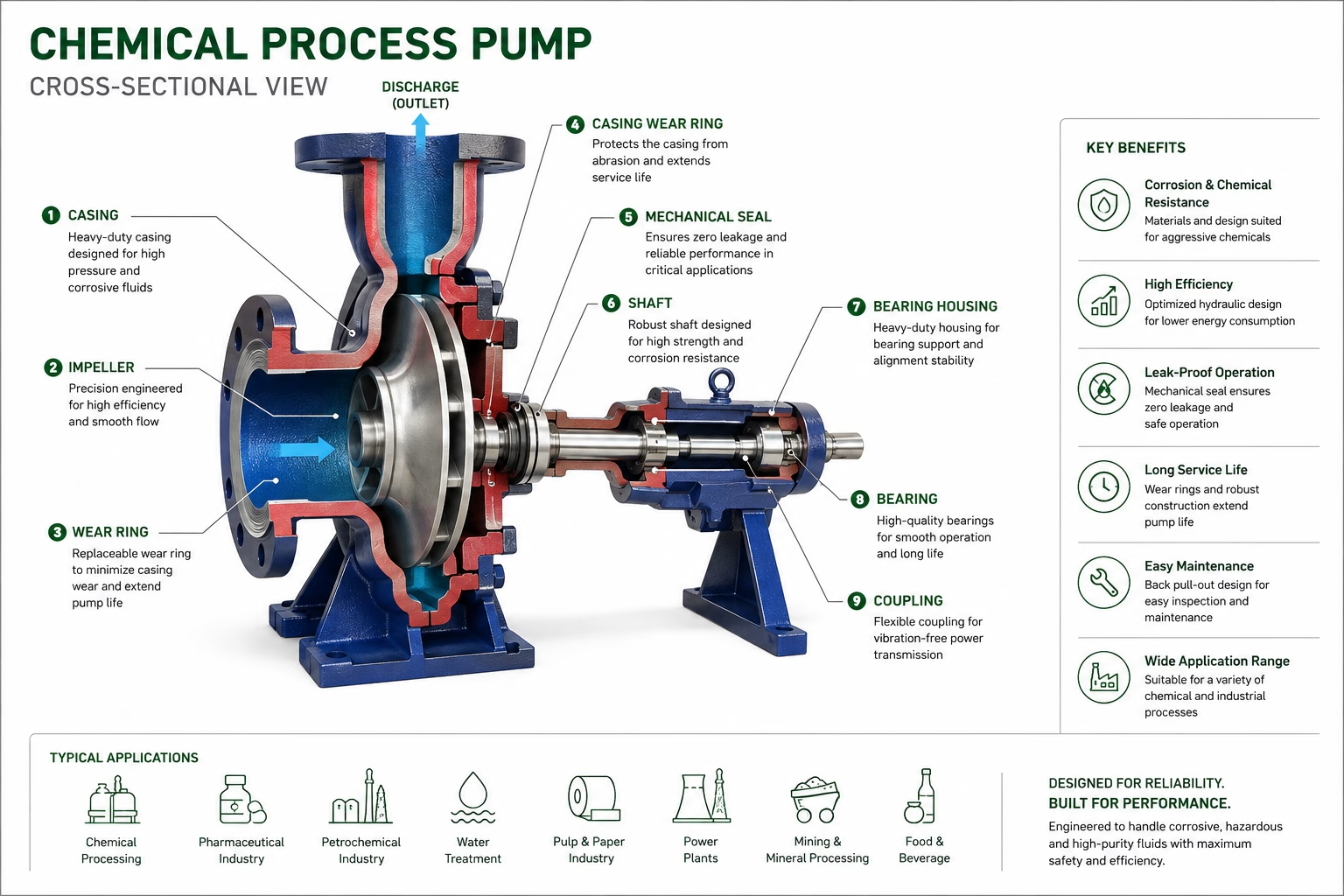
Most chemical process pumps used in industry are centrifugal pumps. Fluid enters the pump through the suction eye of a rotating impeller, which imparts kinetic energy to the liquid through centrifugal force. This kinetic energy is converted into pressure energy as the fluid moves through the volute or diffuser casing and exits through the discharge nozzle. The efficiency and reliability of this energy conversion depend heavily on impeller design, casing geometry, and how well the pump’s wetted materials resist the fluid being handled.
Typical Construction
A chemical process pump generally consists of a casing (volute), impeller, shaft, mechanical seal or packing, bearing housing, and baseplate. In chemical service, every wetted component — casing, impeller, shaft sleeve, wear rings, and seal faces — must be selected for compatibility with the process fluid’s chemistry, concentration, temperature, and pressure.
Key Applications
- Acid and alkali transfer
- Chemical dosing
- Effluent and waste transfer
- Solvent handling
- Chemical injection into process lines
- Tank farm transfer
- Reactor feed and discharge duties
SECTION 02
Industries That Use Chemical Process Pumps
Chemical process pumps are not limited to chemical manufacturing plants. Any industry that handles corrosive, hazardous, or high-purity fluids relies on correctly specified chemical pumps to keep operations safe and efficient.
| Industry | Typical Fluids Handled | Primary Pump Requirement |
|---|---|---|
| Chemical Plants | Acids, alkalis, solvents, process chemicals | Corrosion resistance, chemical compatibility |
| Petrochemical | Hydrocarbons, catalysts, process intermediates | High temperature and pressure capability |
| Refineries | Sulfuric acid, hydrofluoric acid, crude fractions | Abrasion and corrosion resistance |
| Fertilizer | Ammonia, phosphoric acid, sulfuric acid, urea solutions | Heavy corrosion resistance, high duty cycles |
| Pharmaceutical | High-purity solvents, APIs, cleaning agents | Hygienic design, leak-free operation |
| Water Treatment | Chlorine, alum, polymers, caustic soda | Reliable dosing accuracy, corrosion resistance |
| Pulp & Paper | Bleaching chemicals, black liquor, acids | Abrasion resistance, sealing reliability |
| Power Plants | Boiler chemicals, flue gas desulfurization slurry | Erosion and corrosion resistance |
Each of these industries has different priorities — a fertilizer plant may prioritize resistance to concentrated phosphoric acid, while a pharmaceutical facility prioritizes leak-free, contamination-free transfer. The common thread is that fluid chemistry, not just flow and head, drives the pump specification.
SECTION 03
Types of Chemical Process Pumps
Selecting the right pump type is the first decision in any chemical pumping application. Each design suits a different combination of fluid properties, pressure, and safety requirements.
End Suction Process Pumps
These are the most widely used chemical pumps, typically built to ANSI B73.1 or ISO 2858 dimensional standards. They offer straightforward maintenance, back pull-out design for easy servicing, and a wide range of material options.
- Advantages: Simple design, easy maintenance, wide capacity range, readily available spares
- Limitations: Single mechanical seal exposure unless upgraded to double seal arrangement
- Applications: General chemical transfer, acid and alkali handling, process feed duties
Horizontal Chemical Pumps
Horizontal configurations are preferred where floor space allows and where ease of alignment and maintenance access are priorities.
- Advantages: Easier alignment, accessible for routine maintenance, stable operation
- Limitations: Larger footprint compared to vertical designs
- Applications: Tank farm transfer, inter-process transfer, bulk chemical movement
Vertical Chemical Pumps
Vertical sump or cantilever pumps are used where the pump must be installed directly into a tank or sump, particularly for corrosive or hazardous liquids that should not pass through additional suction piping.
- Advantages: No seal contact with fluid in sumpless designs, smaller footprint, ideal for tank-top installation
- Limitations: Longer shaft lengths can increase vibration sensitivity; installation depth constraints
- Applications: Sump and tank drainage, waste transfer, effluent handling
Magnetic Drive Pumps
Magnetic drive (seal-less) pumps eliminate the mechanical seal entirely by using magnetic coupling to transmit torque through a sealed containment shell.
- Advantages: Zero leakage at the seal, ideal for toxic or hazardous fluids
- Limitations: Sensitive to dry running, limited to lower NPSH margins, higher initial cost
- Applications: Toxic, flammable, or high-value fluid transfer where leakage is unacceptable
PTFE Lined Pumps
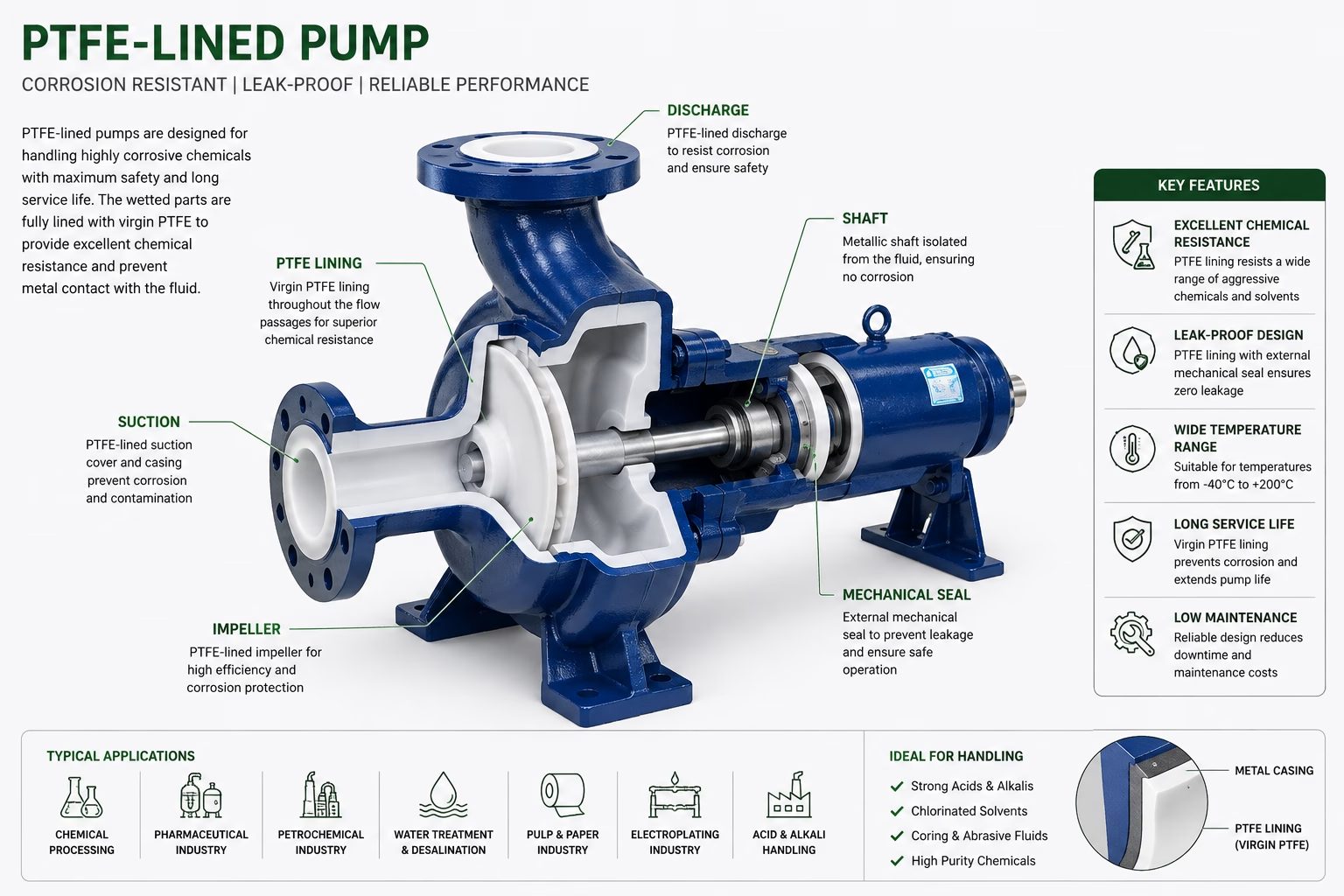
These pumps use a PTFE (or PFA) liner inside a metallic casing, combining PTFE’s near-universal chemical resistance with the structural strength of a metal shell.
- Advantages: Excellent chemical resistance across a wide range of acids and solvents, cost-effective alternative to exotic alloys
- Limitations: Liner thickness limits pressure rating; not suited to high-pressure duties
- Applications: Strong acids, oxidizers, and fluids incompatible with metallic wetted parts
ANSI Chemical Pumps
Built to ANSI/ASME B73.1 dimensional standards, these pumps are designed for interchangeability between manufacturers, simplifying spares management and maintenance planning.
- Advantages: Standardized dimensions, easy cross-manufacturer spares, proven design
- Limitations: Standard dimensions can mean a larger footprint than compact proprietary designs
- Applications: Refineries, chemical plants, and any facility prioritizing standardized rotating equipment
SECTION 04
Material Selection for Chemical Process Pumps
Material selection is the single most important decision in specifying a chemical process pump material. The wrong choice accelerates corrosion, shortens seal life, and increases the risk of unplanned leaks.
| Material | Chemical Compatibility | Temperature Range | Advantages | Limitations | Typical Applications |
|---|---|---|---|---|---|
| Cast Iron | Neutral to mildly corrosive fluids only | Up to 120°C | Low cost, good strength, easy to machine | Poor resistance to acids and chlorides | Water transfer, non-corrosive process fluids |
| Stainless Steel 304 | Mild acids, alkalis, general chemicals | Up to 300°C | Good general corrosion resistance, cost-effective | Susceptible to chloride pitting and stress corrosion cracking | Food-grade fluids, mild chemical transfer |
| Stainless Steel 316 | Dilute acids, moderate chlorides, most process chemicals | Up to 300°C | Better chloride and pitting resistance than 304, widely available | Not suitable for high-chloride or strong acid duties | Pharmaceutical fluids, moderate corrosive chemicals |
| Duplex Stainless Steel | Chloride-rich and moderately aggressive fluids | Up to 250°C | Higher strength and stress corrosion cracking resistance vs. austenitic grades | Higher cost, requires careful welding procedures | Seawater, brine, chloride-bearing process streams |
| Alloy 20 | Sulfuric acid and mixed acid environments | Up to 100°C | Excellent resistance to sulfuric acid across concentrations | Higher cost, limited availability vs. standard stainless | Sulfuric acid transfer, fertilizer and chemical plants |
| Hastelloy | Highly aggressive acids, oxidizers, mixed chemical streams | Up to 260°C+ | Outstanding resistance to a broad range of severe corrosives | High material and fabrication cost | Hydrochloric acid, hot corrosive chemicals, specialty processes |
| PTFE | Nearly universal chemical resistance, including strong acids and solvents | Up to 150°C | Excellent chemical inertness, low friction, non-contaminating | Limited pressure rating, temperature sensitivity, less mechanical strength | Strong acids, oxidizers, high-purity chemical transfer |
| PVDF | Strong acids, halogens, and many solvents | Up to 140°C | Good chemical and abrasion resistance, lighter than metal alloys | Not suited to strongly basic or certain polar solvents | Chlorine handling, acid dosing, water treatment chemicals |
Important: A material can resist acid attack but fail from chloride stress cracking, or resist corrosion but lack the mechanical strength for high-pressure service. Always verify compatibility against the fluid’s complete chemical profile, not just its general classification as an “acid” or “alkali.”
SECTION 05
Selecting the Right Pump for Corrosive Fluids
Choosing a corrosive fluid handling pump requires evaluating the complete operating envelope, not just the fluid name on a datasheet. The process below walks through the factors to review, in order, for every application.
Analyze Fluid Chemistry
Document exact composition, concentration, pH, and any trace contaminants that may accelerate corrosion.
Confirm Operating Conditions
Establish temperature range (including upset conditions), pressure, and flow rate requirements.
Check Solids & Abrasiveness
Assess solids content and particle size to determine wear ring material and impeller design needs.
Verify NPSH Margin
Calculate NPSH available versus NPSH required, accounting for vapour pressure at operating temperature.
Review Toxicity & Hazard Class
Use the hazard profile to decide whether a seal-less design or double seal arrangement is warranted.
Finalize Material & Seal Plan
Match the pump type, wetted materials, and API seal plan to the complete operating envelope.
SECTION 06
Common Causes of Chemical Pump Failure
Most chemical pump problems trace back to a small set of recurring mechanical and hydraulic issues. The table below summarizes the most frequent causes, how they typically present, and the recommended first response.
| Cause | Symptoms | Severity | Recommended Action |
|---|---|---|---|
| Corrosion | Pitting, thinning casing walls, discoloration | High | Correct material selection, regular thickness inspection |
| Cavitation | Noise, vibration, impeller pitting | High | Verify NPSH margin, review suction piping design |
| Seal Failure | Visible leakage, seal face wear | High | Correct seal plan selection, monitor flush flow |
| Dry Running | Overheating, seal damage, noise | Medium | Level switches, suction interlocks |
| Improper Material Selection | Premature corrosion, unexpected leaks | High | Detailed fluid chemistry review before procurement |
| Pipe Strain | Misalignment, casing cracking | Medium | Proper pipe support and expansion joints |
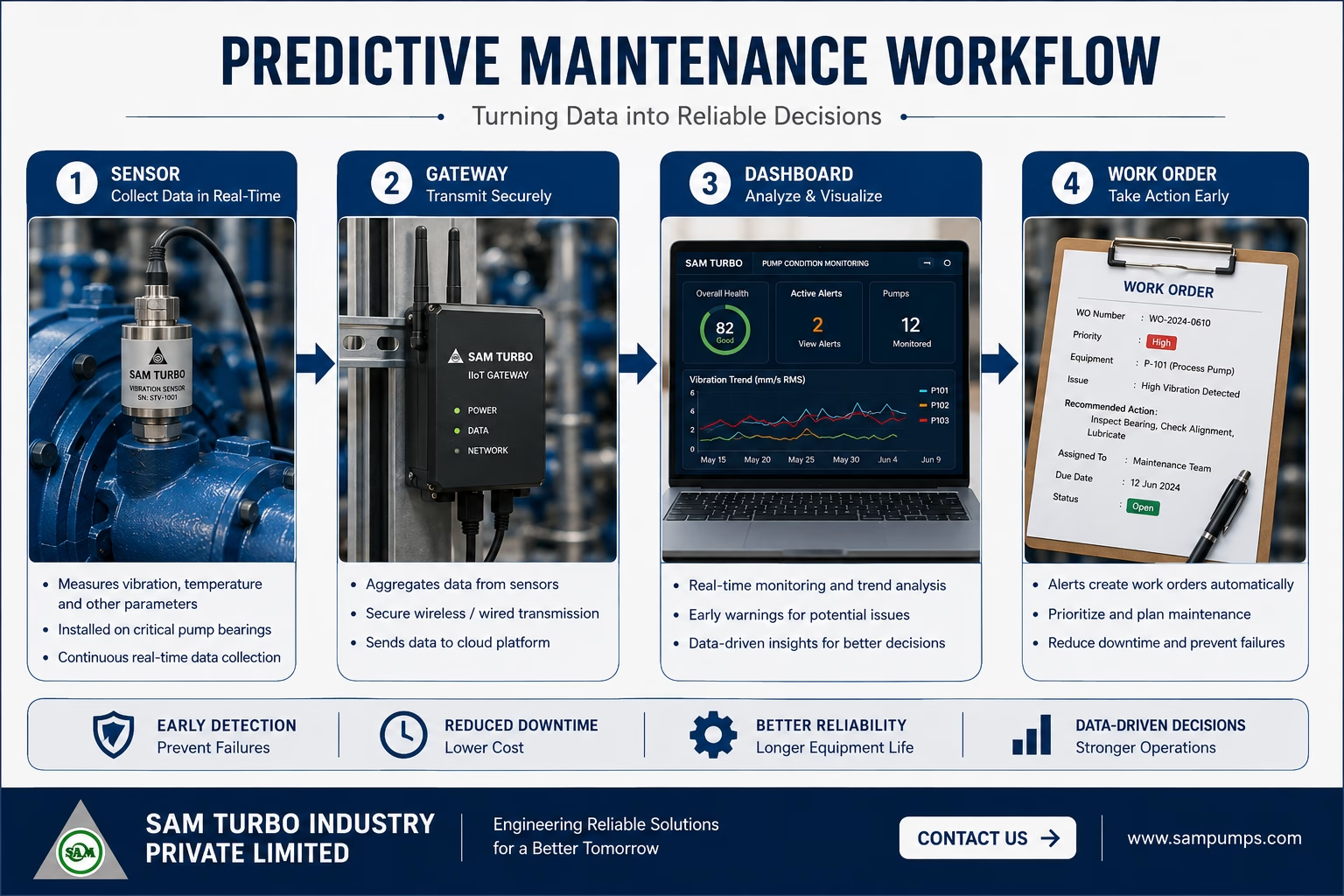
| Bearing Damage | Vibration, unusual noise, heat | Medium | Scheduled lubrication and vibration monitoring |
| Misalignment | Vibration, coupling wear | Medium | Laser alignment during commissioning and after maintenance |
| Chemical Attack | Localized corrosion, seal face degradation | High | Periodic process fluid analysis |
SECTION 07
Mechanical Seal Selection for Chemical Pumps
The mechanical seal is often the most vulnerable point in a chemical pump, and seal selection directly affects both safety and reliability.
Single Seal: A single mechanical seal is the simplest and most economical option, suitable for fluids that are not highly hazardous and where minor emissions are acceptable within regulatory limits.
Double Seal: Double seals use two seal faces with a barrier fluid between them, providing a secondary containment layer. This arrangement is preferred for toxic, flammable, or environmentally sensitive fluids.
Cartridge Seal: A cartridge seal is a pre-assembled, self-contained seal unit that simplifies installation and reduces the risk of assembly errors, which is particularly valuable in chemical service where seal setup precision affects reliability.
Seal Flush Plans: Flush plans manage the environment around the seal faces — controlling temperature, removing solids, or introducing a barrier fluid — to extend seal life and reduce failure risk.
API Seal Plans: The American Petroleum Institute’s API 682 standard defines a series of standardized seal flush plans (such as Plan 11, Plan 32, Plan 52, and Plan 53) that are widely referenced across chemical and petrochemical industries for consistent, proven seal support system design. Selecting the correct API plan for the specific fluid and hazard profile is essential for leak prevention and long-term seal reliability.
SECTION 08
Safety Best Practices for Corrosive Fluid Handling
Safe handling of corrosive and hazardous chemicals depends as much on operating discipline as on equipment design.
- PPE: Chemical-resistant gloves, face shields, and appropriate protective clothing should be mandatory during any maintenance or inspection activity involving chemical pumps.
- Leak detection: Install leak detection systems, particularly for toxic or flammable fluids, to enable rapid response before a minor leak escalates.
- Secondary containment: Bunding, drip trays, and containment basins around pump installations limit the environmental and safety impact of any leakage.
- Material compatibility verification: Confirm compatibility not only for the pump but for all associated gaskets, fasteners, and instrumentation in contact with the fluid.
- Emergency shutdown: Ensure emergency isolation valves and shutdown procedures are clearly defined, accessible, and tested.
- Routine inspection: Scheduled visual and instrumented inspections catch early signs of corrosion, leakage, or seal wear before failure occurs.
- Safe maintenance practices: Always isolate, depressurize, and flush a chemical pump before maintenance, following documented lockout-tagout procedures.
Safety Checklist
- Correct PPE available and used for the specific fluid hazard class
- Leak detection instrumentation installed and functioning
- Secondary containment in place and free of damage
- Material compatibility confirmed for all wetted components, gaskets, and seals
- Emergency shutdown procedure documented and tested
- Routine inspection schedule in place and being followed
- Lockout-tagout procedure enforced for all maintenance activity
- Personnel trained on the specific hazards of the fluid being handled
SECTION 09
Preventive Maintenance Tips
A structured preventive maintenance program is the most effective way to reduce unplanned downtime and extend the service life of chemical transfer pumps.
| Maintenance Activity | Recommended Frequency |
|---|---|
| Visual inspection for leaks and corrosion | Weekly |
| Seal monitoring (flush flow, barrier fluid pressure) | Weekly to Monthly |
| Bearing temperature and noise checks | Monthly |
| Vibration monitoring | Monthly to Quarterly |
| Lubrication service | As per manufacturer schedule, typically Quarterly |
| Alignment verification | After coupling disturbance, and Annually |
| Corrosion and wall thickness inspection | Annually or per process fluid severity |
| Spare parts stock review | Quarterly |
Building spare parts planning into the maintenance calendar is particularly important for chemical service, where lead times for exotic alloy components or specialized seal assemblies can be significantly longer than for standard industrial parts.
SECTION 10
How SAM Turbo Chemical Process Pumps Support Reliable Chemical Handling
Selecting a chemical process pump ultimately comes down to matching engineering fundamentals — correct material, correct seal plan, correct hydraulic design — to the specific demands of the fluid being handled. This is the area where a manufacturer’s depth of engineering experience makes a practical difference.
SAM Turbo Industry Pvt. Ltd. has been engineering pumps for demanding industrial applications for more than 55 years, and its chemical process pump range is built around the same principles discussed throughout this guide: material compatibility with the process fluid, robust hydraulic design for stable performance, and seal arrangements suited to the hazard profile of the application. SAM Turbo’s engineering team works directly with plant engineers and procurement teams to review fluid chemistry, operating conditions, and site-specific constraints before recommending a pump configuration, rather than defaulting to a one-size-fits-all specification.
For plants handling acids, alkalis, solvents, or other aggressive process fluids, this kind of application-specific engineering support — backed by heavy-duty manufacturing and consistent quality control — is what allows a chemical pump to deliver reliable, safe performance over its operating life, rather than becoming a recurring maintenance liability.
SECTION 11
Conclusion
Correct material selection is the foundation of safe, reliable chemical pumping. A pump specified without a thorough review of fluid chemistry, temperature, pressure, and hazard profile is a pump that is more likely to leak, corrode prematurely, or fail unexpectedly. Conversely, a chemical process pump built with the right wetted materials, the right seal plan, and sound hydraulic design can run for years with predictable, manageable maintenance.
The principles covered in this guide — material compatibility, seal selection, failure prevention, and safety practice — apply whether you are specifying a new pump for a greenfield project or troubleshooting recurring failures on an existing line. Getting these fundamentals right protects both plant personnel and long-term operating costs.
Frequently Asked Questions
What is a chemical process pump?
A chemical process pump is a centrifugal or positive displacement pump built with corrosion-resistant materials and specialized sealing to safely transfer corrosive, hazardous, or high-purity fluids in industrial process applications.
Which material is best for pumping acids?
The best material depends on the specific acid, its concentration, and temperature. Alloy 20 performs well in sulfuric acid service, Hastelloy is suited to highly aggressive or mixed acid environments, and PTFE or PVDF offer strong resistance across many acids at moderate temperatures and pressures. There is no single “best” material for all acids — compatibility must be checked against the exact fluid conditions.
What is an ANSI chemical pump?
An ANSI chemical pump is a pump built to ANSI/ASME B73.1 dimensional standards, ensuring standardized mounting dimensions that allow interchangeability between different manufacturers’ pumps, simplifying spare parts management and maintenance planning.
When should PTFE-lined pumps be used?
PTFE-lined pumps are recommended for handling strong acids, oxidizers, and fluids that are incompatible with metallic wetted parts, particularly in moderate pressure and temperature applications where PTFE’s chemical inertness outweighs its lower mechanical strength compared to solid alloy construction.
How do I choose the right pump material for a chemical application?
Start by documenting the fluid’s exact chemical composition, concentration, pH, temperature range, and any contaminants. Cross-reference this data against a recognized material compatibility chart, and verify the selected material’s mechanical suitability for the required pressure and flow conditions.
Why do chemical pumps fail?
Common causes of chemical pump failure include corrosion from incompatible materials, cavitation due to insufficient NPSH, seal failure from incorrect seal plan selection, dry running, pipe strain, and misalignment. Most failures trace back to a mismatch between the pump’s design or materials and the actual operating conditions.
What are API seal plans?
API seal plans are standardized mechanical seal support system configurations defined in API 682, covering arrangements such as flush, quench, and barrier fluid systems. They provide proven, consistent designs for managing seal environment conditions to improve seal life and reduce leakage risk.
Which industries use chemical process pumps?
Chemical process pumps are used across chemical manufacturing, petrochemical, refining, fertilizer production, pharmaceuticals, water treatment, pulp and paper, and power generation — essentially any industry that handles corrosive, hazardous, or high-purity fluids as part of its process operations.
How often should chemical pumps be inspected?
Visual leak and corrosion checks are typically recommended weekly, seal and bearing monitoring monthly, vibration analysis monthly to quarterly, and detailed corrosion or wall thickness inspection at least annually. Inspection frequency should be adjusted based on fluid severity and criticality of the application.
How can corrosion be prevented in chemical pumps?
Corrosion prevention starts with correct material selection based on the fluid’s full chemical profile, followed by regular inspection for early signs of attack, monitoring for changes in process fluid chemistry or concentration, and ensuring all wetted components — not just the pump casing — are compatible with the fluid being handled.
Need Expert Guidance for Chemical Process Pumps?
Consult SAM Turbo’s engineering team for selecting reliable chemical process pumps for corrosive and hazardous fluid handling applications.


