

Mechanical Seal vs Packing is an important consideration when selecting the Right Shaft-Sealing arrangement for a Centrifugal Pump. Both Mechanical Seals and Gland Packing are widely used in Industrial Pumping Systems, but their suitability depends on factors such as the Pumped Fluid, Pressure, Temperature, Shaft Speed, Leakage Requirements, Operating Conditions and Maintenance Practices. The Right Sealing method can help control Leakage, Reduce Wear, Improve Pump Reliability and Minimize Unplanned Maintenance.
For industries such as Thermal Power, Chemical Processing, Mining, Steel, Pulp and Paper, Fertilizer, Sugar, Oil & Gas, Water and Wastewater, Pumps often operate under demanding and continuous-duty conditions. In these applications, choosing between a mechanical seal and gland packing should not be based only on initial cost. Application requirements, operating environment, maintenance expectations and total lifecycle performance should also be considered.
With 55+ years of experience in centrifugal pump engineering, SAM Turbo Industry Pvt. Ltd. designs, manufactures and services industrial pumps for diverse process industries. Its product range includes chemical process pumps, slurry pumps, horizontal split case pumps, multi-stage pumps, pulp and paper pumps, water pumps and other industrial pumping solutions.
This guide explains the key Differences Between Mechanical Seals and Gland Packing, their advantages and limitations, common applications, failure considerations and the factors engineers should evaluate when selecting the most suitable sealing method for an industrial pump.
What Is Pump Shaft Sealing?
In a Centrifugal Pump, the Rotating Shaft passes through the pump casing to connect the impeller to the driving motor. Wherever a rotating shaft exits a pressurized casing, there is a physical gap that pumped fluid could otherwise escape through. Shaft sealing exists to control that leakage path — protecting personnel and the environment, preventing air from entering the pump on the suction side, and keeping the shaft and bearings protected from the pumped fluid. The two most common shaft-sealing methods used in industrial centrifugal pumps are the mechanical seal and gland packing, and the choice between them shapes leakage behavior, maintenance needs and pump reliability for years of operation.
What Is a Mechanical Seal?
A Mechanical Seal is a Precision Sealing device consisting of Two Flat, Lapped Faces — One Rotating with the Shaft, One Stationary in the seal housing — held in continuous contact by spring pressure and system pressure. A Thin Fluid Film between the Two Faces provides Lubrication and Cooling as the Shaft Rotates, while secondary seals (typically O-rings or gaskets) seal the static joints between the faces and their mounting components.
The Core Components of a Mechanical Seal include:
- Rotating and stationary faces — the primary sealing surfaces that ride against each other
- Secondary seals — O-rings, wedges or bellows that seal the static interfaces
- Spring mechanism — maintains face contact and compensates for wear
- Seal housing — contains and locates the seal assembly within the stuffing box or seal chamber
- Fluid film — a microscopically thin layer between the faces that lubricates and cools during operation
Mechanical Seals are commonly preferred where near-zero visible leakage is required, where the pumped fluid is hazardous, corrosive or valuable, and where continuous-duty operation makes frequent manual adjustment impractical.
What Is Gland Packing?
Gland Packing (or a “Packed Gland”) uses rings of compressible packing material — typically braided fibers impregnated with graphite, PTFE or similar lubricants — installed inside the stuffing box around the shaft. A gland follower compresses the packing rings against the shaft, and the compression is adjusted to allow a small, controlled amount of leakage. This slight leakage is intentional: it lubricates and cools the packing-to-shaft interface, and running a packed gland completely dry will damage both the packing and the shaft.
The core components of a gland packing arrangement include:
- Packing rings — stacked, compressible rings that fill the stuffing box around the shaft
- Stuffing box — the cavity in the pump casing that houses the packing rings
- Gland follower — the adjustable component that compresses the packing rings
- Controlled leakage — a small, deliberate drip rate that lubricates and cools the packing
- Packing compression and adjustment — periodic manual tightening as the packing wears and settles
Gland packing remains a practical choice for applications where some leakage is acceptable, where solids-laden or abrasive fluids make mechanical seal faces vulnerable, and where simple, low-cost maintenance is preferred over precision components.
Mechanical Seal vs Gland Packing – Key Differences
Neither sealing method is universally better. The visual and table below highlight how each typically performs across the parameters engineers evaluate during selection — actual performance still depends on the specific pump, fluid and operating conditions.
Mechanical Seal vs Gland Packing — At a Glance
Bar length reflects typical relative performance for each technology, not a fixed numerical value. Actual performance depends on specific design and operating conditions.
Gland Packing
Leakage control
Low maintenance frequency
Solids / abrasive handling
Initial cost efficiency (lower cost)
Expected service life
Ease of installation
| Parameter | Mechanical Seal | Gland Packing |
|---|---|---|
| Leakage | Near-zero visible leakage when correctly installed | Small, controlled leakage by design |
| Friction | Lower running friction at the faces | Higher friction against the shaft/sleeve |
| Maintenance | Minimal routine adjustment; replaced as a unit | Requires periodic re-tightening and re-packing |
| Installation | Requires precision fitting and alignment | Comparatively simple to install |
| Initial cost | Generally higher | Generally lower |
| Operating cost | Lower ongoing water/energy loss | Ongoing flush water and adjustment labor |
| Water/flush requirement | Often minimal, or application-specific flush plans | Typically needs a continuous flush/lubrication supply |
| Temperature suitability | Wide range with correct face/elastomer selection | Suitable for moderate temperatures with the right packing grade |
| Pressure suitability | Suitable for higher pressure with appropriate seal design | Generally better suited to low-to-moderate pressure |
| Abrasive/slurry handling | Sensitive to solids at the faces unless specifically designed | More tolerant of solids, commonly used in slurry service |
| Environmental considerations | Preferred for hazardous or regulated fluids | Leakage may raise environmental/compliance concerns |
| Expected service life | Long, if operated within design conditions | Shorter; wears and requires periodic replacement |
| Adjustment requirements | None during normal operation | Regular manual re-tightening needed |
Mechanical Seal vs Packing – Advantages and Limitations
Mechanical Seal – Advantages & Limitations
Mechanical Seals offer Minimal Leakage, lower ongoing friction losses, and little routine adjustment once correctly installed — advantages that matter most in continuous-duty, hazardous-fluid, or environmentally sensitive services. The trade-off is a higher initial cost, a need for precise installation and alignment, and greater sensitivity to dry running, solids and contamination at the seal faces. Face damage from a single upset condition can mean a full seal replacement rather than a simple adjustment.
Gland Packing – Advantages & Limitations
Gland Packing is simple, inexpensive to install, tolerant of solids and abrasives, and forgiving of minor shaft misalignment. It’s straightforward for maintenance teams to inspect and adjust in the field. The trade-off is the leakage it’s designed to allow, ongoing wear on the shaft or sleeve, the need for periodic re-tightening, and shorter service intervals compared to a correctly applied mechanical seal — along with a continuous flush or lubrication requirement in many services.
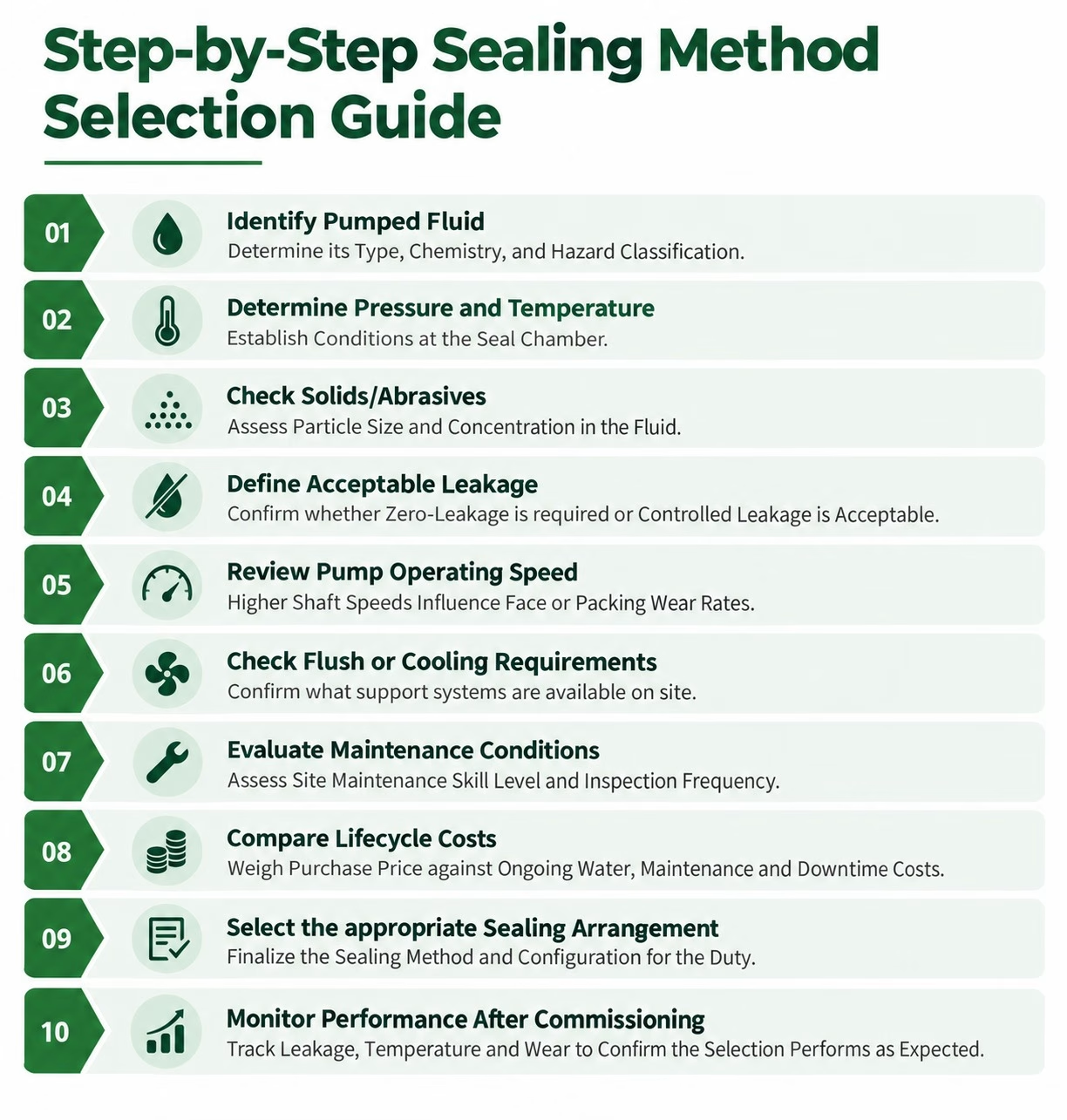
How to Choose Between Mechanical Seal and Gland Packing
A Practical Decision should weigh the following factors together, not in isolation:
Common Applications
Water and WasteWater pumps commonly use either method, with mechanical seals preferred for clean water services and packing often retained for solids-heavy wastewater transfer. Chemical Processing typically favors mechanical seals for hazardous or corrosive fluids where leakage must be controlled. Mining and Slurry applications frequently use gland packing or expeller-assisted sealing due to high solids content, though specially engineered slurry-duty mechanical seals are also used.
Cement plants dealing with abrasive slurries often lean toward packing for ease of field maintenance. Power plants commonly use mechanical seals on boiler feed and condensate pumps where leakage and reliability are critical. Sugar and Pulp and Paper operations use a mix of both, depending on whether the duty involves clean juice/water transfer or fibrous, solids-laden stock. Oil & Gas applications generally require mechanical seals given the hazardous nature of the fluids involved, while General Industrial Services may use either, based on the specific fluid and criticality of the pump.
In every case, application suitability depends on the actual pump duty and fluid characteristics rather than industry convention alone.
Common Seal and Packing Failure Problems
Mechanical Seal problems typically include face damage, dry running, overheating, incorrect installation, contamination of the sealing faces, shaft misalignment, improper flush arrangements, and excessive vibration. Gland packing problems typically include excessive leakage, over-tightening of the gland follower, packing wear, damage to the shaft or sleeve from prolonged friction, incorrect packing material selection, and insufficient cooling or lubrication.
| Failure Problem | Likely Cause | Warning Sign | Corrective Action |
|---|---|---|---|
| Mechanical seal face damage | Dry running or contamination | Sudden leakage increase, noise | Inspect faces, verify flush supply, replace seal |
| Mechanical seal overheating | Loss of fluid film, blocked flush line | Elevated seal chamber temperature | Check flush/quench flow, cooling system |
| Mechanical seal early failure | Misalignment or incorrect installation | Vibration, uneven wear pattern | Check shaft alignment and installation procedure |
| Excessive gland packing leakage | Worn packing or under-compression | Leakage rate above acceptable drip range | Re-tighten gland follower or replace packing rings |
| Shaft/sleeve scoring | Over-tightened packing | Visible grooves, heat discoloration | Loosen gland, inspect and resurface/replace sleeve |
| Accelerated packing wear | Incorrect packing material for the service | Frequent re-packing needed | Review packing grade against fluid and temperature |
Mechanical Seal vs Gland Packing – Cost Considerations
Purchase cost is only one part of the picture. Mechanical seals typically carry a higher upfront and installation cost, but often lower ongoing flush water consumption and less frequent maintenance intervention when applied correctly. Gland packing is typically cheaper to purchase and install, but involves recurring costs from flush water consumption, periodic maintenance labor, more frequent replacement, and leakage-related product loss.
Downtime associated with unplanned seal or packing failure, and any environmental or compliance implications of ongoing leakage, should also factor into the comparison. Rather than comparing purchase price alone, evaluating the full lifecycle cost — installation, flush water, maintenance frequency, replacement parts, downtime and compliance — gives a more accurate basis for selection.
How SAM Turbo Supports Pump Reliability
Getting the Sealing Arrangement Right is Part of getting the Whole Pump Right. SAM Turbo Industry Pvt. Ltd. brings:
- 55+ years of engineering experience in centrifugal pump design and manufacturing
- Industrial pump manufacturing expertise across a wide range of process industries
- Application-focused engineering that evaluates the fluid, pressure and duty before recommending a sealing arrangement
- Quality-focused manufacturing aimed at dependable, long-service-life pumps
- Reliability-oriented technical support for evaluating sealing performance under real operating conditions
- Selection based on actual operating conditions, not catalog defaults
For a closer look at how sealing arrangements are configured on centrifugal pumps, see SAM Turbo’s guide to Mechanical seals in Centrifugal Pumps, or explore the full range of industrial pumping solutions at Sampumps.com.
Frequently Asked Questions
What is the Difference Between a Mechanical Seal and Gland Packing?
Which is Better, Mechanical Seal or Packing?
Does Gland Packing Allow Leakage?
Why do Mechanical Seals Fail?
When Should Gland Packing be used?
Is Mechanical Sealing suitable for Abrasive Fluids?
Which Sealing Method requires more Maintenance?
Is Packing Cheaper than a Mechanical Seal?
Can Gland Packing Damage a Pump Shaft?
How do you Select the Right Pump Sealing Method?
Conclusion
Mechanical Seal vs Packing is ultimately an application-based decision rather than a simple choice between two sealing technologies. Mechanical seals can be suitable where controlled leakage, reduced maintenance and reliable sealing are important, while gland packing can remain a practical option for applications where controlled leakage and ease of adjustment are acceptable. The final selection should consider the pumped fluid, pressure, temperature, shaft speed, solids content, leakage tolerance, maintenance capability and overall lifecycle requirements.
For demanding industrial applications, the sealing arrangement should also be considered as part of the complete pump system. SAM Turbo Industry Pvt. Ltd. brings 55+ years of Centrifugal Pump Engineering Experience and Serves Industries including thermal power, pulp and paper, chemical, fertilizer, mining, oil & gas, sugar and other process industries. Its industrial pump range is designed around varied application requirements, making proper pump and sealing selection an important part of achieving dependable operation.
Whether the application requires a Mechanical Seal or Gland Packing, selecting the TRight Arrangement, installing it correctly and maintaining the pump within its recommended operating conditions can help improve reliability and reduce avoidable downtime. For application-specific pump and sealing requirements, SAM Turbo’s Engineering Team can help evaluate the operating conditions and identify a suitable pumping solution.
Need help Selecting the Right Sealing Method For Your Pump?
SAM Turbo’s Engineering Team can help you evaluate your Operating Conditions and Recommend the Right Mechanical Seal or Gland Packing Arrangement.


