

Pump Bearing Failure Lubrication plays a vital role in maintaining the Reliability, Efficiency and Service life of Industrial Pumps. Incorrect or Inadequate Lubrication can increase friction, heat and vibration, resulting in premature bearing failure and unplanned downtime.
Reliable bearing performance requires the right bearing type, lubricant, quantity, operating conditions, alignment and regular condition monitoring. These practices help maintenance teams detect early warning signs, reduce breakdowns and control maintenance costs.
With 55+ years of engineering experience, SAM Turbo Industry Pvt. Ltd. combines industrial pump manufacturing expertise with application-focused engineering to deliver reliable pumping solutions suited to demanding operating conditions across diverse Industries.
What Are Pump Bearings?
Pump Bearings are Precision Mechanical components that support the Pump Shaft, allow it to rotate freely with minimal friction and keep it correctly positioned within the pump casing. In a centrifugal pump, the shaft carries the impeller and transmits the rotational force from the driver, usually an electric motor, so the bearing housing has to manage both the weight of the rotating assembly and the hydraulic forces generated inside the pump.
Bearings perform three core functions in a pump: they maintain shaft alignment and concentricity with the casing, they absorb radial loads (forces acting perpendicular to the shaft) and axial or thrust loads (forces acting along the shaft), and they reduce friction between rotating and stationary parts. When bearings function correctly, the shaft rotates smoothly with minimal vibration, low heat generation and consistent seal and impeller clearances. When they degrade, the entire rotating assembly is affected, often leading to seal leakage, impeller rubbing and eventual pump failure.
Types of Bearings Used in Pumps
Centrifugal and Industrial Pumps use several bearing types, each suited to different load, speed and operating conditions. Selecting the right bearing type is the foundation of long-term pump bearing reliability.
Ball Bearings
Ball bearings use spherical rolling elements and are widely used in end-suction and standard centrifugal pumps. They handle moderate radial and axial loads at relatively high speeds with low friction.
Roller Bearings
Roller bearings use cylindrical or tapered rolling elements that provide a larger contact area than ball bearings, making them suitable for heavier radial loads and larger, higher-capacity pumps.
Sleeve / Journal Bearings
Sleeve or journal bearings rely on a thin, continuous film of lubricant between the shaft and a plain bearing surface rather than rolling elements. They are commonly used in larger pumps and applications with steady, moderate loads.
Thrust Bearings
Thrust bearings are designed specifically to carry axial loads that push along the length of the shaft, which is important in vertical pumps and pumps where hydraulic thrust from the impeller must be contained.
Radial Bearings
Radial bearings primarily support loads acting perpendicular to the shaft and keep the shaft centered within its housing, helping control radial runout and vibration during operation.
| Bearing Type | Application | Advantages | Limitations | Selection Considerations |
|---|---|---|---|---|
| Ball Bearings | Standard end-suction & process pumps | Low friction, handles moderate radial & axial loads, high speed capability | Limited heavy-load capacity, sensitive to contamination | Speed, combined load direction, expected service life |
| Roller Bearings | Larger pumps, heavy-duty industrial service | High radial load capacity, good durability | Less suited to pure thrust loads, more sensitive to misalignment | Radial load magnitude, shaft size, housing design |
| Sleeve / Journal Bearings | Large pumps with steady, moderate loads | Smooth operation, good damping, simple construction | Requires continuous lubricant film; sensitive to startup wear | Lubrication system reliability, start/stop frequency |
| Thrust Bearings | Vertical pumps, high axial-thrust applications | Effectively contains axial/thrust loads | Not designed to carry significant radial load alone | Magnitude of hydraulic thrust, pump orientation |
| Radial Bearings | General shaft support & centering | Controls radial runout, maintains shaft position | Usually paired with a separate thrust-bearing arrangement | Shaft deflection tolerance, coupling type |
Why Proper Bearing Lubrication Matters
Lubrication reduces metal-to-metal contact between the bearing’s rolling or sliding surfaces, carries away frictional heat and helps keep contaminants away from load-bearing surfaces. Pump bearings are typically lubricated using either oil or grease, and the right choice depends on speed, temperature, load and maintenance practices.
Oil lubrication is generally preferred for higher-speed applications and where continuous heat dissipation is important, since oil can be circulated, filtered and cooled. Grease lubrication is common in general-purpose pumps because it is simpler to apply, provides a sealing effect against contamination and requires less frequent attention, though it is less effective at removing heat.
Beyond the choice of lubricant type, four factors determine whether lubrication actually protects the bearing:
- Viscosity: the lubricant must match the bearing speed, load and operating temperature; too thin a film fails to separate surfaces, while too thick a film increases churning losses and heat.
- Contamination control: dirt, moisture and process fluid ingress are among the most common causes of premature bearing wear, so seals, breathers and clean handling practices matter.
- Temperature: lubricants degrade faster and lose film strength at elevated temperatures, so operating temperature should stay within the lubricant’s rated range.
- Lubrication intervals: both re-greasing and oil-change intervals should follow the bearing and lubricant manufacturer’s recommendations rather than a fixed generic schedule.
Common Causes of Pump Bearing Failure
Bearing failure is rarely caused by a single factor in isolation. In most cases, it results from a combination of lubrication issues, mechanical conditions and operating stresses acting together over time.
| Failure Mode | Possible Cause | Warning Sign | Corrective Action |
|---|---|---|---|
| Surface wear / pitting | Poor lubrication | Gradual noise increase, rising vibration | Follow correct lubricant type and re-lubrication schedule |
| Overheating, seal damage | Over-lubrication | Grease purging from seals, elevated running temperature | Apply correct grease quantity per manufacturer guidelines |
| Metal-to-metal contact | Under-lubrication | Squealing noise, rapid temperature rise | Restore correct lubricant level; check for leaks or blocked lines |
| Abrasive wear, corrosion | Contamination (dirt, water, process fluid) | Discoloured or gritty lubricant, seal leakage | Inspect and replace seals/breathers; check lubricant cleanliness |
| Uneven wear pattern | Shaft or coupling misalignment | Elevated vibration at running speed, coupling wear | Perform precision (e.g., laser) shaft alignment |
| Fatigue cracking | Excessive vibration | Rising vibration readings on monitoring equipment | Investigate imbalance, alignment, looseness or resonance |
| Premature fatigue failure | Overloading beyond rated capacity | Higher-than-normal running temperature and power draw | Verify pump duty point against rated bearing load |
| Early-life failure | Incorrect bearing selection | Repeated short-interval failures on the same duty | Re-verify bearing type/size against actual load and speed |
| Lubricant breakdown | High operating temperature | Discoloured, thin or burnt-smelling lubricant | Check cooling, ventilation and lubricant temperature rating |
| Irregular loading, cracking | Shaft bending or coupling issues | Visible shaft runout, coupling wobble | Inspect shaft straightness and coupling condition |
Pump Bearing Failure Symptoms
Bearings rarely fail without warning. Recognising the early signs allows maintenance teams to plan a repair before an unplanned shutdown occurs.
Vibration
A rising vibration trend at running speed or its harmonics often signals bearing wear, looseness or misalignment.
Noise
Squealing, grinding or rumbling sounds usually indicate inadequate lubrication or surface damage inside the bearing.
Temperature Rise
A steady increase in bearing housing temperature beyond normal operating range points to friction, contamination or overloading.
Lubricant Condition
Discoloured, gritty or burnt-smelling lubricant indicates contamination, overheating or the start of surface wear.
Shaft Movement
Visible shaft play, runout or wobble suggests worn bearings or a loosened bearing fit.
Power Consumption
An unexplained rise in motor current can reflect the additional drag created by a degrading bearing.
Bearing Selection for Industrial Pumps
Choosing the correct bearing for an industrial pump application involves evaluating several interrelated factors together, rather than any single parameter in isolation:
- Load: the combined radial and axial forces the bearing must carry during normal and peak operation.
- Speed: higher shaft speeds generate more heat and demand bearings and lubricants rated for that speed range.
- Radial and thrust forces: the direction and magnitude of hydraulic and mechanical forces determine whether radial bearings, thrust bearings, or a combination arrangement is needed.
- Operating temperature: ambient and process heat both influence lubricant selection and bearing clearance requirements.
- Lubrication method: whether the application suits grease, oil bath or forced-circulation oil lubrication.
- Environment: exposure to moisture, dust, chemicals or washdown conditions affects sealing and material requirements.
- Shaft arrangement: horizontal or vertical mounting, overhung or between-bearing designs each place different demands on the bearing configuration.
- Expected service life: the target run time between planned maintenance intervals, matched against duty cycle and criticality of the application.
Pump Bearing Maintenance & Reliability
A structured inspection routine helps maintenance teams catch bearing problems while they are still minor and inexpensive to correct.
| Frequency | Recommended Checks |
|---|---|
| Daily | Listen for unusual noise; check bearing housing temperature by touch or handheld thermometer; look for visible lubricant leaks |
| Weekly | Record vibration readings; verify lubricant level; inspect seals and breathers for damage or contamination |
| Monthly | Check shaft alignment condition; review vibration trend data; inspect lubricant colour and consistency |
| Periodic | Perform lubricant analysis or scheduled oil/grease replacement; conduct precision alignment check; assess bearing condition against manufacturer-recommended replacement intervals |
Step-by-Step Guide to Prevent Pump Bearing Failure
Select the correct bearing type and size
Based on actual load, speed and shaft arrangement rather than assumption.
Follow correct installation procedures
Including proper mounting force, fits and tolerances specified by the bearing manufacturer.
Use the specified lubricant type and grade
Do not substitute grease or oil types without checking compatibility.
Apply the correct lubricant quantity
Both over- and under-filling reduce bearing life.
Maintain lubricant cleanliness
By using clean tools, sealed containers and functioning breathers and seals.
Perform precision shaft alignment
At installation and after any maintenance that disturbs the coupling.
Monitor vibration and temperature trends
Regularly, rather than relying only on periodic manual checks.
Inspect lubricant condition
On a scheduled basis, and replace it before it degrades beyond its usable range.
Investigate early warning signs promptly
Such as unusual noise, vibration increase or temperature rise, instead of deferring inspection.
Plan bearing replacement
Based on condition-monitoring data and manufacturer guidance, rather than waiting for failure.
Engineering Tip: Never treat lubrication as a routine activity alone. The correct lubricant type, quantity, cleanliness, temperature and lubrication interval must match the bearing and operating conditions.
How SAM Turbo Supports Pump Reliability
55+
Years of engineering experience (since 1971, Coimbatore)
ISO
9001:2015 & 45001:2018 certified manufacturer
9
Core industries served, from power to agriculture
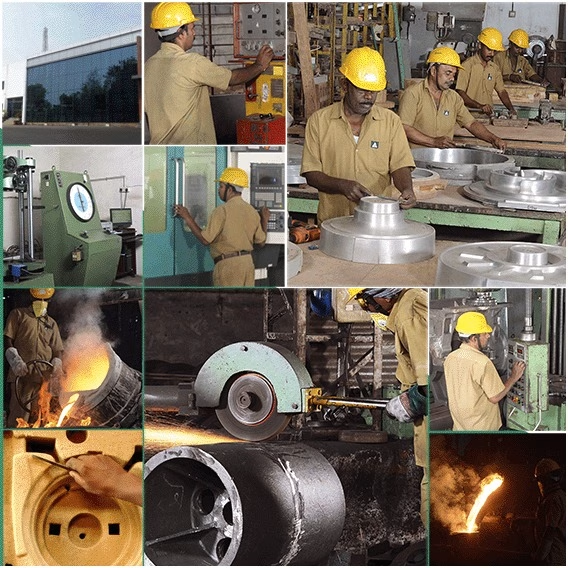
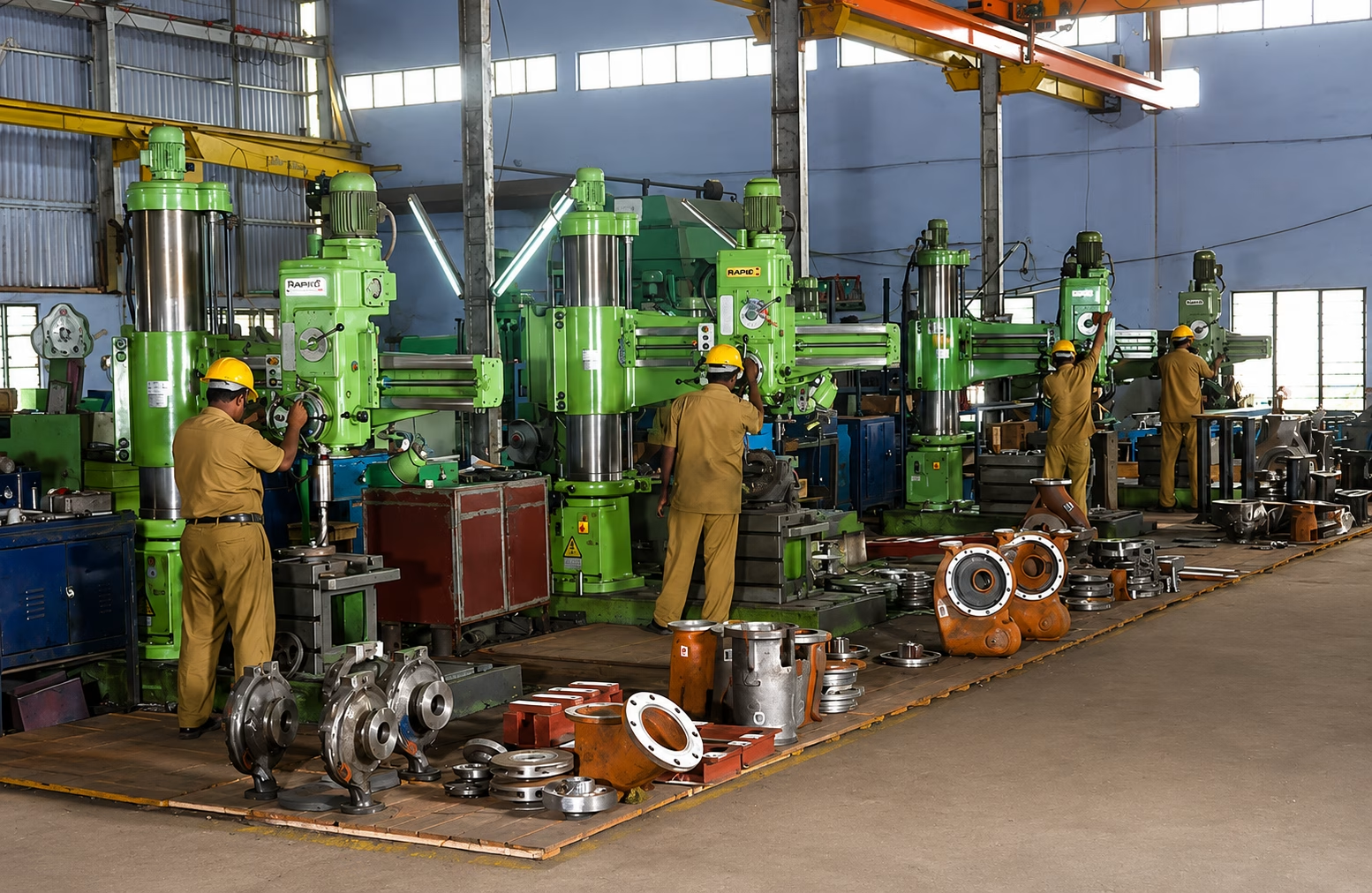
The Company Designs and Manufactures Both Horizontal and Vertical Pumps, with Open and Closed Impeller Construction, for Demanding Sectors including Thermal Power, Pulp & Paper, Chemical Processing, Basic Metal, Fertilizer, Mining, Oil & Gas, Sugar and Agricultural Applications. Because bearing loads, speeds and operating environments vary significantly across these industries, SAM Turbo’s application-focused engineering approach considers the actual duty conditions a pump will face rather than applying a one-size-fits-all bearing and Lubrication Specification.
SAM Turbo also Publishes Practical Maintenance Guidance for its Pump Range covering safe bearing operating Temperatures, Oil-Level Checks and Lubricant Selection by Shaft Speed, Reflecting the same preventive-maintenance principles outlined in this guide. Combined with quality-focused manufacturing practices and reliability-oriented technical support, this experience helps customers select and maintain pumps suited to demanding industrial duty — supporting longer bearing life and more PredictableMaintenance Planning across diverse applications.
Frequently Asked Questions
What causes pump bearing failure related to lubrication?
Most lubrication-related bearing failures result from using the wrong lubricant, applying too much or too little, or allowing contamination to enter the bearing housing.
Should I use grease or oil for pump bearings?
Grease is generally suited to general-purpose pumps due to its simplicity and sealing effect, while oil is often preferred for higher-speed applications needing better heat dissipation. The choice should follow the pump and bearing manufacturer’s recommendation.
What happens if a pump bearing is over-lubricated?
Excess grease increases churning and internal pressure, which can raise running temperature, push lubricant past the seals and accelerate bearing wear.
What happens if a pump bearing is under-lubricated?
Insufficient lubricant allows metal-to-metal contact between rolling elements and races, which quickly raises friction, heat and noise and can lead to rapid bearing failure.
How does vibration indicate a bearing problem?
A rising vibration trend, particularly at running speed or its harmonics, often reflects bearing wear, looseness or misalignment before the bearing fully fails.
Why do pump bearings overheat?
Overheating is typically caused by inadequate or excessive lubrication, contamination, misalignment, overloading or a lubricant that is unsuitable for the operating temperature.
What are the main causes of pump bearing failure?
Common causes include poor, over- or under-lubrication, contamination, misalignment, excessive vibration, overloading, incorrect bearing selection, high operating temperature and shaft or coupling issues.
How often should pump bearings be inspected?
Basic checks like noise and temperature are typically done daily, vibration readings weekly, alignment and lubricant condition monthly, and detailed lubricant analysis or replacement on a periodic schedule set by the manufacturer.
When should a pump bearing be replaced?
A bearing should be replaced when condition-monitoring data (vibration, temperature or lubricant analysis) shows sustained deterioration, or in line with the manufacturer’s recommended service life, rather than waiting for complete failure.
Can misalignment cause pump bearing failure?
Yes. Shaft misalignment creates uneven loading on the bearing, which accelerates wear, raises vibration and is one of the leading mechanical causes of premature bearing failure.
Conclusion
Pump Bearing Failure Lubrication is not only a Maintenance Concern but an important part of overall Pump Reliability. Bearings operate under varying loads, speeds and temperatures, making the right lubrication practice essential for controlling friction, heat and wear. Regular inspection of bearing temperature, vibration, lubricant condition and alignment can help maintenance teams detect problems early and avoid unexpected failures.
Preventing bearing failure requires a complete approach that includes selecting the appropriate bearing and lubricant, following correct lubrication intervals, maintaining proper alignment and monitoring actual operating conditions. These practices can help extend component life, improve equipment availability and reduce unnecessary maintenance costs.
For Industries Looking to Improve Pump Reliability, Combining sound bearing Maintenance practices with properly engineered pumping equipment is a practical way to achieve safer, more predictable and cost-effective operation.
Need help Selecting or Maintaining Pump Bearings for Your Application?


