

Introduction
Sewage Pump Selection Guide begins with understanding the actual conditions a pump will face in service—not simply matching flow and head. Sewage and wastewater can contain solids, sludge, fibrous materials, grease, abrasive particles, and corrosive substances, making proper pump selection essential for reliable operation. The right combination of pump type, solids-handling capability, materials, sealing arrangement, and installation configuration can significantly reduce clogging, wear, and maintenance requirements.
With 55+ years of engineering experience, SAM Turbo Industry Pvt. Ltd. supports demanding industrial pumping applications with an engineering-focused approach. This guide explains the differences between Non-Clog, Submersible, and Vertical Sump Pumps, their typical applications, and the key factors engineers should evaluate when selecting pumps for municipal sewage systems, STPs, ETPs, and industrial wastewater applications.
A correctly selected sewage pump can improve operational reliability, reduce unplanned downtime, and help control maintenance and lifecycle costs. This guide provides a practical framework to help engineers and plant professionals make informed pump selection decisions based on actual operating conditions.
SECTION 01
What Are Sewage & Wastewater Pumps?
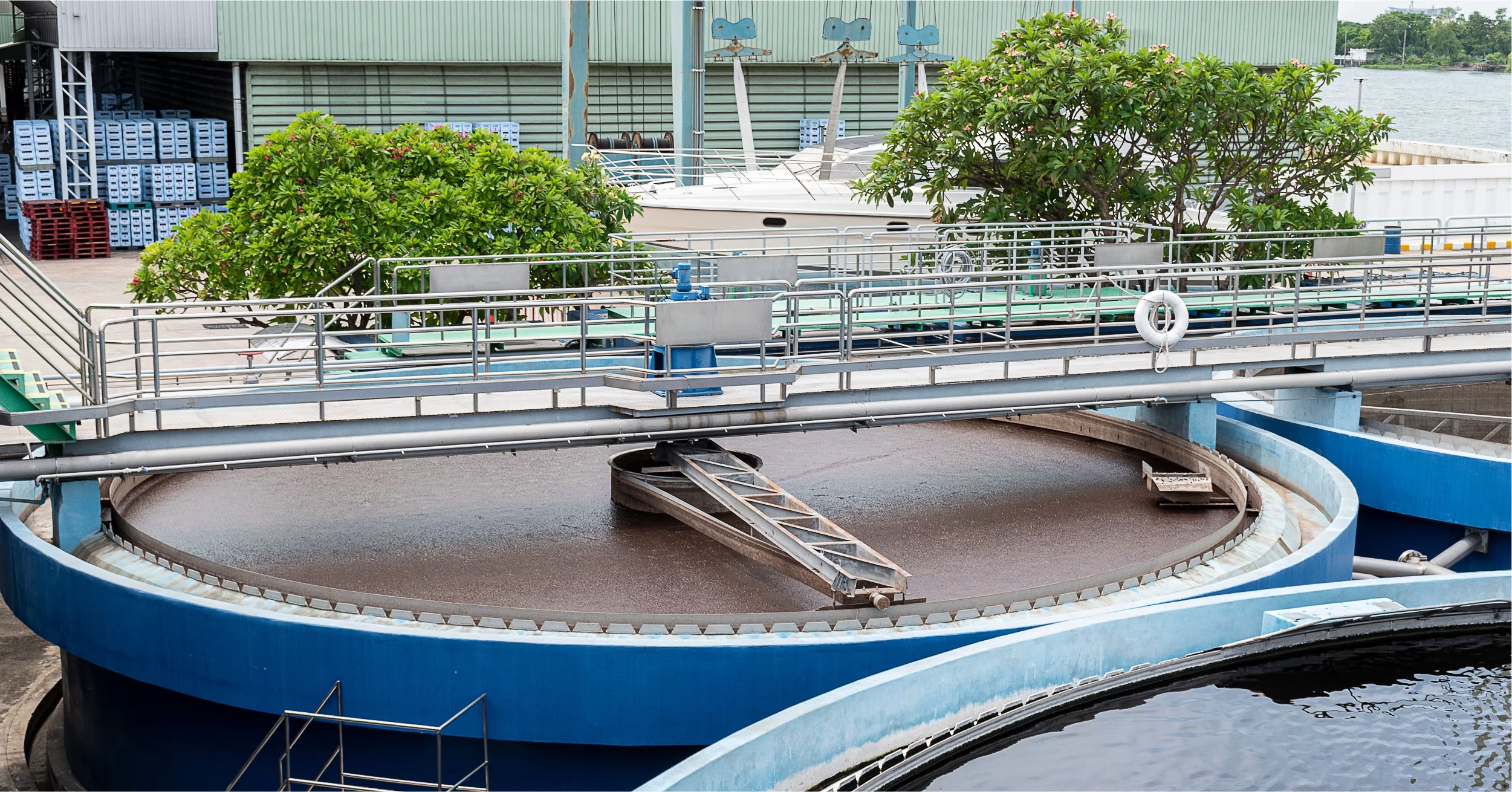
Sewage and Wastewater Pumps are pumps specifically designed to transfer fluids containing solids, sludge, fibrous material, and other contaminants — conditions that would quickly clog or wear a standard clear-liquid pump. They are used across sewage collection networks, pumping stations, sewage treatment plants (STPs), effluent treatment plants (ETPs), drainage systems, and industrial wastewater handling.
SECTION 02
Where Are Sewage & Wastewater Pumps Used?
Municipal sewage systems rely on these pumps at lift stations to move sewage from lower to higher elevations along the collection network. STPs and ETPs use them throughout the treatment process — raw sewage intake, sludge transfer, and treated effluent discharge. Industrial facilities use wastewater pumps for process effluent, cooling tower blowdown, and general plant drainage, while sump applications handle collected liquid in pits and basins across a wide range of industrial and municipal sites.
SECTION 03
Non-Clog Sewage Pumps
Non-clog pumps use impeller designs — typically open, semi-open, or specially profiled channel impellers — engineered with large, smooth flow passages that allow solids and fibrous material to pass through without catching on the vanes. Impeller selection is central to non-clog performance: fewer, wider vane passages generally pass solids more reliably than impellers with many narrow passages, though this typically comes with some efficiency trade-off compared to a standard closed impeller.
Non-clog sewage pumps are commonly used wherever raw or partially screened sewage, sludge, or wastewater containing rags, fibrous material, or other solids needs to be transferred reliably. SAM Turbo’s Non-Clog Pumps / Sponge Ball Pumps are built around this solids-passing principle for sewage and wastewater duty.
SECTION 04
Submersible Sewage Pumps
Submersible sewage pumps are installed directly in the wet well, with the motor and pump unit fully submerged in the pumped fluid. The fluid itself typically assists in cooling the motor, and sealed cable entries and dual mechanical seals protect the motor from the wet environment.
This configuration offers advantages including a compact footprint with no separate dry pump room required, reduced noise at the surface, and straightforward installation in confined wet wells. Limitations include the need to lift the unit out of the wet well for major maintenance, greater reliance on seal integrity to protect the motor, and generally higher unit cost than an equivalent dry-installed pump. Submersible units are typically selected for wet-well applications with moderate-to-heavy solids content where a dry pump room is impractical.
SECTION 05
Vertical Sump Pumps
Vertical sump pumps mount with the pump end submerged in the sump or pit and the motor positioned above, connected by an extended shaft. This keeps the motor out of the wet environment while still allowing the pump to draw directly from the collected liquid without separate suction piping.
These pumps suit collection pits, drainage sumps, and process liquid recovery applications where liquid level varies and a fixed suction line isn’t practical. Maintenance considerations include periodic inspection of the extended shaft and bearing arrangement, and confirming the pump is set to an appropriate depth for the expected liquid level range. SAM Turbo’s Vertical Sump Pumps (VO) are built for this type of sump and drainage duty.
SECTION 06
Common Pump Types Used in Sewage & Wastewater
| Pump Type | Application | Characteristics | Advantages | Selection Considerations |
|---|---|---|---|---|
| Non-Clog Centrifugal | Raw sewage, sludge transfer | Wide impeller passages | Strong solids-passing ability | Confirm passage size against solids/fiber content |
| Submersible Sewage | Wet well, lift stations | Motor submerged, sealed unit | Compact, no dry pump room needed | Seal integrity and lift-out access for maintenance |
| Vertical Sump | Pits, sumps, drainage | Motor above, extended shaft | Dry motor, direct sump installation | Pit depth and liquid level variation |
| End Suction Centrifugal | Treated effluent, low-solids transfer | Standard closed/semi-open impeller | Higher efficiency for clean(er) service | Only suited where solids are limited |
| Horizontal Split-Case | High-flow effluent or utility water | High-flow capacity | Accessible maintenance, higher flow range | Best for low-solids, high-flow duty |
| Slurry Pumps | Grit or high-solids wastewater, where applicable | Wear-resistant construction | Handles abrasive solids content | Relevant only where abrasive solids justify heavy-duty build |
| Positive Displacement | Sludge dosing, thick sludge transfer | Constant flow regardless of pressure | Handles high-viscosity sludge well | Suited to low-flow, high-consistency service |
SECTION 07
Key Factors for Sewage Pump Selection
| Factor | Why It Matters |
|---|---|
| Flow Rate | Sets required pumping capacity for peak and average flow |
| Head | Determines pressure development needed to reach discharge point |
| Fluid | Raw sewage, sludge, or effluent each demand different construction |
| Solids | Determines impeller passage size and clogging risk |
| Temperature | Affects seal and material selection |
| Viscosity | Influences hydraulic performance, particularly for sludge |
| Abrasiveness | Grit content drives wear-resistant material needs |
| Corrosion | Sewage gases and chemistry can attack unsuitable materials |
| NPSH | Insufficient margin risks cavitation, especially at variable wet-well levels |
| Operating Cycle | Continuous vs. intermittent duty affects construction robustness |
| Installation | Submersible, dry-pit, or vertical sump configuration depends on site layout |
| Materials | Must match fluid chemistry, abrasion, and temperature together |
| Seals | Critical for submersible units to protect the motor from ingress |
| Maintenance | Access, spares, and serviceability affect lifecycle cost |
| Energy Efficiency | Operating point relative to BEP affects long-term power consumption |
SECTION 08
Materials, Mechanical Seals & Reliability
Sewage and wastewater expose pumps to a demanding combination of corrosive gases, abrasive grit, and fluctuating solids content, making material selection an important reliability factor. Wetted components should be selected for the specific corrosion and abrasion profile involved, not a generic “Wastewater-Grade” assumption.
Mechanical seals are particularly critical in submersible applications, where seal failure can allow fluid into the motor housing. Bearings, shaft, and coupling all need correct alignment and adequate loading margins to avoid premature wear, and consistent lubrication practices support bearing life. Impeller condition and motor reliability round out the picture — a worn impeller or an overloaded motor both degrade overall pump performance even when other components remain in good condition.
SECTION 09
Common Sewage & Wastewater Pump Problems
| Problem | Cause | Warning Sign | Corrective Action |
|---|---|---|---|
| Clogging | Fibrous material, rags, undersized passages | Reduced or fluctuating flow | Inspect impeller; confirm non-clog design fits solids profile |
| Cavitation | Insufficient NPSH margin, low wet-well level | Noise, erratic flow | Review suction conditions and NPSH calculation |
| Excessive vibration | Imbalance, debris caught in impeller | Elevated vibration readings | Inspect impeller and shaft for obstruction or wear |
| Seal leakage | Seal wear, dry running, debris damage | Fluid in motor housing (submersible units) | Inspect and replace seal; check moisture sensor if fitted |
| Bearing failure | Lubrication issues, misalignment | Rising temperature, noise | Inspect lubrication and alignment |
| Motor overload | Clogging, incorrect sizing, mechanical drag | Rising motor current, trips | Check for obstruction; verify pump sizing |
| Low flow | Clogging, wear, incorrect operating point | Flow below expected rate | Inspect impeller and review system curve |
| High power consumption | Oversizing, poor operating point, wear | Higher than expected motor draw | Review sizing and operating point |
| Impeller wear | Abrasive grit, cavitation erosion | Declining head/flow performance | Inspect impeller condition during scheduled maintenance |
| Corrosion | Sewage gases, incompatible materials | Pitting, wall thinning | Review material selection against fluid chemistry |
| Erosion | Grit and abrasive solids | Reduced efficiency, thinning components | Evaluate wear-resistant construction options |
| Overheating | Low flow operation, cooling issues (submersible) | Rising casing or motor temperature | Review operating point and submergence level |
SECTION 10
Pump Reliability & Preventive Maintenance
Vibration, temperature, motor current, pressure, and flow monitoring together build a picture of ongoing pump condition. Seal condition checks, bearing inspection, and lubrication monitoring should be scheduled routinely, with performance trending — comparing current readings against commissioning baselines — used to catch gradual degradation before it becomes a failure. Condition-based maintenance, triggered by this data rather than a fixed calendar interval, generally supports better use of maintenance resources on sewage pumps operating in variable, solids-laden service.
SECTION 11
Improving Sewage Pump Efficiency
- Confirm correct pump sizing for actual, not overstated, flow demand
- Operate near the pump’s intended duty point
- Maintain adequate suction conditions and NPSH margin
- Review and reduce unnecessary system resistance
- Keep the impeller in good condition, free from wear and debris buildup
- Maintain proper shaft alignment
- Address clogging risk proactively through appropriate impeller selection
- Periodically review the hydraulic system as wastewater characteristics change
SECTION 12
Sewage Pumps vs Wastewater Pumps
The terms are often used interchangeably, but there are practical distinctions worth understanding. “Sewage” typically refers to raw domestic waste containing solids, fibrous material, and organic matter. “Industrial wastewater” refers to process effluent, which may carry different chemical characteristics depending on the industry. “Sludge” refers to the thicker, more concentrated solids fraction separated during treatment, generally requiring positive displacement or heavy-duty centrifugal pumps rather than standard non-clog units. “Effluent” typically refers to treated water discharged after processing, usually with much lower solids content than raw sewage. “Drainage water” and “grit-containing wastewater” both describe specific streams — general site drainage and grit-laden flows respectively — that call for their own construction considerations, particularly around abrasion resistance for grit.
SECTION 13
Step-by-Step Sewage Pump Selection Guide
- Identify wastewater characteristics (raw sewage, sludge, effluent, industrial wastewater)
- Determine required flow
- Calculate required head
- Identify solids content and type (fibrous, grit, general suspended solids)
- Check operating temperature and viscosity
- Evaluate NPSH conditions, including variable wet-well levels
- Select pump configuration (non-clog, submersible, vertical sump, or other)
- Select impeller type, materials, and seals for the specific fluid
- Review installation requirements and site specifications
- Evaluate lifecycle cost, reliability, maintenance, and energy consumption together
Engineering Tip: Pump selection must consider the complete pumping system — wet well, piping, and discharge conditions — not only flow and head values taken in isolation.
SECTION 14
Replacing an Existing Sewage Pump
When replacing a pump, review actual flow, actual head, motor loading history, operating hours, clogging frequency, vibration trends, past seal failures, and energy consumption — not just the original nameplate values. Wastewater characteristics at a site can change meaningfully over years as upstream connections, industrial discharges, or treatment processes evolve, and a replacement selected purely from an old nameplate may not match current conditions.
Do not select a replacement pump based on the old nameplate alone — verify current operating conditions first.
SECTION 15
How SAM Turbo Supports Sewage & Wastewater Applications
SAM Turbo Industry Pvt. Ltd. brings over 55 years of industrial pump engineering experience to demanding applications, including sewage and wastewater duty. This experience spans heavy-duty industrial applications across multiple sectors, supporting an engineering-focused approach to pump selection rather than a one-size-fits-all specification.
SAM Turbo’s quality-focused manufacturing and application-oriented technical support draw on a product range that includes Non-Clog Pumps / Sponge Ball Pumps and Vertical Sump Pumps (VO) relevant to sewage and wastewater service. For solids handling, corrosion resistance, and seal requirements specific to a given application, SAM Turbo’s engineering team can review actual site conditions before recommending a pump configuration.
SECTION 16
Conclusion
Sewage Pump Selection Guide starts with matching the specific application—solids content, fluid chemistry, flow, head, installation type, and operating cycle—to the appropriate pump configuration, whether it is a non-clog centrifugal, submersible, vertical sump, or another suitable pump type. Reliability, safety, maintenance planning, efficiency, and lifecycle cost must also be considered to achieve dependable long-term operation.
With 55+ years of engineering experience, SAM Turbo Industry Pvt. Ltd. brings engineering expertise and industrial pump manufacturing experience to demanding wastewater and sewage applications. From pump selection and configuration to materials, reliability, maintenance, and application requirements, an engineering-focused approach helps ensure the pumping system is suited to actual operating conditions.
Choosing the right sewage or wastewater pump can reduce clogging, premature component wear, unplanned downtime, and unnecessary maintenance costs while supporting reliable plant operation.
Frequently Asked Questions
What types of sewage pumps are available?
Common types include non-clog centrifugal pumps, submersible sewage pumps, vertical sump pumps, and, for specific high-solids or sludge service, slurry or positive displacement pumps.
What is a non-clog sewage pump?
A non-clog pump uses an impeller design with wide, smooth flow passages that allow solids and fibrous material to pass through without catching on the vanes, reducing clogging risk in raw sewage service.
How does a submersible sewage pump work?
A submersible sewage pump is installed directly in the wet well with the motor and pump unit fully submerged. Sealed cable entries and mechanical seals protect the motor while the surrounding fluid typically assists in cooling.
When should a vertical sump pump be used?
Vertical sump pumps suit collection pits and drainage sumps where a dry motor above the fluid is preferred and the liquid level may vary, without needing separate suction piping.
How do I select the right sewage pump for my application?
Evaluate flow, head, solids content, fluid temperature and viscosity, NPSH conditions, installation type, and material and seal requirements together before selecting a pump configuration.
Why do sewage pumps clog?
Clogging typically occurs when fibrous material or rags exceed the impeller’s designed passage size, or when a standard closed impeller is used in an application that actually requires a non-clog configuration.
What causes vibration in sewage pumps?
Common causes include impeller imbalance from debris caught in the flow passages, misalignment, or bearing wear. Vibration should be investigated rather than ignored, since it typically indicates a developing mechanical issue.
Why is NPSH important for sewage pumps?
Adequate NPSH margin prevents cavitation, which is a particular concern in sewage applications with variable wet-well levels. Insufficient margin leads to impeller damage and reduced pump performance.
How can sewage pump maintenance be improved?
Routine monitoring of vibration, temperature, motor current, and seal condition, combined with performance trending against commissioning baselines, supports early detection of developing problems before they cause unplanned downtime.


